Chapter one
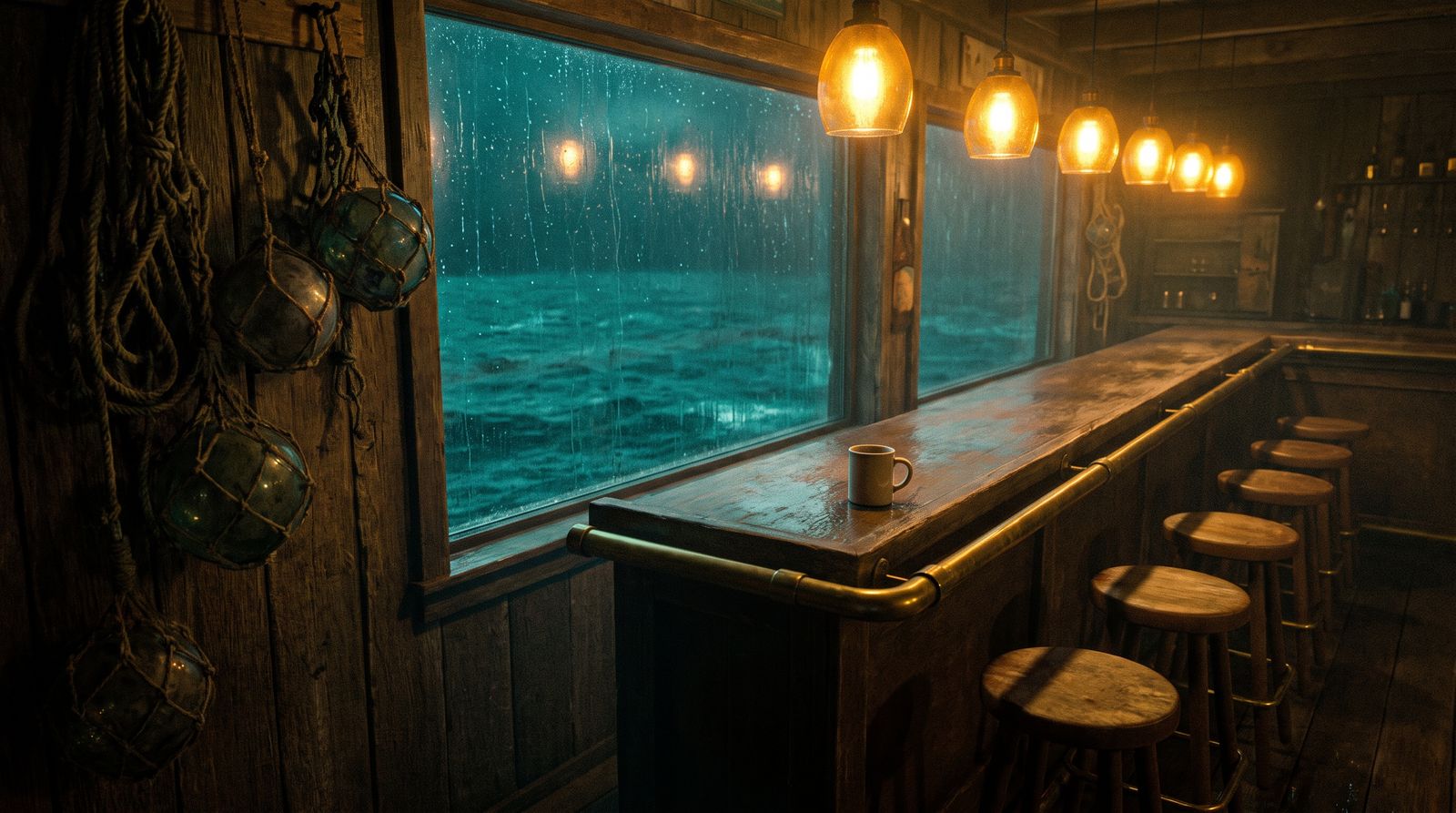
Rowan Quinn was thirty-two and they did not take meetings that sounded like a brochure.
March had come in wet, which was the only way March came to Wrecker's Bay, and the marina shed smelled like epoxy, old cedar, and the particular patience of a hull that had spent the winter being told she was not trash. The Marrow sat in straps like a woman who had heard worse. Thirty-six feet of wood that had been a gillnetter once, then a hobby, then a problem someone from Portland had tried to donate to a nonprofit that did not want her. Rowan had bought the problem in January with money that was supposed to be a new tablesaw. They did not regret the tablesaw. They regretted, occasionally, the way a boat could look at you and decide you were the one who would finish her.
They had been in the shed since six-twenty, which was not a virtue. Six-twenty was when the alley behind Salt & Timber started smelling like Jude’s coffee and Rowan’s room started feeling like a box that had opinions about a person who lived alone on purpose. They had walked the wet gravel with a thermos that was a four and a list in their head that was not a brochure: sister the sole, scrape the starboard rail, decide the tank, do not answer Tessa’s three-dot bubble if it was about feelings.
Tessa’s three-dot bubble was always about feelings. Tessa had stayed the season and then the winter and then, apparently, the rest of her life, which Rowan was glad about in a way they would not put in a text. Jude Harlan had a van-office in his lot and a doorway kiss and a brother who stayed dead. That paragraph was closed. Rowan was full of clamps.
The Marrow’s starboard rail had been painted by a man who believed in hope and a roller. Hope was a bad finish. Rowan had been taking it off in strips since February, the scraper singing when it found bare wood, complaining when it found the kind of caulk that had been sold as a personality. They worked the way they cooked pie: under-sweet, patient, a little mean about shortcuts. The radio muttered marine weather at a volume for someone who already knew the forecast and wanted to argue with it. Holt would be on channel 16 by seven, telling someone their line was sloppy. Holt was always right about lines. Holt was not always right about shirts.
Rowan had a shirt. They wore it when the town asked them to look like a person who could sit in a room and not be a cry for help. The rest of the time they wore flannel that had been washed until the plaid was a rumor, because flannel did not care if you got epoxy on it and because they were thirty-two and they had stopped dressing for other people’s idea of a category.
They/them. Tessa’s cousin. Boatwright. The town had learned it the way the town learned the jetty: once, out loud, then it was just how you talked about the person who fixed your transom. Pepper at Neddy’s Rise was they/them too, and the two of them had done the entire conversation in icing and a nod in 2024 and never done it again. That was the correct amount of speech. Rowan was not a lesson. Rowan was a person who could sister a sole.
They had come to the Bay in 2023 because a hull in Newport had sold and a slip here had been ugly enough to afford, and because Tessa had been on the road being proud and Rowan had needed a town that did not want them to be a brand. Three years. They knew which boards on the finger complained. They knew Holt’s knock. They knew Owen’s chowder was a seven on a good day and a crime when he got romantic about cream. They knew Marisol Adeyemi’s foil pans had taken the specials board in October and not given it back.
They had not made a project of Marisol. They had eaten her food. They had scored it, privately, an eight, and then gone back to clamps, because an eight was a problem if you were trying to keep your life small. Small was how you kept a winter project a winter project. Small was how you did not end up with a chef in your cabin talking about twelve covers and a bunk.
The scraper found bare cedar. Rowan sat back on their heels and ran a thumb along the wood. Honest. A little tired. Not pretty. Pretty was how jackets killed working boats. Pell & Associates had been limping a marina sale since November, smiling with new teeth on the same money, and January had grown a second nose—a hatch lid on a field-trip beach, a barge number that was not 2018. Rowan had not gone cowboy. They had brought a hull diagram to festival planning that no one asked for. They had sat with their arms folded while a jacket said experience. They had gone back to the Marrow and sanded until their shoulders filed a complaint.
Winter had been ribs. February had been fasteners. March was supposed to be the rail and the tank and a quiet that belonged to them. March, it turned out, had other plans. Tessa had texted last night: Marisol is going to come talk to you about a hull. Do not be a clamp about it. She is thirty-four and she will bring food. You are thirty-two and you will taste it and you will be annoying. Be annoying about the boat, not about her.
Rowan had not answered. Answering would have been a meeting.
They were under the starboard rail with the scraper when the door banged.
Not Holt’s bang. Holt knocked like a radio: two short, one long, then he came in anyway. Not Jude’s bang. Jude did not bang; he appeared in the doorway with a look that said he had already diagnosed your day and found it wanting. This bang had a hip in it. This bang had foil pans.
Marisol Adeyemi came in with March on her coat and a stride that had already won the Hull’s specials board and was now, apparently, coming for a slip. She was thirty-four. Rowan knew because Tessa had said it in October the way Tessa said everything she had decided was a fact: Marisol’s thirty-four, she does the foil pans, she will not let Owen put cream in something that does not want cream. Rowan had seen her at the Hull. Rowan had eaten her food and scored it, privately, an eight, and then gone back to clamps because an eight was a problem if you were trying to keep your life small.
“Floating supper club,” Marisol said, as if they had already started. She set two pans on the bench without asking if the bench was clean. It was not clean. She did not seem to care. “Twelve covers. One season to prove it. I cook. You keep it floating. We split the ugly parts. I’m not asking you to be a brand. I’m asking you if this boat can be a restaurant without becoming a yacht.”
Rowan sat back on their heels. Epoxy had found their wrist again. They wiped it on a rag that had given up being a color in November.
They/them, Tessa’s cousin, boatwright, pie as a weapon. Pronouns were fact; the work was the sentence. The town had learned it the way the town learned tides: once, out loud, then it was just how you talked about the person who fixed your transom.
“It can be a restaurant if you don’t put a generator next to the quilts and you don’t let Pell & Associates turn the slip into a photo.” They nodded at the Marrow. “She’s honest. She’s not pretty yet. Pretty is how jackets kill working boats.”
Marisol looked at the hull the way Rowan had seen her look at a pot: locate the weak seam, decide whether it was her problem. Rain ticked on the metal roof. Somewhere on the finger, a halyard slapped because someone had left a line sloppy, and Holt would be on the radio about it before lunch.
“I don’t want pretty,” Marisol said. “I want heat and a plate that doesn’t slide.” She popped the lid on the first pan. Something that smelled like an eight climbed into the shed and made a home next to the cedar. “Deadline’s May if we want festival overflow energy in July. I have a menu. You have a bunk that isn’t legal for guests. We test-cruise in weather. If we hate each other, we walk. If we don’t, we launch.”
Rowan stood. Their knees clicked. They were thirty-two and their knees had opinions about concrete. They crossed to the bench because the smell was a dare and because they were too old to pretend they were not going to taste.
Rice. Heat. A fish they would have bet was lingcod if they were betting, which they were not, because betting was how you ended up with a boat you could not finish. A sauce that had citrus and something darker, a pepper that did not apologize. They ate standing up, the way they ate most things, and hated that it was an eight.
“I don’t sleep with thank-yous,” they said, because the shed was small and Marisol’s mouth was a problem and Rowan was too old to pretend otherwise. “If we do this, the boat is the job. I’m they. That’s the only identity speech you get. After that you can yell at me about clamps.”
“I know you’re they. Tessa said it in October like she was telling me the tide.” Marisol’s smile was quick, not cute. She had a mouth that did not perform. “I don’t sleep with thank-yous either. I sleep with people who can hold a line in a swell. We’ll see if that’s you.”
Rowan set the fork down. The shed had one good window. March light came through it the color of dishwater and still managed to find the paint on Marisol’s cheekbone, a streak she had not noticed or had not wiped. Chef, then. Not a person who arrived clean to a marina to be photographed next to a restoration.
“You cooked this in a kitchen that is not a boat,” Rowan said.
“I cooked this in a kitchen that is a rental with a stove that lies about British thermal units and a landlord who thinks a hood is a personality.” Marisol tipped her chin at the Marrow. “I want a kitchen that moves. I have done pop-ups for six years. Parking lots. A church basement in Astoria that failed a surprise inspection while the rice was on. Owen’s fryer when he is in a mood. I am tired of proving I can plate in a room that was not built for it. Build me a room that was.”
“Twelve is a lot of people to not drown.”
“Twelve is a room I can see. Twenty is a yacht. I don’t do yachts.” She opened the second pan. Greens. Garlic. A hit of smoke. “Taste that too. Then walk me. Then tell me no like a person who has thought about it, or yes like a person who is going to be late for their own quiet.”
Rowan tasted. It was an eight and a half if they were being honest, which they tried not to be before noon.
They walked her.
The Marrow’s cabin was a promise and a mess. Ribs they’d sistered in February still smelled like the cedar they’d chosen because it was honest and because the big-box fir had looked like it would sulk in salt. The sole had a soft spot starboard of the mast step that Rowan had been pretending was a Tuesday problem. The galley was a rumor: a hole where a stove had been, a water tank that needed a decision, a counter that would have to be gimballed or bolted or both if anyone intended to cook in a swell.
Marisol put her palm on a beam and pressed, the way you pressed a steak. “This one is good.”
“That one is good. The one aft of it is a conversation.”
“Have the conversation. I’m not putting a burner under a beam that wants to retire.” She crouched, looked at the sole, made a noise that was not quite a chef noise and not quite a boat noise. “Soft.”
“I know.”
“Do you know in a way that means you have a sistered piece cut, or in a way that means you have been looking at it since January and hoping it would get embarrassed and firm up?”
Rowan almost smiled. They did not give it to her. “I have a piece cut. I have not had a reason to put it in that was not just me and a radio.”
“I’m a reason. I’m also a deadline.” She stood. The cabin was close. She smelled like the pans and rain and a soap that had given up competing with garlic. “Bunk.”
Rowan pointed. One bunk. Legal for the person who held the line, not legal for guests, not legal for a brochure that said overnight experience in a font Holt would have a stroke about. The mattress was a rectangle they had bought at a place that sold camping gear to people who thought Oregon was a weekend. It was clean. It was not pretty.
Marisol looked at it for a long three seconds.
“One,” she said.
“One. If we test-cruise, we test-cruise. If the weather is ugly, we don’t pretend we have a hotel. I can take the sole. I’ve slept on worse.”
“We’ll fight about the sole when the sole is a problem.” She turned. “Partnership. I cook. You keep it floating. We split materials on the galley, because the galley is my ask. You keep the hull decisions unless I am going to burn or drown. I do not want a logo. I do not want a website that says curated. I want a reservation book that is a notebook and a season that either works or tells us to walk.”
“Holt has to bless the slip. Health has to bless the galley. I don’t do cowboy with either.”
“I don’t do cowboy with food.” Her mouth did that quick not-cute thing again. “I do cowboy with landlords. Different crime.”
They stood in the cabin with the March light and the eight-and-a-half still on Rowan’s tongue and the bunk like a third person who had not been invited and had sat down anyway.
“If we do this,” Rowan said, “you don’t make her pretty for jackets. You don’t let a photographer on the finger. Pell has been limping a sale since November and they will smell a supper club and call it guest experience. Guest experience is how working boats become props.”
“I know who Pell is. I plated a festival committee in November and listened to Holt say tabled like it was a spice.” Marisol held out a hand. Dry. A cook’s palm, a scar at the base of the thumb that looked like a knife had slipped in a year that was not this one. “Shake. Then we go see Holt before I spend money on a stove that will not fit your hole.”
Rowan wiped their hand, which did not help, and shook.
Grease and a chef’s dry palm. Forced proximity signed like a slip contract.
“Quinn,” Marisol said, still holding on a beat longer than a business shake. “I will yell at you about clamps. You will yell at me about weight. We will not yell about who we are. I already know. You already know. The boat does not care.”
“The boat cares about clamps,” Rowan said. “That’s her whole personality.”
They let go.
Marisol Adeyemi had not come to Wrecker's Bay to fall in love with a hull.
She had come because Owen Keene had texted in the fall of a year that was already loud—specials board is a crime, come fix it, I will pay you in a way that is almost money—and because six years of pop-ups had started to feel like proving a point to people who were never going to give her a lease. She was thirty-four. She had a résumé that looked like a map of rooms that were not hers. She had a mother in Oakland who sent voice notes about grandchildren Marisol had not promised and a father in Lagos she spoke to on Sundays when the time zones were kind. She had a rental on Oak with a stove that lied and a landlord named Dennis who thought character was a word you could put on a leak.
She had, since October, watched Tessa Quinn fall into this town like a van that had decided to live here, and she had watched Tessa’s cousin weld things at dusk and bring pie to festival planning and sit with their arms folded while Portland jackets said experience. She had not made a project of Rowan. She had made a project of a plate that did not slide. The fact that those two projects had just shaken hands in a cabin that smelled like cedar was a problem she was going to treat like a menu: write it down, score it, do not lie to herself about the heat.
She followed Rowan out of the Marrow and down the finger because the shed had started to feel like a room with a bunk in it, and she was not doing the bunk on a Monday morning before Holt had said the slip was real.
The marina in March was a working argument. Boats in slips that paid. Boats on stands that were waiting for a season. A finger that listed west the way the whole town listed west. The Hester’s absence was still a shape people walked around, even if they did not say the name. Marisol did not say the name. She plated food. She let Jude Harlan keep his brother’s water.
Rowan walked like a person who knew which boards would complain. They were built like someone who lifted hulls, which they did, and they had paint in their hair that was not today’s paint. Dark. Cut themselves, or someone who liked them had. A flannel that had been washed until the plaid was a rumor. Hands that had just been in her handshake and were now, inconveniently, a fact she was going to have to cook around.
“Holt first,” Rowan said. “Then I want you to see the weight. Then you can go back to your lying stove and write a menu that does not require a generator next to anyone’s quilt.”
“I already have a menu.”
“You have a menu for a kitchen that does not move. Write the other one.”
She almost liked them for that. She put the liking in a pan and put a lid on it.
The harbor master’s office was a box with a radio and a filing cabinet that had given up being alphabetical. Holt Voss was thirty-nine and looked it in the way of people who slept next to weather. He did not stand when they came in. He pointed at the two chairs that were not a matching set and kept listening to someone on channel 16 explain a swell as if Holt had not already known.
He keyed off. “Quinn. Adeyemi. If this is about the south cleat, I already yelled at the person who owns that skiff, and it is not either of you.”
“It’s about a slip,” Rowan said. “The Marrow’s. She’s going to be a restaurant. Twelve covers. Seasonal. Not a yacht. Not a photo. I need you to say the slip stays a working slip if we put a galley in her.”
Holt looked at Marisol. She had been looked at by men with clipboards and men with investors and men who thought chef meant they could tell her her own heat was too much. Holt looked at her like a leak: locate, assess, decide whether it was his problem.
“You want to feed people on a wood hull that spent ten years being a regret,” he said.
“I want to feed twelve people on a wood hull that Rowan is making honest,” Marisol said. “I have plated the Hull since October. I have not given anyone food poisoning. I have not asked you to be a brand. I am asking you if the slip is a slip or a brochure waiting to happen.”
Holt’s mouth did something that was not a smile and was not a no. “Vote’s been limping since November. Festival came and went. January grew a second nose—hatch lid, field-trip beach, barge number that is not 2018. I have a file. I have jackets who call it storm debris. I have Willa Crowe who will print a sentence if I give her one that isn’t a stroke. I do not have a sale. I also do not have a promise that I will still have a marina in August that looks like a marina.”
“Then don’t give them a supper club as a door prize,” Rowan said. “Give us a season. If they want a photo boat, they can take a picture of your file.”
“Pretty fingers want pretty water.” Holt rubbed his face. “I’ll say this once, and then you can go be annoying with hull diagrams. The slip is yours through the season if the boat is a working boat. Restaurant is work if health says it is. Photo boat is not work. If a jacket shows up and says guest experience, you do not cowboy. You come here. You bring the chef. You bring a menu that looks like a menu and a hull that looks like it will not drown a tourist who thought experience meant a cocktail.”
“I don’t serve tourists cocktails on a swell,” Marisol said. “I serve food that stays on a plate.”
“Good. That’s a sentence I can use.” Holt pointed at Rowan. “You. Shirt if they call a meeting. The one that isn’t a cry for help.”
“I have a shirt,” Rowan said.
“You have flannel. Buy a shirt. Adeyemi, your pans are an eight. Don’t let Quinn under-season the partnership because they under-sweeten pie.”
Marisol snorted. She had not planned to snort in a municipal office. “I tasted the pie. It’s a structural problem.”
“It’s pie,” Rowan said, the way Jude Harlan said it’s weather.
Holt keyed the radio back on as a dismissal. “Go. I have a finger that thinks lines are optional and a barge number that thinks it is a rumor. Do not make me add a supper club to the migraine until you have a stove that fits.”
They went.
Jude Harlan was in the lot at Salt & Timber with a ladder and a look that said the sign had been crooked since the last gale and he had only now decided it was his problem. Tessa’s van sat under the eave like an office that had learned to stay. Rowan could have walked past. Rowan did not walk past, because Jude would hear about the handshake from Tessa in a paragraph and then he would show up at the shed with a wrench and a moral objection, and it was easier to give him the short version on gravel.
“You’re building a restaurant,” Jude said, before hello, because the town was a leak and he had already located it.
“I’m keeping a hull floating. She’s putting food on it. Twelve. Not a yacht.” Rowan tipped their head at Marisol. “Adeyemi. You know her pans.”
Jude nodded once, the way he nodded at weather. He was thirty-nine and he still looked at new ideas like they might drown someone. “Generator.”
“No.”
“Quilt.”
“No.”
“Holt.”
“Already. He said shirt. I have a shirt.”
Jude’s mouth did the almost-kind thing it did when Tessa was in the next room and he had decided not to be a problem. “If a jacket tries to make that slip a photo, you come get me. I’m a neighbor. I’m not the hero of your water. I’m useful with a wrench.”
“I don’t need a hero,” Rowan said. “I need a sink by Thursday.”
“I have a sink in the loft I stole from a teardown. It’s ugly. Ugly is how you keep them.” He glanced at Marisol. “Your festival committee pan was an eight. Don’t let them turn you into a caption.”
“I don’t do captions,” Marisol said. “I do heat.”
Tessa appeared in the shop door in the mustard sweater with a pencil in her hair and the cousin-look already loaded. “You shook. I can tell because Rowan is standing like a person who has agreed to something and is already building a clamp schedule about it.”
“Go back to your van-office,” Rowan said.
“I’m going. I’m also saying pie, and I’m saying if you let Pell kill that hull I will write a paragraph you will hate.” She looked at Marisol. “I’m thirty-two. They’re thirty-two. You’re thirty-four. None of you are allowed to be stupid about a jacket. Ladle is a two-way street.”
Jude made a noise that was not quite a laugh. “That’s her love language.”
“It’s a liability statement,” Tessa said, and kissed him in the doorway the way she kissed him when the town was allowed to see it: one second, then the van, then the work. Not the plot. Good.
Rowan walked on. Marisol matched them. The gravel had opinions. The bay, what you could see of it through the wet, was the color of a nickel someone had left in a pocket.
“Your cousin is a paragraph,” Marisol said.
“My cousin is a season that learned how to stay. Different crime.” Rowan shoved their hands in their pockets. “Jude will bring the sink if I ask. I am not asking until I know you are still here on Thursday.”
“I’ll be here on Thursday. I shook. I don’t un-shake because a sign is crooked.”
On the gravel, March found the gap at Marisol’s throat. She did not hide it. Sunshine was Tessa’s professional skill. Marisol’s was heat. Different tools.
Rowan stood with their hands in their pockets and looked at the Marrow across the lot like the boat might have changed its mind.
“You have a shirt?” Marisol said.
“I have a shirt. I wear it when Holt has a migraine and Tessa is in the room taking notes.” They glanced at her. “You don’t have to do the meeting voice with me. I already shook. I’m not going to un-shake because you snorted at my pie.”
“Your pie is under-sweet. That’s not a meeting voice. That’s a tasting note.”
“Write it on a ticket.”
“I will.” She tipped her head toward the road. “Hull. I have a lunch special that will not plate itself, and you need to eat something that isn’t epoxy. Owen will pretend he is not interested. He is interested. He is terrified I will steal his regulars and also terrified I will not, because then he will have to keep doing the specials board alone.”
“I don’t steal regulars. I steal slips.”
“You don’t steal slips. You keep them. Different crime.” She started walking. After a second, Rowan walked too, which she scored, privately, a seven, because walking with someone should not feel like a clamp seating and it did.
The Split Hull in March did Monday like a church that had decided God could wait until the fryer was clean.
Owen Keene was thirty-three and wiping the bar with the expression of a man who had married a building and was still surprised the building had opinions. Beckett Reed sat on his stool and did not talk. His shoulder was a fact against the wood. Marisol had learned not to make a project of Beckett. He had a person. The person was Owen. That paragraph was closed and she was glad, because the Hull was her Tuesday kitchen and she did not need a soap opera in the walk-in.
Tessa Quinn was in a booth with a laptop and a mustard sweater and the look of a woman who had stayed the season and then the winter and was now, inconveniently, a local. Jude’s flannel was on the back of the chair. Jude was not in it. Salt & Timber, then. A roof or a hull or a van that was an office.
Marisol lifted two fingers at Tessa. Tessa lifted two back and did not come over, which was the correct cousin-adjacent behavior when Marisol was about to do a deal in public.
“Special’s up at eleven-thirty,” Owen said, without hello. “If you’re late I will write a poem. It will be bad.”
“I’m not late. I’m early with a boatwright.” Marisol slid behind the pass because the pass was hers on Mondays whether Owen admitted it or not. “Rowan is going to eat. You are going to pretend you don’t want a chowder crossover. Then you are going to want a chowder crossover.”
Owen looked at Rowan. Rowan looked at the specials board, which still had Marisol’s Sunday writing on it in a Sharpie that had been dying since February.
“They’re building a restaurant on the Marrow,” Owen said. “That’s what your face is doing.”
“That’s what our handshake is doing,” Rowan said. “Twelve covers. Seasonal. We don’t steal your regulars. We steal the people who want to eat on a boat and then we send them back here for the drink they should have had first.”
Beckett made a sound that might have been a laugh. Owen pointed at him without looking.
“You don’t get an opinion until you move a table.” Owen leaned on the bar. “Chowder crossover. You want my base or you want to insult my base.”
“I want your base on a night you are closed to the floor and open to a pot,” Marisol said, already tying the apron she kept on a hook that said not yours in her own handwriting. “I want to see if it holds on a plate that moves. If it holds, we do a night that is not a brand. If it doesn’t, I will tell you in a tasting note and you can hate me in a way that is still money.”
“I already hate you in a way that is still money.” Owen’s mouth twitched. “Don’t drown. Holt will put it on the radio and I will have to hear about it during last call.”
“We won’t drown,” Rowan said. “I’m very boring about drowning.”
Tessa appeared at Marisol’s elbow with the laptop shut and the cousin-look on, which was fond and nosy and a little bit pie.
“You shook,” Tessa said.
“We shook,” Marisol said.
“Jude says if you put a generator next to anything that looks like a quilt he will come down there with a wrench and a moral objection.” Tessa glanced at Rowan. “I say pie. Also I will ladle if you feed me. Also you are thirty-two and you have been pretending that boat is just a winter project since January and I am very proud of you in a way you will hate.”
“Hate it quietly,” Rowan said. “And tell Jude the generator is already a no. Holt said shirt. I have a shirt.”
“You have flannel.”
“That’s what Holt said.”
Tessa kissed the air next to Rowan’s cheek, which was as much public cousin as either of them did, and went back to the booth. Jude’s flannel stayed on the chair like a dog that had been told to wait.
Marisol cooked.
It was not a show. It was a Monday special: the rice from the second pan scaled up, the greens, a fish Owen had actually sourced like a person who respected a board. She plated for the room and plated for Rowan without making it a performance. Rowan ate at the bar, not the pass, which she respected. Partners who hovered in a kitchen were a health code and a personality problem.
When she came out with her own plate, because chefs who did not eat became problems by three, Rowan had a notebook open. Not a brochure. A list. Sole. Sister. Tank. Gimbal. Clamp schedule. Health. Shirt.
“You’re very sexy when you make lists,” Marisol said, and then wanted to take it back, and then did not, because she was thirty-four and taking it back was a driveway move.
Rowan did not look up. A muscle jumped in their cheek. “I’m very sexy when the sole isn’t soft. Eat. Then we weigh the stove hole.”
She ate. It was an eight. She was allowed to say so about her own food. Rowan said eight at the same time she thought it, which was either partnership or a problem, and she put that in the pan with the liking and pressed the lid down harder.
Pepper from Neddy’s Rise found them on the finger at two with a box and rain in their hair and the look of a person who had decided icing was a political act.
Pepper was they/them the way Rowan was they/them: fact, then cinnamon. They did not make a speech. They set the box on the Marrow’s rail, opened it, and the shed—Rowan had left the bay door cracked—filled with the smell of a roll that had been extra on purpose.
“For the hull,” Pepper said. “Not for a meeting. If a jacket comes, hide them. Jackets don’t deserve the icing.”
“We’re not a meeting,” Rowan said.
“You’re a restaurant. That’s worse. Meetings end.” Pepper glanced at Marisol, then at Rowan, then at the bunk they could see through the cabin door because Rowan had not closed it, because Rowan was a person who forgot that bunks were visible. “I don’t need a paragraph. I need you to eat something that isn’t epoxy and I need the slips to stay ugly. Ugly is how we keep them.”
“Working-local,” Marisol said.
“That’s Holt’s sentence. Mine is icing.” Pepper shoved the box an inch closer. “Tessa already texted me. She used too many words. I used icing. We’re even.”
They left the way they had come, which was the correct bakery exit: no hug, no identity workshop, a box that would be empty by four.
Rowan took a roll. Icing on their thumb. They licked it without thinking and Marisol looked at the water until the water was less interesting than the thumb, which took no time at all.
“Your cousin has a network,” Marisol said.
“My cousin has a van and a theory that pie fixes structural problems.” Rowan held out the box. “Eat. Then we measure. If you stand there scoring my thumb I will put you on the clamp schedule.”
“I wasn’t scoring your thumb.”
“You were. It was a seven. You’re a terrible liar for a person who has run pop-ups.”
She took a roll. It was a nine. She wrote that down in her head next to Rowan’s mouth is a problem and the bunk is visible from the finger and May is a deadline that will not care about either.
They measured.
The stove hole was a rectangle that had been cut by someone who believed in hope and a jigsaw. Rowan had a tape. Marisol had a notebook that was already greasy. They argued about weight the way other people argued about rent. They argued about a rail that would keep a pot from becoming a projectile. They argued about a board that could be a pass if you squinted and a crime if you did not.
“Twelve plates,” Marisol said, crouched in the hole like she lived there. “I need to turn twelve without becoming a line cook for a yacht. That means mise that latches. That means a board that is not pretty and is bolted. That means you, Quinn, not hovering in my hip while I am holding a knife.”
“I don’t hover.”
“You hovered when I plated the festival committee. You brought a hull diagram no one asked for and then you stood in my hip like the diagram needed a bodyguard.”
Rowan, above her, went still in a way that was not offense. “I brought the diagram because Holt was about to let Sharon talk about fairy lights on the jetty. I stood in your hip because the cabin was small and I am not a person who leaves a cook in a small cabin with a jacket.”
Marisol looked up. From the hole, Rowan was a flannel and a mouth and a pair of eyes that did not perform kindness. She felt it in her ribs. She was thirty-four. She had felt heat in worse kitchens. She had not felt heat that came with a clamp schedule and a sentence about not leaving her with a jacket.
“Then don’t leave me with a jacket,” she said. “And don’t stand in my hip unless I put you there.”
“That’s a yes-adjacent sentence.”
“That’s a weight sentence. Get out of my hole. I need to see if a hotel pan fits if I hate myself a little.”
Rowan got out of her hole. Their hand landed on the beam beside her head to do it, not on her, which she noticed because she was noticing everything now, which was a menu problem.
The hotel pan fit if she hated herself a little. She wrote it down. Rowan wrote sister sole this week on a scrap of cedar. They were, she realized, going to be in this cabin every day until May. Forced proximity was not a trope when it was a tape measure. It was a job.
At four, Holt came down the finger with the radio on his belt and a piece of paper that had been folded against the weather.
“Health,” he said. “I called because I am a harbor master and not your mother. They can do a walk-through Thursday if you have a sink that is a sink and a story about waste that is not a hope. If you don’t, they can do a walk-through in two weeks and your May deadline starts looking like a brochure you wrote to yourself.”
“We’ll have a sink,” Rowan said.
“We’ll have a story about waste,” Marisol said. “I have been telling health stories for six years. Some of them were even true.”
Holt’s mouth twitched. He looked at the Marrow, then at the slip, then at the empty water where pretty fingers wanted a photo boat.
“January’s hatch lid is still in my file,” he said, quieter. “Same money. New smile. If they smell you, they will come smile at me about reallocating guest experience. I am telling you now so you do not act surprised in a meeting and make me look like a man who does not run a harbor.”
“We’re not surprised,” Rowan said. “We’re annoying. There’s a difference.”
“Be annoying with diagrams. Be boring about drowning. Shirt, Quinn.” He walked back up the finger. The radio crackled. Someone had left a line sloppy. The town continued.
Marisol stood on the Marrow’s deck and felt the boat move a little under her, even in the slip, because wood boats talked and because March had a swell even when it was being polite.
“Thursday,” she said.
“Sink by Thursday. Sole by Thursday if I don’t sleep.” Rowan ran a hand along the rail. Paint came off on their palm. “You should go write the menu that moves. I’ll cut the sister. If I text you it will be about clamps. If you text me it should be about weight. If Tessa texts both of us it will be about pie and we will ignore her in a loving way.”
“I don’t ignore cousins who ladle.”
“Then you can have the pie conversation. I’m full.”
She should have left. She had a rental and a lying stove and a special that needed mise for Tuesday. She stood there anyway, because the handshake was still on her palm and because Rowan was looking at the bunk again through the cabin door and she could see them thinking a thought they were not going to say.
“Say it,” Marisol said.
Rowan glanced at her. “If I say it, it’s a meeting.”
“I don’t take meetings that sound like a brochure. You said that. Say the un-brochure thing.”
They exhaled. Epoxy on their wrist. Icing, still, at the corner of their mouth, which she was not going to mention, because mentioning it would be standing in their hip.
“I don’t want to want this,” Rowan said. “The boat, I wanted. The boat is a hull. You’re a person who brings pans and a deadline and a mouth that is going to wreck my quiet. I shook anyway. That is not a thank-you. That is me being thirty-two and tired of pretending I only love wood.”
Marisol felt the lid on the pan slip.
“I didn’t come here to wreck your quiet,” she said. “I came here to feed twelve people on a boat that isn’t a yacht. If your quiet gets wrecked, that’s a side effect. I’m not going to apologize for a side effect I haven’t even plated yet.”
“Good.” Rowan shut the cabin door. The bunk went away. It did not go away. “Go home, Adeyemi. Thursday is a sink. I’m not doing the rest of this conversation on a finger Holt can see.”
She went.
Oak Street in March was a wet argument between porch lights and the kind of dark that arrived before anyone was ready for dinner. Marisol walked it with her hands in her coat and her mind in the cabin. She passed the café with Lena Myles still stapled to the board, staple rustier than the clipping, a Coast Guard name that was a story Tessa had not filed and a person who was not in town. She passed Neddy’s Rise, already closed, the window still smelling like a nine if you stood close. She passed Willa Crowe’s office at the Bay Weekly, the lights on, a silhouette that might have been Willa or a stack of back issues with opinions.
She did not go in. Willa would want a sentence. Marisol did not have a sentence that was not a handshake and a bunk she was not going to write about in a weekly.
The rental on Oak had been a fisherman’s daughter’s place once, then a summer sublet, then Dennis’s idea of character. The porch listed. The key stuck. Inside, the heat clicked like it was thinking about it. Marisol hung her coat, washed her hands the way she washed them after a service, and stood in the kitchen that lied.
Six years of pop-ups. She could recite them if a health inspector asked, and health inspectors always asked, as if a résumé were a temperature log. A parking lot in Astoria with a permit that expired while the rice was on. A brewery in Tillamook that wanted elevated pub and got her heat instead and then wanted the heat to be quieter. A church basement that failed a surprise inspection because someone had stored paint next to the flour and Marisol had said, out loud, that she was not plating next to a hobby. A summer on a cart in a town that wanted her to smile more. Owen’s fryer. The Hull’s board. A festival committee pan that Jude Harlan had called an eight, which she had not needed him to say.
She had come to the Bay because the coast was a line she understood and because Oakland had started to feel like a kitchen she had already cleaned. She was thirty-four. She had a mother who sent voice notes about a cousin’s baby and a father who asked, on Sundays, whether she had a stove that was hers. She had not had a stove that was hers. She had had rooms. She had had foil pans. She had had a stride that won boards and lost leases.
The Marrow was a stove that moved. That was the graf. Rowan Quinn was the person who could keep it floating. That was the nut. The fact that Rowan had icing at the corner of their mouth and a voice that said I don’t sleep with thank-yous like a cleat was a sidebar she was not going to file tonight.
She took out her notebook and wrote twelve, moving, no yacht, Quinn holds the line at the top of a page that had already been a menu and was now, inconveniently, a partnership.
She texted Tessa, because Tessa would text anyway.
we shook. tell Jude the generator is a no. tell your cousin their pie is a structural problem. I will ladle if you feed me is a two-way street.
Tessa, immediately: don’t you dare let a jacket kill your hull. also I will ladle if you feed me. Jude says shirt. I say pie.
Marisol set the phone down. She heated the leftover first pan because wasting an eight was a crime. She ate at the counter. She did not look at the driveway. She had learned that from Willa Crowe, who had come back in November and then stayed, and who had once left a man in a lot because leaving was a sentence she knew how to write. Marisol was not Willa. Marisol was not leaving a boatwright in a shed. Marisol was writing a menu that moved.
She wrote until the light died.
Heat first. A pepper stew that would hold if the boat rolled, rice that would forgive a delay, a fish that did not need a story on the plate. Greens that could take a squeeze of citrus at the pass and not wilt into a crime. A dessert that was not cute: dark, a little bitter, something you ate with a spoon and did not photograph. She wrote the waste story in the margin the way she had written waste stories for six years—gray water to tank, compost off-boat, no hope, no brochure—and then she wrote the part that was not for health.
Plates latch. Board bolts. Quinn does not hover. If they hover I put them on a clamp.
She laughed once, alone in a kitchen that lied, because she had just written a boatwright into a mise list like they were a hotel pan.
She heated the rest of the first pan because the eight was still an eight cold and she was not a person who wasted an eight. She ate at the counter with the notebook open. She did not look at the driveway. Willa Crowe had come back in November and then stayed, and Marisol had watched her almost leave a captain in a lot because leaving was a sentence Willa knew how to write. Marisol had learned the lesson without taking the plot: do not do the driveway. Do not stand in the wet making a speech about staying. Write the menu. Show up at seven. Bring coffee that is not a four.
Her phone buzzed. Owen: crossover is not a yes. crossover is a pot I have not agreed to. also if you drown I will be annoying on the radio.
She typed: we won’t drown. they are boring about drowning. your base, my night, not a brand. go be married to your building.
Owen: I am always married to my building. Beckett says hi by existing. don’t steal my regulars.
She put the phone down. She washed the pan. She stood in the dark kitchen and thought about Rowan’s hand on the beam beside her head, not on her, and the way that had been hotter than a hand on her would have been, because it was a person who asked by not taking.
If we do this, it isn’t a thank-you.
She wrote that at the bottom of the page. She did not send it.
She was thirty-four. She could hold a line in a kitchen. She would see if she could hold one in a swell.
She set two alarms. She laid out the clothes she was willing to ruin on a boat. She slept like a person who had a waste story to tell at seven and a quiet she had not come here to wreck, and might wreck anyway, and would not apologize for until she had plated it.
Rowan cut the sister in the shed with the radio on and the bay door cracked and Pepper’s box empty on the bench.
They were good at this part. Wood did not flirt. Wood did not bring a pan that scored an eight and a half and then stand in a hole and say don’t stand in my hip unless I put you there. Wood sat still and let you sister it if you were patient and if your clamps were not a personality disorder.
The Marrow had been a gillnetter named by a man who thought marrow was a joke about soup. Rowan had kept the name because renaming a boat was how you asked the water for a conversation you did not want. They had been bringing her back since winter: ribs, fasteners, the ugly honesty. They had told themselves it was a project. Projects did not have chefs. Projects did not have May.
They texted Tessa because Tessa would worry in a paragraph if they did not.
shook. hull is the job. tell Jude I have a shirt. do not come down here with pie tonight I am full of clamps.
Tessa: don’t you dare let a jacket kill your hull. also I will ladle if you feed me. Jude says shirt. I say pie.
Jude and Tessa were a doorway kiss and a van-office. Not the plot. Good. Rowan was full of clamps.
They fitted the sister. The soft spot became a former soft spot, which was the only kind of miracle they believed in.
Fitting a sister was a religion. You cut. You dry-fit. You argue with a rib that has opinions. You clamp. You wait. You do not get romantic about a clamp. They cut. They dry-fit. The Marrow talked. Small wood sentences that meant about time and don’t get pretty and I told you in January. They listened. They clamped. They waited. March ticked on the roof. Holt’s radio argued with a line two fingers over. Someone’s skiff was sloppy. Someone’s skiff was always sloppy. The empty shape people walked around stayed empty. Ellis Harlan stayed dead. Rowan did not say the name. They said, to wood, “Don’t make a liar out of me,” which they had already said on the rail and were saying again under a hull because repetition was a tool.
They thought about her in the hole. Don’t stand in my hip unless I put you there. They thought about icing on their thumb and her looking at the water until the water was less interesting. They thought about Holt saying shirt. They thought about Jude saying ugly is how you keep them. They thought about Tessa’s mustard and a pencil and a paragraph they would hate. They were thirty-two. They could sister a sole. They were not sure they could sister a season that had a chef in it without the season becoming a person.
They swept. They covered the pans Marisol had left—she had left the pans, of course she had, chefs left pans the way boatwrights left clamps, as a claim—and they stood in the shed and looked at the Marrow’s one bunk through the cabin glass.
The bunk was a rectangle. Clean. Not pretty. Legal for the person who held the line. Visible from the finger if you left the door open, which they would not, after today. They shut the cabin door. The bunk went away. It did not go away. They opened the door again because shutting it to hide a legal fact was a brochure about shame and they did not do shame about a bunk. They did shut about jackets. Different crime.
They stood in the shed and looked at the Marrow’s one bunk through the cabin glass.
Unkind and accurate: You are going to wreck my quiet, Adeyemi, and I am going to let you, and it still will not be a thank-you.
They locked the shed. Holt’s light was still on in the office. Willa’s car was at the Bay Weekly like a dare. The slips were ugly. Ugly was how you kept them.
On the walk home they stopped at the finger and looked at the water the way they always looked at the water: not for pretty, for honesty. March swell, even in the basin. A line sloppy on a skiff that was not theirs. The empty shape people still walked around when they said the Hester or, more often, when they did not. Rowan did not say it. Ellis Harlan stayed dead. The sale limped. The Marrow was a restaurant if a chef and a boatwright and a harbor master who hated brochures all stayed boring about drowning.
They had not planned a restaurant. They had planned a hull. The hull had other plans. That was the oldest story in a marina and they were still, at thirty-two, surprised by it.
The room off the alley behind Salt & Timber was a box with a hot plate and a window that looked at Jude’s sign. They had taken it in 2023 because it was close to hulls and far from anyone who wanted them to be a brand. The sign was still crooked. Jude would fix it at five or he would not. Tessa would hold a light if he asked. Rowan washed epoxy off a wrist at a sink that was not Thursday’s sink and watched the water run gray.
They had been they for longer than this town had known them, and this town had known them fine. Tessa had said it in October like she was telling people the tide. Owen had never said it wrong. Holt had never said it wrong. A jacket from Portland had said sir once in November and Rowan had said it’s Quinn and gone back to a diagram, and the jacket had smiled like winter. That was the whole identity conversation the Bay was going to get from them. The rest was clamps.
They ate leftover roll icing with a finger like a person who was not going to start being careful about wanting. Pepper’s icing was a political act. Rowan respected political acts that came with extra.
They sat on the mattress that was not a bunk and opened a notebook that was not Marisol’s. Sink. Sole. Tank. Gimbal. Health Thursday. Shirt. They added do not stand in her hip and then crossed it out because writing it down made it a meeting, and then wrote it again because crossing it out was a lie.
They thought about her mouth. They thought about the way she had said I sleep with people who can hold a line in a swell like a tasting note. They thought about the bunk, legal for one, visible from the finger if you left the door open, which they would not, after today.
They were not going to sleep with a thank-you. They were not going to sleep with a partnership. If they slept with her it would be because they wanted her, and she wanted them, and the boat was the job on both sides of that sentence. They were thirty-two. They could hold that line. They were not sure they could hold it if she kept standing in holes and looking up.
Jude’s shop light went off. The alley got quieter by one contractor. Rowan lay down. The hot plate ticked as it cooled, a small ugly sound, honest.
They did not text Marisol about the bunk.
They texted her about the sink.
sink Thursday. I can do a sink. you do waste. if you come at seven I will have coffee that is a four and you can hate it.
Three minutes. She typed like a ticket.
seven. I will bring coffee that is not a four. I will bring a waste story. I will not bring a thank-you. hold the line, Quinn.
Rowan set the phone face down.
They held the line. It was their whole personality. It was, as of this afternoon, no longer the only thing in the cabin.
March ticked on the window. The sign at Salt & Timber hung crooked from the last gale. Jude would fix it at five or he would not. Tessa would hold a light if he asked.
Rowan Quinn, thirty-two, they/them, boatwright, lay on a mattress that was not a bunk and thought about a chef in a hole saying put you there, and they did not make a speech.
They set an alarm for six. They slept like a person who had a sink to build and a quiet that was already, generously, wrecked.