Chapter one
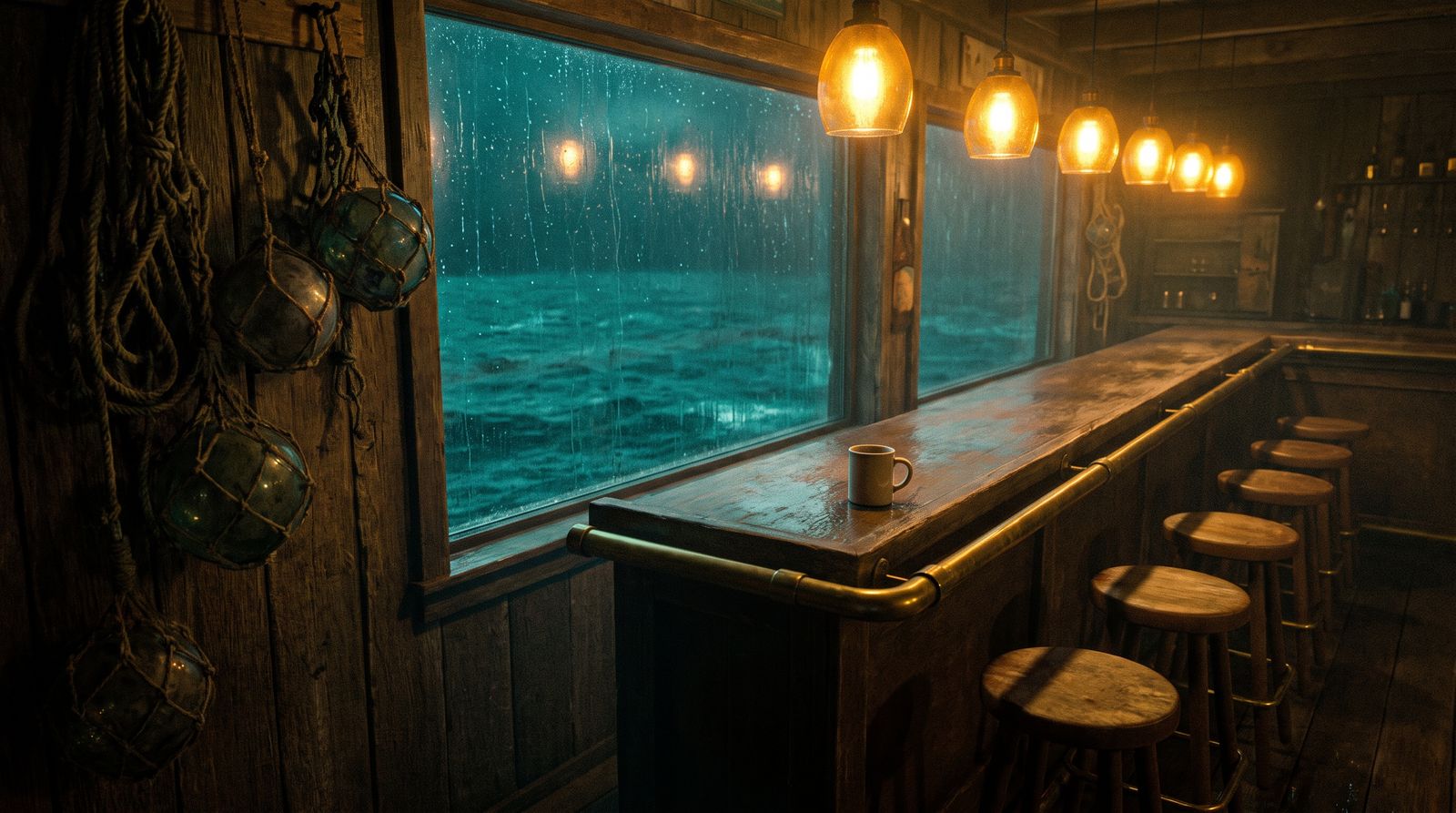
Claire Bennett was forty-two and she had inherited a bed-and-breakfast she wanted to throw into the bay.
The thought arrived every morning at five-forty, the same minute the porch light clicked off on a timer Tom’s aunt had installed in 2009 and no one had dared to change. Claire stood in the foyer in yesterday’s cardigan and today’s resolve and watched HarborHost eat a reservation, spit it back, eat it again. The screen froze on a spinning wheel that had been designed by someone who had never held a key. July 14. Wednesday. The overflow weekend Sadie Ruiz had invented sat on the calendar like a weather warning, and the software treated it as a suggestion.
Tom had been dead fourteen months. The Widow’s Light had been his aunt Marian’s, then his problem, then a building that sent Claire booking emails in the night. July in Wrecker's Bay meant overflow: the summer crush, a food-and-storm weekend meant to be a cousin to the November festival and not a copy of it, and a town that still thought lemon oil could fix grief.
Claire stabbed the keyboard. HarborHost offered her a dialogue box. Would you like to restore from last save? She would like to restore from May of last year. The box did not offer that.
Lena Myles had said, in May, that if the software were a jetty she would close it. Lena had Holt now, and a delay on the marina sale, and a porch light on the ridge. Claire had eight rooms, a clawfoot tub that stained, a garden that believed in hydrangeas more than it believed in drainage, and a closed-for-repair suite she used as an office because she did not have the money to repair it.
The foyer smelled like lemon oil and old wood and the particular damp of a coastal house that had been loved by a woman who believed in doilies. Marian Bennett had died in a winter that still lived in the baseboards. Tom had inherited the light, the mortgage, the opinionated plumbing, and a guest book full of people who wrote quaint like it was a compliment. Claire had inherited Tom’s death and then, because the lawyer in Newport had a kind face and a stack of papers, the rest of it.
She had not wanted any of it. She had said so, out loud, in the lawyer’s office, and the lawyer had nodded the way people nodded at widows, and then he had slid the deed across the blotter.
Claire walked the downstairs the way she walked it every morning: inventory first, feelings never. The parlor still had Marian’s glass lamps and a sofa that listed toward the bay windows. The dining room table sat twelve if you liked elbows. The kitchen had a stove that required a relationship and a refrigerator that hummed in a key Claire had started to hear in her sleep. On the counter, a bowl of lemons. She bought them because Marian had bought them. She did not make lemonade. She oiled the wood and pretended the smell was a personality.
Room One, front, street side: quilt-ready, two twins pushed together because the guild ladies had opinions about who snored. Room Two, adjoining, the connecting door that stuck. Room Three, the porch room, best light, the one HarborHost kept double-booking with a Portland couple who wanted a view and a discount. Room Four, garden, the one with the listing floor Marian had called character. Room Five, up the back stairs, clawfoot adjacent, the tub’s waiting room. Room Six, the quiet one, if quiet meant you could hear the pipes negotiate. Room Seven, two queens, the chefs. Room Eight, the last clean one, held for the two Portland people Sadie had sworn she would not send to Sharon.
The repair suite sat at the end of the upstairs hall like a secret Marian had not finished having. Daybed. Water stain on the ceiling in the shape of a continent. A desk Claire had dragged from the parlor. A closet that held Tom’s last good coat because she had not decided whether coats were allowed to leave.
She did not go into the closet. She went back downstairs and made coffee in a pot that had belonged to a woman who measured by eye and never wrote anything down.
Claire was forty-two. She had been a development director for a Portland arts nonprofit for twelve years, which meant she knew how to smile at a donor and how to make a spreadsheet confess. She had married Tom Bennett when she was thirty-four and he was thirty-seven and he still thought a coastal aunt with an inn was a story they would visit, not a life they would inherit. They had come down in 2024 when Marian’s knees gave out. They had stayed. Tom had taught a night class in Newport and learned the names of the pipes. Claire had kept the books and told herself it was temporary.
Temporary had a way of dying on you.
Claire did not sleep well the Tuesday night before Sadie arrived.
That was a different Tuesday, a week of HarborHost and a parking email Holt had already answered and a subject line from Gregg she had filed under later. She had walked the eight rooms with a clipboard of her own, the development-director clipboard, the one that had survived Portland, and she had written the defects the way she had once written a capital campaign: honest, unkind, useful.
She had stood at the bottom of the walk stairs in the dark that Tuesday with the spare key in her hand and had not gone up, because she had not yet typed a no and she did not perform for wind. She had gone to bed in the repair suite and listened to the building email her, and she had thought: If the overflow woman is real, I will give her the inn and I will keep the stain. If she is not real, I will oil a lamp.
The overflow woman had been real. The overflow woman was due at nine.
She drank the coffee black. She did not score it. Tessa Quinn, who lived here now and kissed Jude Harlan in doorways, would have given it a four and then stolen a scone. Claire gave it nothing. She stood at the sink and looked at the garden, where the hydrangeas were doing their July performance, blue going to that bruised purple that meant the soil had opinions.
Her phone buzzed. Holt Voss. Harbor master. Thirty-nine. A man who used a radio like other people used hello.
Overflow parking. South lot. Do not let a delivery van kiss the light. I will ticket poetry.
Claire typed back: I don’t do poetry. I do towels.
Holt sent a thumbs-up, which from him was a sonnet.
She set the phone down. HarborHost chimed. A reservation for Ruiz, Sadie, whole-inn hold, July 14–25, status: CONFIRMED / DENIED / CONFIRMED. The system had a sense of humor. Claire did not.
She opened the confirmation email Sadie had forwarded three times, each time with a shorter subject line. The last one said only: I am not staying at Sharon’s.
Claire had met Sharon. Sharon ran the Tide Rest. Sharon’s drain was a personality. Sharon was full through the weekend anyway, because July in a town of four thousand two hundred was a math problem the pass did not care about.
Claire printed the room list. The printer jammed. She unjammed it. She printed it again. Eight rooms, one weekend of chefs, a quilt guild, two Portland people, and an event planner who had booked the whole building as if buildings were a kind of software you could force-quit.
The November festival had already happened. Claire had lived through it: generators on the green, Owen Keene threatening a cord, Hannah Harlan in overflow bunks taking a photo and sending it to Jude like a threat, Holt telling a jacket the vote was tabled. That had been November 2026. This was July 2027. Sadie Ruiz had invented a food-and-storm weekend so the festival would have a cousin and Owen would not murder a generator in the heat. Claire respected the logic. She did not respect the booking system that had eaten the logic twice.
She wiped the desk. She put the room list under a glass paperweight shaped like a lighthouse, because Marian had believed in on-the-nose decoration. She looked at the front door and thought, unkind and accurate: If you are going to wreck my week, Ruiz, you can at least be on time.
The door opened at nine-twelve.
A woman with a rolling rack of garment bags and a mouth that looked like it billed by the hour. Dark hair twisted up with a pencil. A dress that meant business. Sneakers that meant she had done this in worse towns. She was not pretty in the way brochures wanted. She was pretty in the way a good knife was pretty: useful, sharp, not interested in being admired while it worked.
“Sadie Ruiz. Thirty-eight. I booked the whole inn.” She said it like a weather warning. “Your system confirmed twice and denied once. I’m not leaving. I have a weekend of chefs, a quilt guild, and two Portland people I will not let stay at Sharon’s because Sharon’s drain is a personality.”
“I didn’t confirm a buyout.” Claire’s voice came out aunt-of-the-inn, which she hated. “I confirmed survival. I’m not an event space. I’m a widow with bad software.”
“Then I’ll be the software.” Sadie parked the rack. The wheels clicked on Marian’s runner. “I plan the storm festival. I planned November. I planned this overflow weekend so Owen doesn’t murder a generator in July. I need every room. You can have the repair suite. We’ll call it one bed and make it a joke until it isn’t. I’m very funny when I’m desperate.”
Claire looked at her. The joke landed in a place that had been dark since the funeral.
“I’m not sleeping with the event planner to keep the lights on.”
“I didn’t ask you to.” Sadie’s eyes were kind and unyielding. Brown. No performance. “I asked you not to cancel me. The marina group already called about a September hold for investor hospitality. Pell & Associates. Same money that wants the slips pretty. If you want to sell them the inn, do it after my weekend. If you don’t, I will help you say no and I will still need towels.”
Claire’s hands went tight on the desk. Tom had hated Pell in the abstract. He had said pretty water kills people the way other men said please pass the salt. She hated them in the inbox. She had three emails from a polite assistant named Gregg-with-two-g’s about a September buyout week, a number that would let her walk away, and a sentence about heritage hospitality that made her want to throw the laptop after the inn.
“Repair suite is mine,” she said. “You get the inn. If you make a speech about healing I will put you in the room with the listing floor.”
“No speeches.” Sadie held out a key she had already labeled. White tag, block print, LINEN — DO NOT LOSE. “I’m thirty-eight. You’re forty-two. We both have jobs. Show me the linen closet before I start a war with a quilt.”
Claire took the key. Their fingers did not linger. That was a choice.
“How did you already label my keys.”
“I emailed you a packet on Monday. HarborHost ate it. I printed a second packet and put it in the garment bag marked do not hang, this is government.” Sadie tipped her head toward the rack. “I also called Lena Myles in May when your parking email bounced to the harbor. She said if the software were a jetty she’d close it, and then she said your name like a woman who had stood in this foyer and watched you stab a keyboard. I like a referral that includes violence.”
“Lena doesn’t do cute.”
“Neither do I.” Sadie’s mouth almost smiled. “I do timelines. I do towels. I do not do cute unless a quilt lady requires it, and even then I charge.”
Claire locked the front desk drawer because the drawer stuck if you didn’t, and because she needed something to do with her hands. “Walk. If you touch Marian’s lamps I will become the kind of host who writes rules on the mirror.”
“I don’t touch lamps. I touch logistics.”
They walked.
Claire had given this tour to donors, once, in a different life, when a building was a story you told to get a check. She did not tell Sadie a story. She named the rooms. She named the problems. Room One’s twins. Room Two’s sticking door. Room Three’s habit of getting stolen by HarborHost. Room Four’s floor. Sadie crouched and put her palm on the board and said, “That’s a shim, not a personality,” like Jude Harlan would have said it, except Jude would not have been wearing a dress that made Claire’s throat stupid.
“Jude can look at it after the weekend,” Claire said. “He’s thirty-nine and he bills like you’ve insulted his mother. I’m not spending Tom’s insurance on a floor while I still have a software crime.”
“Jude fixed my festival booth in November and billed the committee in an envelope that said do not smile at this. I like him.” Sadie stood. “Room Four can live. If a quilt lady twists an ankle I will personally become a lawsuit.”
Room Five. The clawfoot waited behind a pocket door Marian had painted the green of a good envy. The enamel had a stain like tea. Sadie looked at it the way Tessa looked at a pot: inventory, then want.
“That’s a Tuesday night if I have to kill someone to keep guests out of it,” Sadie said.
“Guests pay for the tub.”
“Guests can have the tub when I say they can have the tub. I’m not a tyrant. I’m a timeline.”
Claire felt her mouth do something dangerous. She put it away.
Room Six. Room Seven. Room Eight. Sadie stuck labeled keys on the hooks as if the hooks had been waiting for her. She did not ask permission. Claire did not give it. The inn, traitorously, seemed to sit up straighter.
The garden was already warm. July on this coast was not a California postcard. It was a bright, salt-slick argument: sun, then a bank of fog, then sun again like the sky had changed its mind. Marisol Adeyemi had staked a note to the potting bench in a chef’s hand: Thursday load-in. Twelve covers. Not a yacht. If a jacket brings a camera I will plate him. Rowan had added, underneath, in pencil: slip is fine. Holt says van stays off the light. I say pie.
Sadie read both. “I hired them for Friday and Saturday. Garden pop-up. Food-and-storm. Not the green. Not November. Owen gets to keep his generators in a shed where I can see them.”
“You hired my garden.”
“I hired a weekend that keeps your rooms full at July rates and keeps Pell from calling you a distressed asset in a memo.” Sadie tucked the note back under the stone. “If you want to be angry, be angry about the memo. The garden was already going to grow.”
Claire looked at the hydrangeas. She looked at Sadie’s sneakers, grass-stained already, which meant Sadie had walked the side path instead of using the gate like a guest. She looked at the Widow’s Light the way she looked at it when she was tired enough to be honest: a white clapboard box with a widow’s walk that was not legal for guests and a porch that the town used like a parish.
“Tom wanted to paint it,” she said. She did not know why she said it. “Gray. I said no. Marian’s white was a fight she had already won.”
“Good. Gray is how jackets photograph a sale.” Sadie’s voice stayed even. “I’m sorry he’s dead. That’s the whole sentence. I won’t make it a weekend theme.”
Claire’s eyes stung. She did not let them do more than that. “Towels,” she said. “You wanted the linen closet.”
The linen closet was under the back stairs, a slice of dark that smelled like bleach and cedar and the ghost of Marian’s lavender sachets. Claire opened it. Sadie stepped in without waiting to be invited, counted washcloths out loud, and made a face at the stack of extra sheets that had been folded by a woman who believed in hospital corners as morality.
“You’re short on bath,” Sadie said. “Long on tablecloths. That’s a widow’s aunt. I can work with it. I’ll send Owen a threat about napkins and I’ll buy bath at the hardware if the hardware still sells towels like it’s 1998.”
“It does.”
“I love this town.” She said it like a complaint. She reached past Claire for a stack and her shoulder brushed Claire’s cardigan, warm, not an accident if you were keeping a ledger, and Claire’s whole body did a stupid, fourteen-month-quiet thing.
Sadie noticed. Of course she noticed. She did not make it a speech. She handed Claire the stack and said, “Put these in Five. I’ll take the rack up. If the repair suite has one bed, we can fight about the floor after I unpack the chefs’ jackets.”
“We’re not fighting about a floor.”
“Then we’re sharing a mattress like adults.” Sadie’s eyes were kind again, and worse. “I can take the floor. I’ve slept on worse at a quilt guild. I’m also thirty-eight and my knees have opinions. Your call, Bennett. I’m not going to Sharon’s.”
Claire carried the towels up. The repair suite looked at them. The daybed was a daybed because Marian had believed daybeds were a personality. It was also, if you pulled the trundle, almost a real bed, which Claire had been using as a couch for emails.
“One bed,” she said, and hated how the joke was already in the room. “You can have Room Eight until the Portland people get here tomorrow. After that, this is it. I’m not putting you on my floor. You’re the reason I have income this week.”
“Room Eight until Thursday check-in, then we share this and we don’t make it a festival.” Sadie set a garment bag on the chair that listed. “If I roll into you, you can push me off. I’m a violent sleeper. It’s in the contract.”
“There is no contract.”
“There is now.” Sadie held out a second labeled key. REPAIR — CLAIRE. SADIE AFTER THURSDAY. “I make labels. It’s a sickness. You can mock me after the quilts are hung.”
Claire took the key. This time their fingers lingered, half a second, the kind of half second a development director would have filed under do not. She filed it anyway.
They spent the rest of the morning on the inn.
The first hour after a stranger parked a rack in Marian’s foyer was the hour Claire usually reserved for lemon oil and not answering the phone.
She did not get the hour. Sadie wanted the breaker box, the shutoff, the guest book, the list of who had a shellfish allergy and who had a feeling about down pillows. Claire had the first two. She had a guest book full of quaint. She had a spiral notebook where she wrote allergies in the handwriting she had used for donor packets, because some skills did not die when a husband did.
“Priya’s allergic to walnuts, not shellfish,” Sadie said, already writing it on a card. “Diego will eat anything and then tell you the salt was shy. Irene can’t do a feather pillow. Fran will say she can’t do a feather pillow and then steal Irene’s. Bets is easy until you move a lamp. Grant and Elise are a maybe. I don’t like a maybe. I like a card on file and a look.”
“You like a look.”
“I like knowing who will livestream a fern.” Sadie glanced up. “I’m not making your inn a problem. I’m making your inn a list. Lists keep weekends from becoming lawsuits.”
Claire showed her the guest book. Sadie read three pages and did not laugh at quaint. She said, “Marian had regulars. You have ghosts. We’ll make regulars again if you want them. If you don’t, we’ll make a clean July and a clean no. That’s also a list.”
They checked the porch light timer. Marian, 2009, a switch that clicked at five-forty like a religion. Sadie did not offer to change it. Claire almost liked her for that.
Claire’s phone buzzed. A number she had not deleted: the Newport lawyer, checking in because widows got checked on in July as if grief were a seasonal occupancy. She let it go to voicemail. Sadie pretended to count hangers. Claire listened to the message in the pantry: just seeing how the light is, no pressure on the September interest I forwarded, call if you want a second pair of eyes on a number. She deleted it. She had eyes. She had a foyer. She had an event planner who had already said compass as if the word were a pest.
“Lawyer,” Claire said, because hiding it would make it a theme. “He forwarded Pell in June. I didn’t answer. I oiled a lamp.”
“Good. Lawyers who forward numbers are compasses with letterhead.” Sadie shut the pantry. “I’m going to need a list of who has a key. Marian’s hiding places don’t count unless you want quilt ladies in the hatbox.”
Claire showed her the board behind the desk: eight hooks, a spare for the garden shed, a spare for the widow’s walk that was not legal for guests and that Tom had loved anyway. He had taken coffee up there in a wind that made Claire stay on the stairs. She had not been up since the funeral. She did not say that. Sadie looked at the spare and did not reach for it.
“I’m not doing the walk,” Sadie said. “I’m doing towels. If you want the walk later, you can want it. I’m not a view.”
“You’re very sure what you’re not.”
“I’m thirty-eight. I’ve had time to make a list.”
Sadie unpacked the way a person defused a bomb: garment bags into Seven for the chefs, a roll of painter’s tape, a printed run-of-show that had color-coded hours and a note that said Owen: chowder, not a generator, I am begging. She found the breaker box without asking. She found the water shutoff. She found the extra toilet paper Marian had hidden in a hatbox, which Claire had not known about, and held it up like evidence.
“Your aunt was a survivalist with better hats.”
“She was a Bennett. We hoard and we call it hospitality.”
“We.” Sadie’s mouth tipped. “You’re still a Bennett.”
“I’m a widow who kept the name because changing it felt like a form.” Claire shut the hatbox. “Don’t make it a theme.”
“I don’t do themes. I do weekends.”
At noon Pepper from Neddy’s Rise knocked with a box of cinnamon rolls and a look that said they/them solidarity came in icing. Pepper was a town fixture, the baker, the person who put extra on the house without a speech. They set the box on the desk, glanced at Sadie’s rack, and said, “If the quilt guild asks for gluten-free, I have a tray. If they ask for a speech about heritage grains, I have a back door.”
“You’re a professional,” Sadie said.
“I’m a baker. Same thing in July.” Pepper looked at Claire, softer. “You look like you slept. That’s new.”
“I didn’t.”
“Then you look like you might. Take the extra icing. I’m not your mother.” They left. The bell over the door, which Marian had insisted on, made a sound like a small apology.
Claire ate a roll standing up. It was an eight. She did not say so. Sadie ate one with a napkin like a person who had learned, in other towns, not to get icing on a run-of-show.
“Lena said you stabbed the keyboard,” Sadie said. “I thought she was being poetic. She is not poetic.”
“Lena is a contractor. Holt is a radio. I’m a foyer. We all have our tools.”
Sadie licked icing off her thumb. Claire looked at the lighthouse paperweight. The paperweight did not help.
“Tell me about Pell,” Sadie said, not gentle, not cruel. “I got a call from Gregg-with-two-g’s on Monday asking if the overflow weekend could be ‘a soft intro to September hospitality.’ I told him I don’t do soft intros for men who want slips pretty. He laughed like I had told a joke. I had not.”
Claire sat on the parlor sofa. It listed. She let it. “They want a September week. Investor hospitality. The number would let me walk away from the light and Marian and HarborHost and the emails. Sell the inn to the marina group in all but deed. I would keep a check. They would keep a brochure.”
“And.”
“And Tom hated them. And I am tired. And I am forty-two and I do not want to be a distressed asset in a memo, and I also do not want to die in a foyer stabbing a keyboard.” She said it flat, the way Tom had said pretty water. “I’m not deciding today. You’re here. The rooms are full. That’s the sentence until Sunday.”
Sadie nodded once. “Until Sunday I need towels and a house that doesn’t eat reservations. After Sunday you can decide if you want a check or a fight. I’m not your moral compass. I’m the woman who booked you.”
“That’s the second time you’ve said you’re not my compass.”
“It bears repeating. Widows get a lot of compasses. Most of them point at a sale.”
Claire stood. The sofa let her go with a creak Marian would have called settling. “Come to the kitchen. If you’re going to be the software, you can learn the stove. It requires a relationship.”
“I’m very good at relationships that have instructions.”
The stove did not have instructions. Claire showed Sadie the burner that lied, the oven that ran hot, the drawer that held Marian’s recipes written on cards in a hand that assumed you already knew what a knob of butter meant. Sadie photographed the cards. Claire almost stopped her. She did not. Tom had photographed them too, and then he had died, and the photos had sat in a phone Claire still paid for and did not open.
“I won’t post them,” Sadie said, reading the almost. “I don’t put dead women’s kitchens on a grid. I need to know if the chefs can work in here if the garden fog kills the pop-up.”
“Marisol won’t work in here. She’ll work in a tent and pretend it’s a galley. Rowan will hover with a clamp.”
“Good. I like a hover with a skill.”
They were standing too close. The kitchen was small. That was the excuse. Claire moved to the sink. Sadie opened the refrigerator and made a face at a jar of something Claire had meant to throw out in April.
“That’s a science project.”
“That’s a widow.”
“I’ll take it out. You can watch me be useful and not healed.” Sadie dumped the jar, washed it, set it on the rack. She did not ask where the recycling went. She found it. Claire felt the dangerous mouth again and went to the dining room to put out water glasses she did not need yet.
The afternoon brought the first human problems.
Irene Cobb called from a car on the pass to say the quilt guild was forty minutes out and Fran had forgotten the banner and did Claire have a step stool that wasn’t a lawsuit. Claire had a step stool that was a lawsuit. She said so. Irene laughed like a woman who had been folding bias tape since the Clinton administration and said, “We’ll use Fran. Fran’s a lawsuit with hips.”
A chef named Priya texted Sadie, who put the phone on speaker without asking: ETA 6. I need a reach-in and a place that isn’t Sharon. Also I refuse to plate next to a generator.
“Garden,” Sadie said. “Marisol’s rules. No yacht. No jacket cameras. Claire’s kitchen is a relationship. You can have a reach-in on Thursday when the rental gets here. Until then you can suffer like the rest of the coast.”
Priya said, “I like you,” and hung up.
Claire looked at Sadie. “You put me on speaker.”
“You run the house. I’m not going to have a chef conversation you find out about when someone plugs a pan into your hydrangea.” Sadie pocketed the phone. “Transparency. It’s in the contract.”
“There is no—”
“There is now.”
Claire went to the porch.
The Widow’s Light sat one street back from the water, close enough to smell the jetty and far enough that Holt could not ticket the hydrangeas. July traffic crawled. A family in a Subaru argued about chowder. A man in a jacket that was too clean for the zip code took a picture of the marina and then of the inn, which Claire filed under Pell or tourist, and then he got back in a car with Portland plates and left, which she filed under not today.
Jude Harlan’s truck went by with a ladder. He lifted two fingers. Claire lifted one. Tessa, in the passenger seat with a notebook, blew a kiss at the porch like the porch had scored a six. They were a doorway couple. Not the plot. Claire was glad. She was full of an event planner and a software crime.
Owen texted: chowder tomorrow. if you let a quilt touch my pot i will become a health code. beckett says hi. that is a lie. he lifted two fingers. i translated.
Claire sent back a period. Owen sent a string of lemons. She did not know what the lemons meant. She left them.
Sadie came out with two glasses of water and sat on the porch step without asking if the step was for staff. She stretched her legs. The sneakers had a hole starting at the left toe.
“I planned November from a folding table in the Hull’s back room,” Sadie said, looking at the water she could not quite see. “Owen’s generators. Cal and Willa’s fonts. Jude miserable at the boat kids’ table. Hannah in your overflow bunks taking a picture and threatening Pell. I was the woman with the clipboard. You were the woman with the rooms. We did not meet. Your system ate the intro.”
“I was in the kitchen with lemon oil. I don’t do green events. I do towels.”
“I know. I ate a roll in your dining room and you were a rumor in a cardigan.” Sadie drank. “I’m not here to restage November. November is done. The vote is limping. Holt delayed the jackets through the summer. This weekend is food and fog and a quilt guild that will fight me about hanging height. That’s the job. I’m very good at the job.”
“And after the job.”
“Portland. A rented office. A plant I have not killed only because my sister waters it when she remembers I exist.” Sadie’s mouth tipped. “I’m thirty-eight. I book towns. I don’t live in them. That’s also in the contract, until it isn’t.”
Claire watched a gull argue with a bag. “Don’t flirt with my inn.”
“I’m not flirting with the inn.” Sadie stood, brushed her dress, became the timeline again. “I’m flirting with the weekend. The inn is your problem. I’m just the software.”
It was not true. They both heard it.
The quilt guild arrived at two-forty in a convoy of sensible cars. Irene Cobb was seventy-one, short, and in possession of a voice that could cut batting. Fran was sixty-eight and already talking about the listing floor. Three more women whose names Claire wrote on the room list in the handwriting she used for donors: Patty, June, and a quiet one called Bets who looked at the parlor lamps like she wanted to date them.
Sadie became a different person without becoming fake. She hugged Irene. She did not hug Fran. She assigned rooms like a general. She got the banner hung with the lawsuit step stool and Fran’s hips and a knot Claire would have needed YouTube for. She did not make a speech about heritage. She said, “Dinner is on your own tonight. Tomorrow the garden starts earning. If you need extra pillows I will find them. If you need me to care about a color story I will pretend.”
Irene squeezed Claire’s wrist. “Marian would have liked this one. Marian liked a woman who could hang a thing straight.”
“Marian liked a woman who paid in advance,” Claire said.
Irene laughed, delighted, and took her guild up the stairs. The house filled with the sound of rolling bags and opinions about humidity.
Claire stood in the foyer and felt the building change temperature. Full houses did that. Marian had said so. Tom had said so. Claire had said so to no one, in the months when the rooms sat empty and HarborHost sent her pitying emails about occupancy.
Sadie came back down, slightly sweaty, pencil still in her hair. “Room Eight is still mine until tomorrow. I’ll take the repair suite desk tonight if you want the daybed. Or we can start the joke early. I’m not precious.”
“You’re in Eight. I’m in the suite. Tomorrow we can be adults.” Claire heard herself delaying. She let herself delay. “I have to go to the hardware for bath towels. You can stay and prevent a quilt war.”
“I’ll come. I want to see if 1998 is still in stock.”
They walked.
Oak Street in July was three blocks of honesty wearing a tourist hat. Hardware that was not a chain. The café, pastry case raided, Lena’s old clipping no longer on the board because Lena was a person on the jetty now and staple rust had been retired. Neddy’s Rise sending out cinnamon like a municipal service. The Bay Weekly window with a Willa Crowe piece about slip inspections that did not turn a drowning into a special.
Sadie bought eight bath towels the color of a good fog. The man at the counter, who had sold Claire toilet flappers in March without making it a conversation, looked at Sadie’s dress and sneakers and said, “Festival girl.”
“Overflow girl,” Sadie said. “November already happened. I’m the cousin. Be kind to my receipt.”
Claire paid. Sadie tried to pay. Claire said, “It’s my inn,” and Sadie said, “It’s my weekend,” and the man at the counter looked at the ceiling until they settled on Claire’s card and Sadie’s promise to buy the next disaster.
On the walk back they passed Salt & Timber. Jude was in the lot with a hull strap and a face like a forecast. Tessa sat on the bumper with a sandwich and scored it, out loud, a six. She waved. “Claire. You look like a full house. If you need a ladle Friday I’m cheaper than I look.”
“I need you not to write about my software.”
“I don’t write about software. I write about people who feed people. Your event planner looks like she could feed a timeline.” Tessa’s smile was sunshine that had a job. “Jude says shirt. I say pie. You say towels. We’re all very well.”
Jude lifted his chin at Sadie. “Ruiz. If you put a generator next to a quilt I will become your father.”
“I put generators in Owen’s shed. I’m not a monster.” Sadie shifted the towel stack. “If the listing floor in Four gets worse, I’ll call you. I’ll pay. I won’t smile at the invoice.”
“That’s the only language I speak.” He went back to the strap. Tessa stole a pickle off his plate. They were not the plot. The town was just the town, doing July.
Claire and Sadie walked the last block in a silence that was not empty. The towels were heavy. Sadie’s shoulder kept time with Claire’s. A bank of fog came in off the water and put a hand on the street, cool, and Sadie said, “There it is. That’s why I invented a weekend that isn’t afraid of weather. Portland people want sun. I want a town that tells the truth.”
“The town tells the truth. The software lies.”
“Then we fire the software.” Sadie glanced at her. “Not today. Today we fold towels. Today we keep Room Three from getting stolen. Today you don’t sell a light to a memo.”
“I didn’t say I would.”
“You didn’t say you wouldn’t.” Sadie’s voice stayed kind. “I’m not your compass. I’m just standing here with eight towels and a mouth that bills by the hour, and I would like, for the record, if you didn’t disappear into a September check before I get my weekend.”
Claire stopped on her own porch. The Widow’s Light looked back at her, white, stubborn, Marian’s fight. “I’m forty-two. I don’t disappear. I inventory. If I sell, you’ll get an email like everyone else.”
“I hate that email already.”
“Good. Hate is honest.”
Sadie’s mouth did the almost-smile. “I’m very funny when I’m desperate. I’m less funny when I’m honest. You should know which one you’re getting.”
“I’m getting towels,” Claire said, and opened the door before the porch could become a scene.
They folded in the linen closet because the dining table had become a quilt staging area and Irene had strong feelings about crumbs. The closet was too small. That was a fact, not a metaphor, and it still put Sadie’s hip against Claire’s and Sadie’s breath against Claire’s cheek when she reached for the top shelf.
“Sorry,” Sadie said.
“It’s a closet.”
“It’s a closet and I’m still sorry.” She did not move away as fast as a woman who was only folding. Claire did not ask her to.
They got the towels up. They got Room Five set. They got the chefs’ jackets hung in Seven like a promise. HarborHost tried to eat Room Three again at four. Sadie sat at the desk, cracked her knuckles, and did something to the admin panel Claire had not known existed.
“How.”
“I dated a woman who built booking systems. It ended. The password logic did not.” Sadie did not look up. “Your confirmation emails were going to a spam folder named Marian. That’s not a metaphor either. I’m moving them. I’m also turning off the setting that lets Pell’s assistant request a hold without a card. Gregg-with-two-g’s can suffer.”
Claire stood behind her and watched the screen become a house she recognized. Rooms. Dates. Names. No spinning wheel. It was not a fix. It was a tourniquet. She put her hand on the back of Sadie’s chair and then, because she was forty-two and not a coward in doorways, she left it there.
Sadie went still, then kept typing. “That’s fine,” she said, to the screen. “That’s in the contract if you want it to be.”
Claire took her hand back. “Dinner. I can do eggs. I cannot do a speech.”
“Eggs are a speech I like.”
They ate in the kitchen at the small table Marian had used for lists. Eggs. Toast. The last of Pepper’s icing stolen onto the side of a plate. Irene’s laugh upstairs. A pipe negotiating. Sadie asked about the stove’s lying burner and Claire told her, and then Sadie asked about Tom’s night class and Claire told her that too, short: history, Newport, students who thought the coast was a unit. Sadie did not say I’m sorry again. She said, “He sounds like he would have hated my run-of-show,” and Claire laughed, real, surprising, and had to put down her fork.
“He would have annotated it.”
“I allow annotations. I do not allow fonts. That’s Willa’s crime.”
“Willa’s fonts kept the paper alive. Cal’s name stayed a no. I’m not taking a side in a typeface.”
“Good. I need you for towels.”
After, Sadie went to Eight with her rack and a promise to be downstairs at six-thirty for a breakfast that was not yet a breakfast.
After Sadie went to Eight, Claire did not go straight to the daybed.
She went to the parlor and sat with Marian’s lamps and the listing sofa and a silence that had been her roommate for fourteen months. The house sounded different with five extra women in it. Better. Worse. A radio she had not tuned. She thought about Tom in this room with a stack of student essays, complaining about a thesis on shipwrecks that had not mentioned the Hester and then mentioning the Hester anyway, because the town leaked. She thought about his aunt in a chair that was gone now, saying the light stays if you stay, Thomas, and if you don’t, sell it to someone who will change the sheets.
Claire had changed the sheets. She had not stayed, not in the way Marian meant. She had occupied.
She opened the closet in the suite and looked at the coat. She did not put it on. She took it out and hung it on the chair that listed and sat with it like a person sitting with a fact.
“I’m going to share a mattress with a woman who bills by the hour,” she told the coat. “I’m not asking you. I’m telling the cloth. If you hate her run-of-show you can haunt the lying burner. I’m forty-two. I’m tired of asking dead people for permission to want a throat.”
She hung the coat back. She sat on the floor of the closet like a person who had lost an argument with a garment, and then she stood up because Sadie Ruiz was in Eight and the joke was already in the room and she was forty-two and too old to sit in a closet about a coat.
She wrote a list of her own, donor handwriting, not for Sadie:
Do not sleep with the software because the house is full. Do not sell the light because a lawyer forwarded a number. Do not make Tom a real-estate strategy. Do not make Sadie a festival. Buy bath towels. The hardware still sells 1998.
She had already bought the towels. She crossed the line out. She left the others. She put the list in the desk drawer under HarborHost’s printouts, where a compass would not look.
She could sell. The number in Gregg’s email was a number that would let a forty-two-year-old widow with a nonprofit resume walk back to Portland and rent a place that did not email her at two in the morning. She could keep Tom’s coat in a closet that did not smell like a guest. She could stop being the woman Lena had found stabbing a keyboard.
She could also stay. The inn was full. The software had a tourniquet. A woman with a hole in her sneaker had said no speeches and then had sat in a linen closet and been sorry about a hip.
Claire lay down on the daybed without taking off the cardigan. The house made full-house sounds: a laugh, a toilet, Fran telling the listing floor it was on notice. She thought about Sadie’s mouth and hated that she thought about Sadie’s mouth. She thought about September and hated that too.
At two in the morning HarborHost, or the ghost of it, sent her a notification that Room Three was confirmed. She looked at the phone in the dark. Sadie had already moved the reservation to the right place. The email was just a ghost doing its job.
Claire typed a note she did not send: I am not selling them the inn this week. After that I don’t know. Don’t be a compass.
She deleted it. She put the phone under the pillow Marian would have called bad for the neck. She slept, a little, and in the sleep Sadie’s sneakers were on the repair suite rug, and Claire did not push them off.
Thursday would bring the rest of the house. Thursday would bring the one bed for real. Thursday would bring Gregg-with-two-g’s if Sadie had not already made him suffer.
Claire Bennett was forty-two, a widow, a foyer, a woman with eight rooms and a light she had not yet agreed to keep.