Chapter one
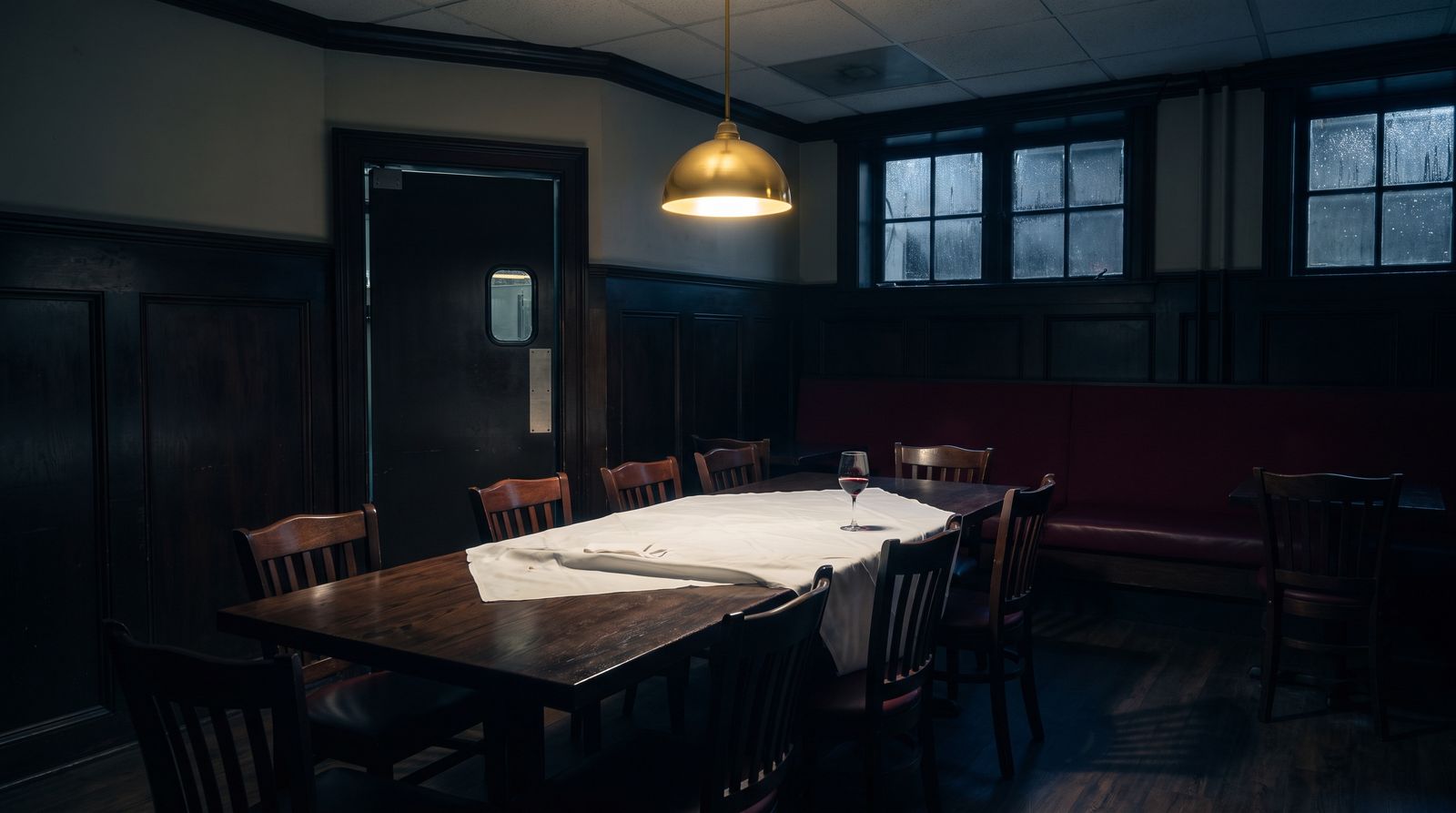
Rafael Ravelli was thirty-five years old and he had already started counting the lies a chapel could hold.
Saturday, 18 September 2027. Morning. Harbor House 412 had a window that faced the water and a Bible he had put in the drawer the night he checked in, which was how you unmade a vocation without making a speech about it. He shaved in a mirror that did not belong to a rectory. He put on a black suit that was not new and not rented. He did not put on a collar. The collar was in Fall River, hanging on a hook he had not taken with him, and if a cousin’s funeral wanted a saint it would have to invent one from a man who hung sheetrock for cash and still woke at five because some muscle memory died slower than faith.
Enzo had been forty-four and useful in the way of cousins who ran a card room and did not ask for a seat at Dante’s table. Official story: a heart. Rafael had left God in March. He had not left the habit of smelling a story that wanted to be a sacrament.
He had slept four hours and called it enough. Sheetrock paid in cash and wrecked the hands; a funeral asked the hands to look idle. He looked at them under the hotel tap. Callus. A nick from a utility knife in New Bedford last Tuesday. No ring. No rosary. He had left the beads in a drawer in Fall River with the collar, which was either symbolism or laziness, and he refused to decide which.
The Bible in the nightstand had a gilt stamp and a translation he had preached from. He had opened it once, at 1:14 a.m., to see if the verses still sat in his mouth. They sat. They did not mean. He had closed it and put it under the hotel stationery and then, because that was still a relationship, he had put it in the drawer and left the stationery on top like a weight. Harbor House 412 was a bed, a window, a gun in the duffel he had not taken to San Luca because a chapel with a gun was a different kind of lie. He left the gun. He took the suit.
He took the stairs instead of the elevator because elevators were boxes and he had spent too many years in boxes that smelled like wax. The lobby pretended it was only a Saturday in the Seaport. A concierge looked at the suit and did not ask. A television over the coffee station was doing weather, not death. Rafael walked out into a morning that had decided to be clear, which was a kind of insult, and took a cab he paid in cash because his last name on a card at a funeral was a paragraph he did not owe a driver.
The cabbie talked about the Sox and did not wait for answers. Rafael watched the city become the North End: brick, a bakery already working, a saint in a window that was not San Luca’s. He had grown up in these blocks and then he had grown a collar to get out of them, and then the collar had become a different block with the same last name in the mouth of every man who wanted a blessing on a route. Fall River had not been escape. It had been a quieter room for the same weather.
He tipped too much and got out a block early because walking the last of a funeral was a habit he had kept. Hanover already had a radius. Two photographers, far enough. A florist’s van. Gio’s car, which was not supposed to look like a captain’s and did. Rafael walked the last block with his hands empty and his mouth shut and the smell of lilies coming at him like a receipt.
San Luca’s nave smelled like lilies and floor wax, which was how the North End laundered a death. He stood in the vestibule long enough to inventory the doors: main, side, service, the one the priest used when he wanted to look like he had arrived from a quieter country. He had been ordained in a building that taught you doors before it taught you grace. He had been a boy in this one, twelve, cheating at scopa in a basement that smelled like oil and a different saint, Enzo’s laugh a low thing that did not need a table’s permission.
He went to the casket because not going was a costume.
Enzo looked like a man who had been about to deal and had been interrupted by a doctor. The cologne had been wiped off by people who thought the dead should smell like lilies. Rafael stood with his hands empty and did not invent a blessing. He looked at the mouth that had said don’t look at the cards and at the hands that had palmed one when Rafael was twelve, and he thought, without poetry, that a heart which stopped in a locked room did not get to look this tidy.
Matteo found him there. Thirty-two, a deposition in a suit, Roman a half-step behind like a knife that had learned how to stand in a nave. Matteo did not offer a hand. He offered a fact.
“You came for the lock,” Matteo said, low. “Don’t become a quote. If a notebook finds you, you are a last name she already has.”
“I’m here for Enzo.”
“Those can sit in the same pew.” Matteo’s mouth barely moved. “Roman says Miami likes hearts that stop on our streets. I say a visitor log that will not produce is a filing I cannot unmake in a chapel. Sit. Don’t bless it.”
Roman’s mouth ticked. “Print looks expensive. Silence looks like weather. I’ve done both. Weather is worse. Don’t make me say that twice before the hymn.”
Rafael did not bless it. He left the casket the way he had left Fall River: without asking permission. He sat in the second pew because the first belonged to the living don.
Dante was thirty-three now, married, a settled spine in a black suit that did not wrinkle for grief. Sienna’s hand was on his wrist, not decoration — a count, a stay. She had learned the family the way you learned a harbor: exits first, then the person. Chiara two seats down, twenty-nine, eyes on the side door the way other women watched the priest. Matteo and Roman in the aisle like a legal argument that had decided to stay married. Matteo’s face was a deposition that had not opened yet. Roman’s mouth did not joke. Nico a shadow, thirty, the kind of stillness that used to be a lot and was now a choice. Gio in the back, twenty-eight, street captain, jaw tight for a cousin who had taught him how to hold a cue stick and how not to ask for a seat.
Rafael had not worn the collar. He had hung it in a Fall River rectory in March and walked out with a duffel and a silence that followed him south on a bus that did not care what he had been. The family had called him the saint when he left. They had buried that word with Stefano last October, then used it again when they needed a man who looked like forgiveness in a photograph. He had not come home for photographs. He had come because Enzo had taught a twelve-year-old to pal a card and laugh about it, and because a heart that stopped in a locked room was a sentence, and Rafael was tired of blessing sentences he had not read.
He was not here to forgive Enzo’s heart.
Ciro Bellini stood near the service door, forty-six, helpful, glasses catching the stained glass as if loyalty were a trick of light. Rafael had been gone long enough to see it: the way Ciro’s mouth did grief like a man who had practiced in a mirror. Stefano had died on a terrace a year ago less two weeks. Official story: Miami. Rafael had not been in the room. He had been in a parish that asked him to pray for a don the way you prayed for weather. He had said the words. He had tasted the lie in them even then. Ciro had sent a card to Fall River that said with sympathy in a hand that wanted to be useful. Rafael had burned it in a sink that was not the church’s, because once was a costume and twice would have been a vocation.
The journalist was in the last pew on the left.
He did not know her name yet. He knew the notebook. He knew the way she did not perform sorrow for a family that had not invited her. Dark hair, a black coat that had seen other funerals, a face that belonged to a woman who asked questions for a living and did not apologize for the asking. Thirty-something. Not a girl. Not a tourist. She wrote something once, short, and did not look at the altar when the priest said rest.
Rafael’s hands were empty. They had been empty since the parish. He wanted, inconveniently, to know what she had written.
He had not been at Stefano’s funeral. Dante had not asked him to steal it. The family had called him the saint on a phone that he had let ring in a rectory kitchen, and then they had buried a don without a brother in a collar, which was the only honest thing about that day if the clips were right. Rafael had said a private office Mass for a man he was not sure he had loved and was sure he had feared, and then he had gone to a diner and eaten eggs that tasted like a transfer. He was here for Enzo. He was here because a second heart in a year was not weather. He was here because he had smelled Ciro’s card in March and burned it, and burning a card was not the same as reading a lock.
The priest was a man Rafael had served Mass with when he was seventeen and still thought a collar was a door out. The priest did not look at him. That was either kindness or a professional decision. The homily used heart the way the city used Miami: as weather, as a thing that happened to other people’s streets. A woman in the third pew cried in a way that photographed. A man in the fifth did not. Enzo’s sister from Revere held a tissue like a receipt. Rafael did not invent a later in which he comforted her. He had left the job where comfort was a costume.
He watched Ciro’s glasses. He watched Chiara’s attention on the side door. He watched the journalist’s pen, which did not move during the part about rest and moved once, small, when Ciro shifted his weight toward the service exit.
The nave held maybe two hundred if you counted the ones who had come to be seen. Rafael counted exits instead. Main. Side. Service. Choir loft, if you were a problem and not a mourner. He had learned naves the way Chiara learned books: as architecture that pretended to be theology. San Luca’s stained glass made Ciro’s lenses into a small colored crime. The lilies were too many. Floor wax under grief was a North End specialty. Someone had put a prayer card with Enzo’s face on the pew rail; the face looked like a man who had been about to deal. Rafael did not pick it up. Picking it up was a tell.
He thought about the card room on Salem. He had not been in it in a decade. He could still smell the smoke and the cheap saint in the window and Enzo’s cologne, which had always been too much on purpose. A doctor who signed what he was paid to sign. A lock. A visitor log. Official story: a heart. Rafael’s body, in a pew that had held him at twelve and seventeen and never at thirty-five until today, did not believe weather.
Dante did not turn. “You came,” he said, low, when the hymn started. “I told Gio not to expect it.”
“Enzo played cards with me when I was twelve.” Rafael watched the side door, then the last pew. “That’s older than your marriage. Don’t make it a homecoming.”
“It isn’t.” Dante’s mouth barely moved. “It’s a count. Miami likes hearts that stop on our streets. If you stay the week, you stay out of Chiara’s books and out of Nico’s lots. You left. You can keep the leaving.”
Sienna’s eyes flicked to Rafael, then to the back of the church, then back to the priest. She had seen the notebook too. Of course she had. She had seen more than that: the way Rafael’s attention had gone to the last pew and stayed there a beat too long for a brother who claimed he had only come for a cousin. Sienna did not waste a look. She filed it the way she filed docks.
“She’s Civic,” Sienna said, not quite to Dante, not quite to Rafael, a fact put on the pew like a glass. “June. After the Seaport body. She left a card. Chiara has it. We do not make a scene in a nave.”
“I’m not making a scene,” Rafael said. “I’m sitting.”
“You’re counting,” Sienna said. “That’s a different column.”
Chiara did not turn. She said, without moving her mouth much, “If she prints a lieutenant, we inherit a city that thinks it has a confession. If you talk to her, you are not a source. You are a last name she already has.”
Rafael said nothing. He had left two buildings by liking the truth more than the rooms that asked him to bless it. He was not going to start blessing Chiara’s fear in a pew.
The hymn was one he still knew in his throat. He stood when they stood. He did not kneel. Kneeling was for churches he still believed and executions he had refused. He said Amen because the room required it, and because some muscle memory died slower than faith. The word sat in his mouth like a coin he had stopped spending.
Nico stood without singing. Matteo’s mouth moved because lawyers knew how to look like a room. Roman did not. Chiara’s eyes never left the side door long enough to be a hymn. Sienna’s hand stayed on Dante’s wrist through the second verse. That marriage had been a war and then a choice; Rafael had read it in clips and in the way Dante’s suit did not wrinkle. He was glad of it in the way you were glad of a spine you were not required to be. He did not want Dante’s seat. He wanted a cousin’s lock read out loud. He wanted, inconveniently, the woman in the last pew to say his name when it was not a file.
He watched her stand. She stood like a person who had already chosen the column. The coat was good without being money. The hair was dark and had decided not to perform. When the congregation sat, she sat. When they stood, she stood. She did not kneel either. He filed that without making it a sign from a God he no longer worked for. It was a woman who did not give a nave more than it had earned.
The priest lifted the host. Rafael’s hands stayed empty. A year ago he would have known what to do with them. A year ago he would have been in Fall River saying a different man’s name over a different kind of bread. He watched Ciro’s mouth move through the responses as if loyalty were Latin. He watched the journalist’s notebook stay closed through the consecration, which was either courtesy or a trap, and open again when Ciro’s weight shifted a second time toward the service door.
Don’t look at the cards, Enzo had said. Look at the man who thinks he’s winning.
Rafael looked at Ciro.
Ciro looked helpful.
That was the tell.
Ciro shifted again. Helpful. The service door was a habit. Rafael filed the habit.
The journalist wrote a second time. Short. She still did not look at the altar. He wanted, without poetry, to know whether she was counting the same door.
Nico did not look at the last pew. Nico looked at Ciro, which was information if you had been gone long enough to see a brother look at a lieutenant like a lot he was not allowed to walk. Gio, in the back, had already seen the notebook. A journalist at a Ravelli funeral was a street with a pen.
When they filed out, she was already on the sidewalk with the wind and a pen.
The vestibule did the thing vestibules did: hands, names, a priest who said sorry for your loss to men who had not lost so much as rearranged. Ciro took hands. Ciro’s glasses caught the door light. Ciro said Enzo’s name like a man who had practiced it. Rafael did not take Ciro’s hand. He stood in the second pew until the first pew emptied, which was a kind of respect that was not a homecoming, and then he walked the side aisle because the main aisle was a photograph.
Dante stopped him at the side door with two fingers on a sleeve, not a grab. “If you stay the week, you stay out of the books. I meant it.”
“I heard you.”
“The Civic woman is not a hobby,” Dante said. “Sienna already said it. I’m saying it so you don’t get to invent a later in which I didn’t.”
“I’m not inventing a later.” Rafael watched the sidewalk through the glass. She was there, coat, wind, pen, a page that wanted to leave her hand. “I’m going outside. That’s a door. It’s allowed.”
Dante’s mouth barely moved. “You left. You can keep the leaving. If you pick up a notebook you become a paragraph. I don’t bury paragraphs. I bury cousins.”
“Then don’t bury this one as weather,” Rafael said, and went out into the light and the lie of a clear morning.
The air outside was cleaner than the nave and less honest. Hanover Street pretended it was only Saturday. A bakery two doors down was doing a line that did not care about a cousin. A kid on a scooter cut through the radius and a photographer swore without heat. The lilies had followed them out in people’s arms, a white that photographed like money if you let it. Someone was already smoking against the parish hall in a way that said the Mass had been a costume they had finished wearing. Rafael did not look at the cameras. He looked at the notebook first, which was respect, and at her face second, which was hunger he had not budgeted for at 10:40 in a suit that was not new.
He stood on the step long enough to let Gio have the first pass. That was street etiquette. It was also a chance to watch her answer. She did not step back. She did not step in. She held the pen still and gave Gio a column distinction — courtesy card, funeral, different desks — and Gio’s mouth ticked, and Gio did not move her. Rafael felt something land in his chest that was not grief. Interest. Worse. A want that had nothing to do with a lock and everything to do with a woman who would not chase a page the wind had taken.
Ciro came out the main doors then, glasses, helpful, a hand on a widow’s elbow that did not belong to him. He did not look at the journalist first. He looked at Rafael. A small nod. A saint-to-lieutenant courtesy that wanted to be a family. Rafael did not nod back. He watched Ciro’s eyes go to the notebook a beat later, inventory, and that was enough. The window was closing. Names were about to become a race.
He went down the steps.
She did not perform sorrow. She stood on the sidewalk and let the wind take a page and did not chase it. That was either competence or a woman who had already written the line she needed. He respected both.
Gio was already talking to her. Of course he was. Gio did streets. Rafael filed the conversation without hearing it: the card from June, the Civic, a funeral that was a different column. Gio did not move her. That was information.
Rafael thought, without poetry: She is going to be a problem.
He thought, with less honesty: I want to know her name before Ciro does.
He walked toward the notebook because the saint they had buried was already dead, and the man who was left had empty hands and a cousin who had not died of weather, and a woman on a sidewalk who had not looked at the altar when a priest said rest.
Ciro’s car was not yet moving. Ciro was still in the vestibule being helpful. Rafael had a window that was not stained glass. He intended to use it.
“If you print the heart,” he said, when he reached her, and the wind took the end of it toward the street, “print the room it stopped in.”
He had not introduced himself like a saint.
He had introduced himself like a man who had left two buildings and was done blessing weather.
Her pen stayed still. That was the first true thing the morning had given him that was not a lily.
Behind him, San Luca kept its lilies and its floor wax and its helpful man at a service door. Ahead of him, a journalist held a pen like a count. Rafael Ravelli was thirty-five, out of the collar, not out of the blood, and he had already started counting the lies a chapel could hold.
He had not yet started counting hers.
He would.
Coffee first. A name. The block, not the key. He could feel both in his wrists: the collar that was dead, the blood that was not.
The wind took another page. She did not chase it.
He thought that was the most honest thing he had seen since March.
Behind his teeth, the old liturgy tried to start a prayer and found no employer. He let it die. He had a sidewalk, a notebook, a cousin who had not died of weather, and a helpful man whose car had not yet rolled. He had empty hands and a last name he had not left on the hook with the collar.