Chapter one
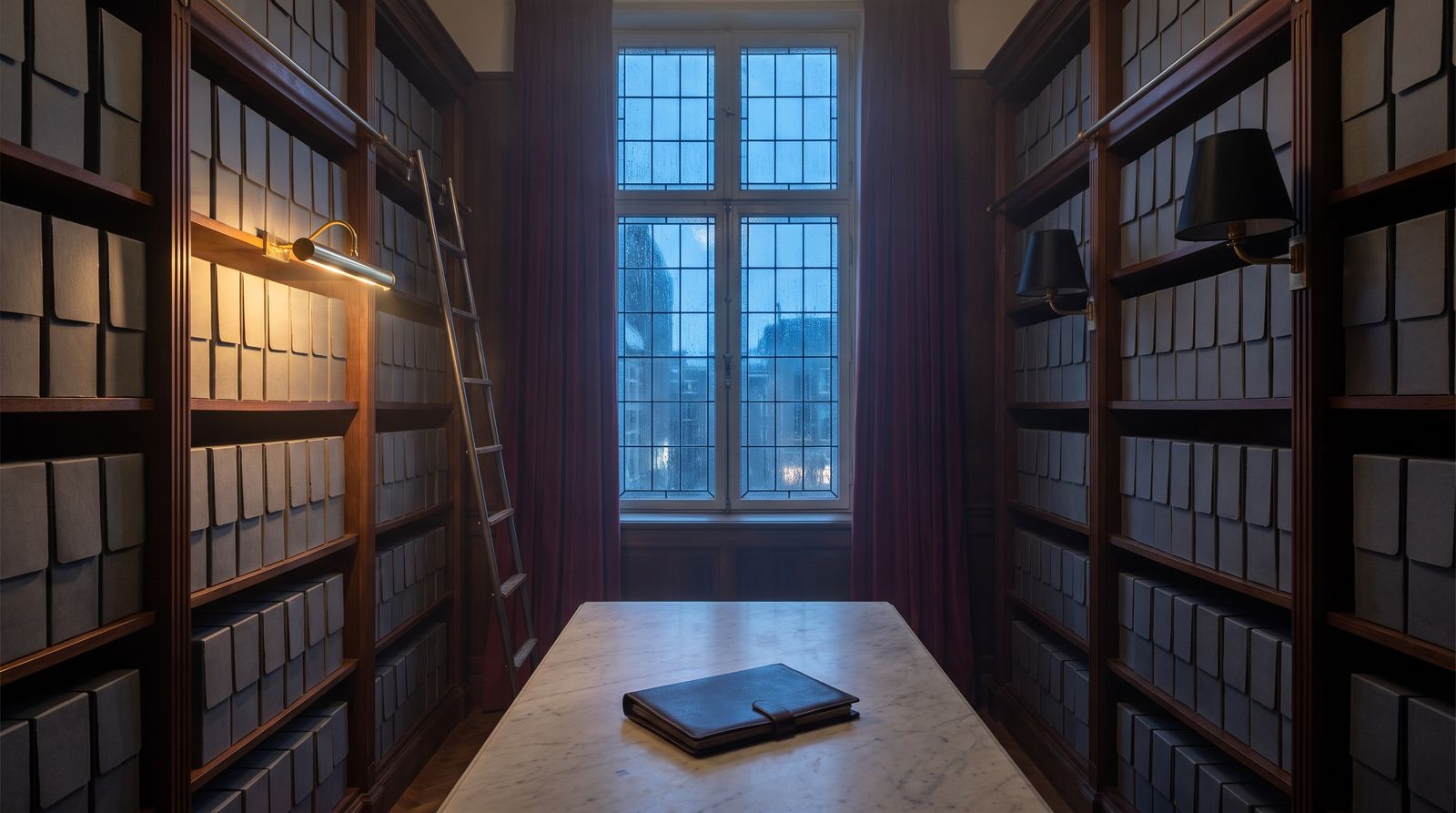
Eve Shaw was thirty-five and she had never lost a building she intended to keep.
The morning of 10 January 2028 began in a fourth-floor walk-up that was not a vault. Radiator. A lock that would have disappointed Seth Rowe. A window onto a court that collected other people’s laundry. Eve made coffee that tasted like a deadline and stood at the sink in a shirt that had not been chosen for a members’ club. She had three hours before the lobby. She used them the way she used a retainer: as a door, not a compliment.
Her office was a room she rented by the month in a building that did not perform gold. Desk. Two chairs. A plant that had not been trained to look accidental and was, frankly, dying. She watered it anyway. She sat. She opened the leftover file.
Camille Ortiz and Yasmin Reid’s list had gone out in November. Pages four through nine. The right damage. Eve had been in the Meridian lobby that night with a notebook, thirty-five already, and had told Camille she could work with the leak if the rest stayed unslaughtered. Conrad Wythe had stood in a doorway, forty-eight, and nodded at Camille as if a nod could be a continuance. The club had stayed open on thinner sins. January, he had said with his eyes, would be louder. January was louder. January was a handful of leftover names who believed ruin was a season and a publicist’s job was weather.
Ira Kenrick. Fifty-one. Counsel. Still filing as if Hollis Mather’s taste could be rehabilitated into a misunderstanding about provenance. Eve had his letters from December, three of them, each using history as if history were a membership benefit. She had his holding company in Jersey, a door that no longer opened. She had Tova Belden’s margin note: eats easily if you don’t pretty him.
Piers Alden. Forty-seven. A judge’s cousin, which in this city was a job description. He had called Eve’s office twice since Thanksgiving and used the word overcorrection. He liked lunches at clubs that wanted to be The Meridian and were not. He liked robes by proximity. He would want a whitewash that looked like a family matter.
Trent Holbeck. Fifty-nine. Collector. Still thought a river was an aesthetic. Still thought Hollis had been a man with an eye. He sent flowers. He used the word palate. He had bought a sky that was not Ansel Wren’s and had hung it as weather. Farah Dyer had named that river. Stefan Morel had named the buyers. Holbeck had not learned.
Reed Colvin. Reporter. Called the bar. Thought Hollis was a misunderstood collector. Thought the list was a lovers’ quarrel. Thought a sidewalk was a kind of honesty.
Eve wrote the four names on a clean page and did not write funeral next to any of them. She wrote letter, then lawyer, then charter. She wrote, smaller, or closing. She had told Conrad in November that she would write the sentence if the answer was no. She had not yet written the sentence. She had not yet taken the dollar. She had done the homework anyway, because she did homework or she did funerals.
Conrad had called her on the third of January. She had been in the rented office with the dying plant. He had not used a secretary. He had said Shaw as if he had already decided she was a sentence. He had said he wanted her to spin whether The Meridian deserved to stay open. If the answer was no, he wanted that sentence too. He would not pay her to lie. She had said she would come to the lobby on the tenth. She had said she did not sleep with clients for copy. He had said the work. She had hung up and written charter or closing on a clean page and underlined or. Tova had said, when Eve forwarded the note, he either means it or he is very good. You’ll know in the lobby.
Tova Belden arrived at nine with coffee that was better than Eve’s and a face that had already eaten breakfast in the form of a leftover motion. Tova was forty-four, counsel who did not perform orchids, the liaison who had already eaten better men than Kenrick in other buildings. She sat in the second chair and put her boots on the desk because the desk could take it.
“Wythe called again,” Tova said. “He wants you in the lobby at eleven. He wants a sentence about whether the place deserves to stay open. He says he will not pay you to lie. I told him I would not let you lie even if he paid. He liked that, which is either honest or a brand. You’ll find out.”
“I’ll find out in the lobby,” Eve said. “If he wants pretty, he can have a firm. If he wants exact, he can have me and a number that is not a discount. I don’t sleep with clients for copy. I don’t bury names that are crimes. I will write a charter or I will write a closing. He picks the work. Not my mouth.”
Tova’s mouth ticked. “Say the mouth part to him. Men who named vaults sometimes like to invent a younger woman to match the story they want. You’re thirty-five. Say it. Ages are adult. The gap is two careers. Don’t let him write a fairy tale in the copy I have to defend.”
“I don’t let anyone write my age but me.”
“Good. Fenwick House sent a period this morning. Nell Brennan. One dot. It means they’re not your sequel and they’re not your villain and they kept a company. Malcolm Fenwick is not going to walk into that lobby and make this a publisher’s problem. Don’t let Colvin hang them. Don’t let Kenrick hang them. Don’t invent a villain couple because the press likes a colophon.”
“I don’t invent villains,” Eve said. “I inherit them and I sentence them. Hollis is already sentenced. He’s ruined. He’s in a courtroom. He’s not dead. He’s not a romance. He’s a caution. The leftover names are the work. The building is the question.”
Tova put a folder on the desk. Ugly on purpose. “Draft packet. Ugly survives windows. Pretty gets framed and then used. I want caution seven times if Hollis’s counsel asks for a softening. I want no purge. I want revoked for a crate. I want staff not members. I want the service door to be a door and not a tour. The dead man was twenty-nine. Adult. The boy in the memoir title is a metaphor. If Colvin youth-codes a corpse I want a closing with his name on it.”
Eve read the ugly folder. She initialed nothing yet. Initialing was for a page that could survive a window, and she had not yet seen the building in daylight. Night lied. Daylight was ruder. She had seen The Meridian at night in November: amber glass, Camille’s jewelry, Yasmin’s leak, Conrad in a doorway. She needed the rude version.
Tova hung up. “Kenrick filed overnight. Tortious. History. Duty. I wrote history is not a membership benefit. I’ll send it when you take the dollar. If you don’t take the dollar, I’ll send it anyway, because I am tired of leftover lawyers.”
“I’ll take the dollar if the work is the work,” Eve said. “If he wants a whitewash I will walk. If he wants a funeral I will write it and I will not be pretty. If he wants a charter I will write thinner sins and I will make him sign an if.”
“An if.”
“His name on the awning if he signs the thinner sins. I like a word that can close a building.”
Tova stood. “Eleven. Lobby. Don’t water their orchids. Don’t touch the rail as if it were a wrist. You’re a publicist. You know the difference between a story and a bed. Don’t let the building make them the same paragraph on the first morning.”
“I know the difference.”
“I know you know. Knowing is easy in this office. Knowing is harder in a stairwell that smells like lemon oil. I’ve been in that stairwell. I ate a better man than Kenrick in a different year and I still remember the brass. Go. Be thirty-five. Be exact.”
Eve put on the coat that cost less than the members’ and more than honesty. She put the notebook in the pocket. She left the dying plant a second drink of water. She took the 6 train two stops too far on purpose, because arriving from the wrong direction made her look at the awning as a stranger, and strangers were ruder than clients. The car was a January car: coats, a student sleeping, a man reading a Fenwick House paperback that was not a plot. She did not lean over to see the title. She held the notebook and did not write his mouth. She got off two stops late and walked back into a wind that had not decided to snow, and she stood under the gold long enough to read it as a stranger. THE MERIDIAN. No surname. A line of longitude someone had decided to charge admission for.
The Meridian’s lobby in January 2028 smelled like orchids and a leak. Not water. Paper. The particular sweet-rot of names that had been useful too long and then useful in the wrong direction. Camille Ortiz and Yasmin Reid’s list had done the right damage in November. The leftover names—lawyers, a judge’s cousin, a man who still thought Hollis Mather was a taste—wanted a funeral or a whitewash. Eve did not do funerals for rooms that could still hold a charter.
Eve opened her notebook on the marble ledge beside a pot of white orchids that had been trained to look accidental. She had three columns. Crime. Only rich. Undecided. The first column was short now. Camille and Yasmin had taken a blade to pages four through nine and left the only-rich drinking as if they had always been clean. What remained was a handful of men who believed ruin was a season and a publicist’s job was weather.
Eve did not write funeral next to any of them. She wrote letter, then lawyer, then a third word she had not decided whether to keep: charter.
A man in a dark coat came down the stairs as if the stairs belonged to him, which they did.
Forty-eight. The man who had named the club. Twenty years of vault and whiskey and a drawer that had been furniture until it was a weapon. He looked at her the way a client looked at a fire they had decided to hire: not panic, not romance, the particular attention of a person who had already done the math on what burning would cost and had not liked the number.
“You’re Shaw,” he said. No handshake. The lobby did not encourage hands. “You spun the gallery window. You spun Fenwick House’s winter. I want you to spin whether this place deserves to stay open. If the answer is no, I want that sentence too. I will not pay you to lie to me.”
Eve’s pulse moved. She filed it. She had a system for pulses. Client. Threat. Bed. The first two were invoiceable. The third she did not put on paper until someone asked in a room that could survive the asking.
“I’m thirty-five,” she said. She said the number because men who named vaults sometimes liked to invent a younger woman to match the story they wanted. “I don’t sleep with clients for copy. I don’t bury names that are crimes. I will write a charter that keeps the doors open on thinner sins, or I will write the closing. You pick the work. Not my mouth.”
Conrad’s gaze held. Not a museum. A career looking at a career. Gray at the temple that he had not dyed, which in this neighborhood was either honesty or a brand. A mouth that had learned to say no to members and had, for too many years, said later to the wrong drawer. He was tall in the way expensive rooms preferred: not a threat until he decided to be one. He did not smile. She respected that. Smiles in lobbies were a kind of lie.
“The work,” he said. “Office. Now. The last ledger is a handful of people who think Hollis’s ruin was a season. It wasn’t. We finish them on paper. Then we decide if my name stays on the awning.”
“Your name isn’t on the awning,” Eve said.
“It is in the city,” Conrad said. “Same problem.”
She closed the notebook. The orchids kept performing. Somewhere above them a vacuum started and stopped, a cleaner on another floor learning that morning in a club was a rumor. Eve followed him upstairs. She did not touch the rail as if it were his wrist. She was a publicist. She knew the difference between a story and a bed. She also knew, already, that this building was going to try to make them the same paragraph.
The stairwell smelled like lemon oil and old smoke that policy had not quite evicted. Brass rods on the runner. A landing window that looked onto an airshaft and a slice of January that had not decided whether to snow. Conrad did not look back to see if she was keeping up. She kept up. Thirty-five. Two decades of other people’s disasters. She did not spin beds. She had a rule about that, written in the same ink she used for retainers: the mouth is not a deliverable.
The locked floor was thinner than the rumor.
She had expected a vault from the files: brushed steel, a number that was a joke about a year, the kind of door Bram Ortega used to stand beside as if standing were a verb you could retire into. What she got was a short corridor, two rooms, a window that had been filmed for privacy and then half-peeled, and a drawer in a cabinet that had been left open on purpose.
Empty.
No graves. No lists. No photographs face-down. Camille and Yasmin had used the last ledger. What remained was furniture that remembered being a weapon and a man who had let it.
“November,” Conrad said, as if she had asked. “They took pages four through nine and left me a building that still had members and no longer had a spine villain’s toy. I did not stop them. I also did not help them fast enough. That is the sentence you may use if you decide I am the problem.”
Eve stood over the drawer. She did not put her hand in. Hands in empty drawers were a photograph waiting for a leftover lawyer.
“You’re not the problem I was hired to bury,” she said. “You’re the problem I was hired to sentence. Different job.”
“Good.”
He closed the drawer with two fingers. The sound was ordinary. Ordinary was the point. He led her through a second door into an office that sat above the club the way a conscience sat above a habit: close, paid for, not always in use.
Desk. Blotter. A lamp that had outlived three kinds of sin. A window onto the avenue that sold Midtown as a decision. No photographs of people. A single print of a coastline that was not a river and was not a lie, as far as she could tell. Whiskey that had not been poured. Two chairs that had been placed as if he expected a fight and hoped for a contract.
Eve took the chair that was not his. She crossed her legs because the chair invited it and because she was not going to pretend her body was a rumor. Notebook open. Pen that could ruin him. She had ruined better rooms with worse pens.
“Walk me through the leftover names,” she said. “I have three. If you have a fourth, now is the time. I don’t like surprises that arrive as microphones.”
Conrad sat. He did not loosen a cuff. He was the kind of man who dressed for a funeral and a board meeting with the same tie and let the room decide which it was.
“Kenrick,” he said. “He still sends invoices to a holding company that used to wash Hollis’s quiet. The holding company is a name on a door in Jersey that no longer opens. Kenrick has not updated his software.”
“Alden.”
“Piers likes to lunch with men who still have robes. His cousin sat on a bench that signed a search we should have had in 2009 and did not get until last year. Piers thinks the cousin’s embarrassment is a family matter. It is a public one.”
“Holbeck.”
Conrad’s mouth did something that was not a smile. “Trent bought weather. He bought a sky that was not Wren’s. He bought the story that Hollis had an eye. He is the reason I used the word taste when I should have used the word fence. He will want a whitewash. He will call it context.”
Eve wrote context and put a line through it.
“Anyone else.”
“A reporter named Reed Colvin has been calling the bar. He thinks Hollis is a misunderstood collector. He thinks the list was a lovers’ quarrel. He thinks I am a man who will give him a quote if he stands on the sidewalk long enough.”
“I’ll take Colvin,” Eve said. “You don’t speak to sidewalks. You stand in the doorway if I tell you to and you look like a building that has decided to live. You do not look like a rescue. You do not look like a date.”
“I can do that.”
“Bram.”
“Keeps the door if he wants it. I asked in December. He said he was not a trophy and he was not a ghost. He would stay if the charter was thinner and Felix never walked in as a story. I said yes to both before I hired you. You may put it in writing.”
Eve’s pen moved. She liked men who pre-answered the decent questions. She liked it in a way that was not invoiceable.
“Fenwick House,” she said, because the city would ask. “Malcolm and Nell.”
“They are not the problem,” Conrad said, and there was no performance in it. “They kept a company and a true version. They sent me a period in November and another last week. I am not going to invent a villain couple because the press likes a publisher. They stay together. They keep Fenwick House. If you need a quote from them it will be a period. Do not make them a sequel.”
“I don’t write sequels for finished people,” Eve said. “I write closings for rooms that earn them.”
Silence. Downstairs, someone dropped a crate that was only liquor. The sound traveled up the stairwell and died against the filmed window. Eve watched Conrad hear it and not flinch. Twenty years. He had heard worse crates.
“Why me,” she said. “You could have hired a firm with a floor and a slogan. You hired a woman with a walk-up and a notebook.”
“The firms wanted to rebrand the orchids,” Conrad said. “You spun a window without asking the glass to be innocent. You spun a publishing house without asking the CEO to be a saint. I need someone who can look at twenty years and tell me which years were a club and which years were a grave. I am forty-eight. I am not interested in being young in the copy. I am interested in being exact.”
Eve’s pulse moved again. She filed it under threat because bed was not a column she was opening on a first morning.
“Exact I can do,” she said. “Pretty I won’t. If you want pretty, hire the firm. If you want a charter that can survive a window, you get me and you get the sentence I write when I leave this room. You also get my hours. I don’t live here. I don’t drink with members. I don’t take a key unless I ask for one, and I have not asked.”
“Understood.”
She looked at his mouth. She did not pretend she hadn’t. Thirty-five was too old to perform innocence at a desk. He looked back as if looking were a contract clause. The want in the stairwell had followed them in and sat on the blotter like a third document.
“Show me the club in daylight,” Eve said. “I don’t write rooms I have only seen at night. Night lies. Daylight is ruder.”
He stood. He did not offer a hand. She did not want one. They went back down the stairs, past the empty drawer, into the main room that the city still called a vault when it wanted to be cheap.
Daylight in The Meridian was a trick of amber glass and a skylight someone had paid to make look older than the hotel underneath. The bar was mahogany that had been oiled by hands that knew how to disappear. Stools that did not wobble. A floor that had been designed to swallow heels. No chute visible. The chute had been a path, not a piece of furniture: crates through a service door, provenance in a smile, Gareth Lennox’s kind of paper. Soren had killed that path in September. What remained was a room that could still hold whiskey and worse if no one wrote a rule.
Eve walked the perimeter with the notebook open. She wrote revoke for a crate. She wrote no silent partners. She wrote no lists in drawers. She wrote Hollis as caution, not myth. She did not write Conrad’s mouth.
A woman in a black shirt was polishing glasses that were already clean. Ellis Dreher, if the file was right: fifty, been here eleven years, had never been on a list because she poured and did not buy. Ellis looked at Eve the way staff looked at a publicist—as a weather system—and went back to the glass.
“She stays,” Eve said.
“She stays,” Conrad said. “She has a better memory than my lawyers.”
“Then she gets a clause. Staff are not members. Staff cannot be leaned on for a name. If a leftover sends a reporter to the bar, Ellis says charter and points at the door. She does not say no comment. No comment is a hole.”
Conrad nodded once. He had the gift of treating a woman’s sentence as a revision, not a performance.
They stood in the center of the room. January came through the skylight as a thin, expensive cold. Eve could see the shape of the night even empty: money in chairs, a piano that was not being brave, the particular quiet of people who believed privacy was a membership benefit. She could also see the shape of a funeral: crime tape in the copy, a padlock on the gold, a paragraph about a vault that had learned to be a grave and then been put down like a dog.
She did not want the funeral. She wanted to want it less than she did. That was the job. Wanting a building to live was not the same as lying for it. She had lost that distinction once, at twenty-nine, for a hospital that had asked her to call a pattern an outlier. She had written the outlier. Two more nurses had paid for it. She had not done funerals for her own sleep since. She did closings, or she did charters. She did not do pretty.
“If I decide it should close,” she said, “I will write it so the only-rich can find another bar and the leftover names cannot find a sequel. I will not write it to save your face. I will write it to end a network. You said you would not pay me to lie. I am holding you to that before I take a dollar.”
“Take the dollar,” Conrad said. “Then hold me to it. I have been held to worse.”
She named a number. It was not pretty and it was not a discount. He did not haggle. He had the look of a man who understood that haggling with a publicist was how you ended up in a story you did not own. The retainer said charter or closing and the mouth is not a deliverable and if you become a lie I write the closing. He initialed the last line before she did. She liked him for that in a way that was not invoiceable.
“Wire by noon,” she said. “I start when it clears. Until then I am a woman in a lobby with a notebook, and you are a man who named a room. We are not colleagues. We are not a paragraph.”
“We are a building,” he said. “That is already too much.”
Eve almost smiled. She did not give him the smile. Smiles were a kind of yes she had not said.
She walked the service corridor because daylight was ruder there too. Linoleum. A smell of bleach and citrus. The door Eliot Ward had been walked through in 2008 was still a door. It had a new lock. It had a sign that said STAFF. It did not have a plaque. Eve did not need a plaque. She wrote service door: stays, no romance, no tour. The dead man had been twenty-nine and an adult. The boy in the memoir title had been a metaphor. She would not let a leftover reporter youth-code a corpse to make Hollis look complicated.
Conrad waited at the end of the corridor without crowding her. Forty-eight. Two careers’ worth of distance in the way he held his hands—loose, empty, a man who had learned that empty hands photographed better than explanations.
“Office,” he said again, quieter. “If you want the last ledger on paper, we do it where the blotter is. I am tired of deciding this building in hallways.”
Eve followed him back up.
The want in the stairwell was not empty at all. It lived in the lemon oil and the brass and the fact that he had said if the answer is no, I want that sentence too. She had been hired by men who wanted a yes they could frame. She had been hired by women who wanted a no they could leak. She had not, in a long time, been hired by someone who wanted the true sentence even if it took the gold off his own awning.
She did not touch the rail.
In the office she laid out the week as if the week were a press packet. Morning: charter draft. Afternoon: leftover letters, Tova Belden on the legal side—Tova had already eaten better men than Kenrick and did not require a speech about taste. Four o’clock tomorrow, if Colvin kept his pattern, a sidewalk. Night: she went home to a walk-up that was not a vault and he stayed above his club like a man who had built a habit and was trying to turn it into a rule.
“I go home,” she said. “That is not a negotiation. If you stand behind my chair tonight, you say go home, Eve, and you mean it. I have not asked.”
Conrad’s gaze flicked to the chair, then to her mouth, then back to the work as if the work could save them.
“I can say it,” he said. “I can mean the building.”
“Mean the building,” Eve said. “The rest is a different invoice. I have not opened it.”
She stood. The orchids downstairs would not comment. The avenue would not comment. January would try to snow and fail, probably, because this city liked to threaten weather it did not deliver. Eve Shaw, publicist, thirty-five, notebook closed on three leftover names and a charter that did not yet exist, looked at the man who had named The Meridian and did not tell him that her pulse had a fourth column.
She followed him to the desk because the work was the work.
She did not sit on the blotter.
She sat in the chair, uncapped the pen, and began the only sentence she was willing to sell on a first morning: whether a vault that had learned to be a grave deserved to stay open on thinner, cleaner sins.
The building waited. Conrad Wythe waited. Eve wrote the date at the top of a clean page—10 January 2028—and did not write his mouth beside it.