Chapter one
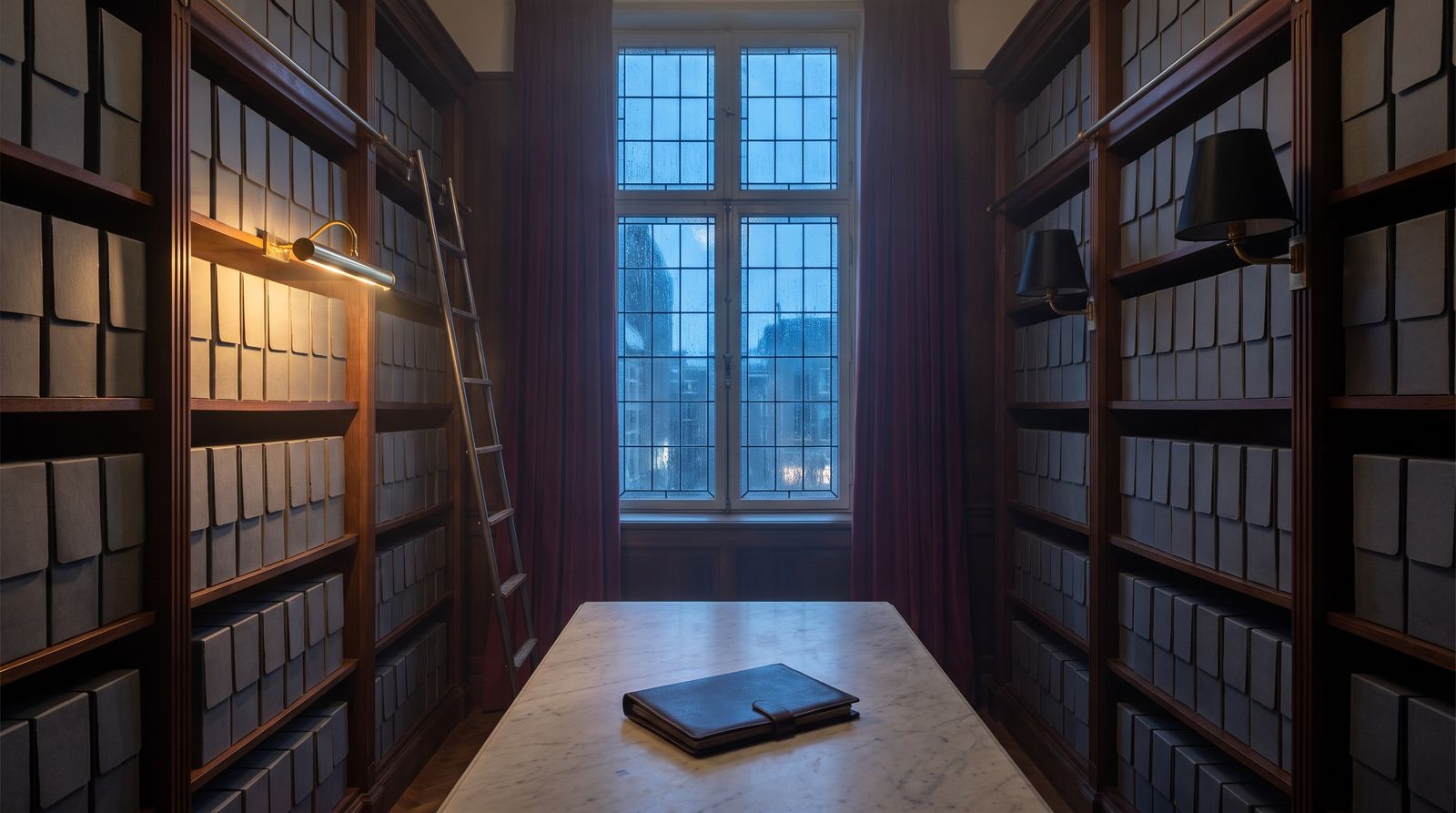
Felix Mora was twenty-nine years old and he had already published one book under a name that could not be traced to a pulse.
The spine in Fenwick House’s January catalogue had said something elegant and false. Reviewers had called the voice exact and unforgiving and, once, a man who had waited to use names. They had been half right. The names in volume one had been true enough to sting and clean enough that staff kept their jobs. Nell Brennan’s fingerprints were all over that cleanliness. Malcolm Fenwick’s name had been in it. Hollis Mather’s name had been a shadow in the margin, a collector who lent canvases and bought weather.
Volume two did not like margins.
The second manuscript sat in the hotel safe like a tooth. Cream paper. A courier’s seal Felix had not ordered. No return. He had found it at four in the afternoon, after a desk clerk with a practiced smile handed him a padded envelope and said this arrived for the name on the reservation, which was his real one, which was already a mistake. He had brought it upstairs. He had opened the safe because Nell’s letter — the one that had pulled him out of a Brooklyn walk-up he barely used and onto a train into Midtown — had said if a second copy finds you, do not open it alone.
He had opened it alone. That was the kind of man he was: curious first, breathing second.
The first line was not a hook. It was a date.
March 2008. The man who died was twenty-nine. Someone held the door.
Felix sat on the suite carpet in his socks and read until his hands went cold.
He knew the sentence. He had written a cousin of it for volume one and watched Nell cut the cousin into something a house could stand. This was not a cousin. This was the rest. It named a painter — Eliot Ward, twenty-nine, last seen leaving a members’ club above a Midtown hotel that sold itself as older than its money. It named a vault on the club’s private floor, brushed steel, a number that was a joke about the year. It named the boy who held the door as a metaphor an adult had used, bitter, the way a memoirist used a knife of irony and then had to live with the blade. The copyright page of volume one had already warned readers: if you are looking for a child, close this and go home. The dead man had been an adult. The metaphor was a door. Volume two kept both facts and then it named the man who had profited.
Hollis Mather. Already a collector when Felix was still learning how to lie on a title page. Already in the habit of buying silence the way other men bought wine. Already, in 2008, standing close enough to a death to take a canvas home and call the provenance unfinished.
Felix was twenty-nine. The dead man in 2008 had been twenty-nine. The coincidence felt like a hand on the back of his neck.
He read the next twenty pages because stopping would have been a kind of prayer and he did not pray. He read about the vault’s hours. He read about a photograph kept face-down in a box. He read a sentence about Fenwick House that Nell had not been given in January, a sentence that said the company had been built on a corridor and a membership card and a morning Malcolm Fenwick had asked whether the club would still honor him. Volume one had used that. Volume two used what came after: who got paid, who got a painting, who got to keep breathing in a city that filed the death under accident and went to lunch.
Felix set the pages down. He did not put them back in the safe yet. He sat with his back against the bed frame and listened to the hotel do what expensive hotels did: pretend the hallway was empty, pretend the ice machine was the loudest danger, pretend Midtown was only lights.
His phone buzzed. Unknown.
Stay quiet. A man is coming. He is not your friend.
Felix put the phone face-down. He did not call the police. Memoirists who named vaults did not get to be citizens. He poured whiskey he would not finish — the bottle had been in the suite when he checked in, a courtesy that felt like a bribe — and stood at the window of a hotel that cost more than his last advance, watching the avenue pretend it was a river.
He had come to New York because Nell’s letter said the second copy would find him and because staying in Brooklyn had started to feel like hiding in a draft. The walk-up still had his name on a lease he paid so the mailbox would have an address. He rode trains to the last stop when he could not sleep. He published under a ghost because a pulse attached to a memoir like volume one became a target, and he had liked, for a little while, being only sentences.
The letter had arrived three days after volume one shipped. Late February into the first raw days of March. Nell Brennan’s handwriting on a Fenwick House card, no flourish, the kind of note editors wrote when they were done pretending paper was safe.
Felix — a second copy will try to find you. If it does, do not open it alone. Do not give it to Legal first. You do not have to be the second body in this story. I am twenty-nine and I am telling you this as the woman who already cleaned one version. Come in if you need a room that is not a draft. — Brennan
He had come in. He had taken a reservation under his real name because the ghost name was already in too many reviews and because he was tired of lying to desk clerks. That had been vanity dressed as honesty. The courier had used the vanity.
Volume one had shipped. Delia Marsh had called it a door that finally stayed open. Hollis’s lawyer had wanted it pulled. Malcolm had written no in a margin and kept a company. Eve Shaw’s sixty words had named Eliot Ward and a death that had been called an accident and a collector who lent canvases. Felix had watched all of that from a distance that was supposed to be safety and had felt, instead, the particular loneliness of a man whose worst work had gone out into the world wearing someone else’s spine.
He had not been in the Fenwick House closet when Nell opened the first envelope. He had been the leftover pulse: a catalogue name she had seen and never met, a source who knew which door was left. The second manuscript had been addressed to him before it had been addressed to anyone. Nell had not opened the rest in Malcolm’s kitchen. She had found him. She had written the card. She had not said bring a gun. She had said do not open it alone.
Then the courier. Then the safe. Then the date.
Felix had checked into the hotel that morning with a bag that held two shirts, a charger, and the kind of notebook he used when he was pretending he still wrote things that were not evidence. The suite was too large for one man who lived in a walk-up. White bedding. Art that had never risked an opinion. A minibar that assumed he was the sort of person who needed tiny vodkas to feel expensive. He had stood in the doorway of the bathroom and thought, unkindly, that Eliot Ward had left a club above a hotel like this and not come back as a person.
He had gone downstairs for coffee he did not want. He had come back up. The clerk had called after him with the envelope. He had signed for it with a hand that looked, to him, like someone else’s.
Now it was evening. March 2027 trying to be spring and failing in the glass. The unknown text sat face-down. The safe held cream paper that named a vault he had only described from other people’s mouths and a profit he had only implied. Volume two did not imply. Volume two pointed.
Felix walked the suite once, measuring it the way he measured cells in other men’s stories. King bed. Desk. Chair that wanted to be sculpture. Safe in the closet behind a mirror that made him look like a guest. He was a guest. He was also the plot.
He thought about calling Nell. He thought about the period at the end of her name and how she would answer on the first ring and how Malcolm Fenwick would be in the room, forty-four, settled, a company on new terms, and how bringing them in before he finished the pages would make him a boy asking adults to hold a door. He was twenty-nine. The dead man had been twenty-nine. He was not going to be the metaphor.
He thought about calling the number that had texted him. Stay quiet. A man is coming. He did not. Unknown numbers that knew a suite were not friends, and friends did not lead with quiet.
He thought about leaving. Walking out with the manuscript in his coat, taking a train to the last stop, becoming a man who had not opened a door. He put his shoes on. He took them off. He left the manuscript in the safe because running with paper was how people got cute and dead, and he had written that sentence about other men.
The whiskey sat unfinished. He picked it up again and did not drink. He set it down. His hands were still cold.
In the pages he had already read, there was a paragraph about a vault box with no name, only a number, and a photograph kept face-down so that the dead man would not become a trophy. Felix had written trophies before. He had cut them when Nell told him to. Volume two kept the photograph unturned and still managed to make Hollis Mather’s fountain pen feel like a weapon. Annotations. A lawyer’s fear. Notes in a hand that had never been used for anything honest.
Felix had not finished the manuscript. He had read enough to know why a man was coming. He had read enough to know that quiet meant alive if you are useful, gone if you are not.
He put his palm on the closet door. The safe was a blunt object behind cheap hotel wood. Cream paper. A courier’s seal. The rest of a death Fenwick House had only half-buried.
“All right,” he said to the empty suite, because talking to paper was a professional hazard and he was already in it. “You found me. Now someone else gets a turn.”
He drank a sip of the whiskey and set the glass on the sill. His reflection looked like a person who had slept on trains. Dark hair that needed a cut. A mouth that had been used for lying on paper. Twenty-nine, already famous in a small vicious way, already tired of being a file.
Nell had written, in the letter, you do not have to be the second body in this story. She had also written do not open it alone. She had signed it the way editors signed things that could bleed: with a last name and a period.
Felix had opened it alone anyway. He could hear her voice in his head, sharp, twenty-nine still, telling him that curiosity was not a personality. He agreed. He kept reading with his eyes closed, which was a stupid trick and did not work. The pages were still there when he looked.
He put the manuscript in the safe. He turned the dial. He wiped his hands on his trousers as if cream paper left a residue. The whiskey sat unfinished. The unknown text sat face-down. The city arranged itself in the glass and did not offer a second life.
He sat at the desk that wanted to be sculpture and opened his notebook, the one he used when he was pretending he still wrote things that were not evidence. He wrote March 2008 and then he crossed it out. He wrote Hollis Mather and left it. He wrote vault and photograph face-down and do not youth-code the dead. He wrote Nell said alone is how you become a body and then he wrote I am twenty-nine and I opened it anyway. The notebook did not forgive him. Notebooks never did. That was why he liked them.
He thought about the ghost byline — the elegant false spine, the reviews that had called him exact — and about the catalogue page Nell had seen with his real name on it, a Fenwick House author she had never met. He had liked that distance. Distance was a kind of condom. The courier had torn it. The reservation name had torn it. The text had torn it. A man was coming who was not his friend.
Felix stood and walked the suite again. He checked the peephole. Empty hallway. Ice machine somewhere, performing danger. He put his ear to the door like a man in a worse book and heard nothing. He went back to the window. Midtown did its lights. Somewhere above him, if the hotel was the one he thought it was, the Meridian sold membership to men who believed rules were for the lobby. Volume two had named that floor. Volume one had named it cleaner. Felix had been in neither room. He had been the leftover pulse. He was tired of being leftover. He was also tired of being a pulse that other people scheduled.
His phone buzzed again. Same unknown.
He will put a gun on the table. That does not make him yours.
Felix laughed, a cracked sound, and put the phone face-down again. He did not answer. Answering was how you became a character in someone else’s containment. He poured the whiskey out an inch, then stopped, because wasting liquor in a suite this expensive felt like a personality he did not have. He left the glass on the sill. He put his shoes by the door, then took them back to the closet, then left them by the door. He was twenty-nine and he was stalling. Stalling was a kind of prayer and he did not pray.
A knock. Not housekeeper. Two raps, then a pause that had been trained.
Felix left the manuscript in the safe. He put the whiskey down. He crossed the suite in his socks and stopped with his hand on the latch, because the text had been right about one thing: a man was coming. The text had been wrong about the part Felix could control. He opened the door anyway.
The man filled the frame like a decision.
Not a cheap suit. Not a lawyer. A coat that had been chosen to hide a holster and a face that had not been chosen to hide anything. Gray at the temple. A mouth that had not smiled in years. Hands that had stopped things. Thirty-eight, if Felix had to bet, and he was a man who bet on ages because ages were the one fact a memoir could not revise.
“Bram Ortega,” the man said. “Meridian security. You’re going to let me in, or I am going to stand here until someone with a worse job arrives.”
Felix looked at the gun under the coat. He looked at the doorway the way he looked at a first sentence: for the lie, then for the true part. The true part was that this man had stood in other doorways. Felix had heard the name once, in a hallway rumor after volume one shipped — Bram still stands in doorways, Hollis had said to someone, useful man, limited imagination — and Felix had filed it as color. Color was now filling his doorframe.
“If you’re here to keep me quiet,” Felix said, “you’re late. I already read it.”
Bram Ortega’s eyes went to the room behind him: the unfinished whiskey, the safe, the socks, the window. He did not look surprised. He looked like a man who had already watched the room for longer than a knock.
“I’m not here for the book,” Bram Ortega said. “I’m here for you. That’s worse.”
Felix should have shut the door. He should have called Nell. He should have been the kind of principal who asked for a badge and a lawyer and a different hotel. He stood in his socks and felt the want arrive in the same breath as the fear, which was unprofessional of his body and exactly on-brand for his life.
“Then you’d better come in,” Felix said. “If you’re going to be worse, I want it on this side of the latch.”
Bram came in. He closed the door with his heel. The suite got smaller in a way that had nothing to do with square footage and everything to do with a man who ran a club’s doors for a living and had just decided this one was his.
Felix backed up far enough to be polite and not far enough to be safe. He was twenty-nine, already published under a name that could not be traced to a pulse, and the pulse was standing in a Midtown suite with a gun under a coat, waiting to be contained.
He did not feel contained.
He felt seen, which was worse, and he had opened the door himself.