Chapter one
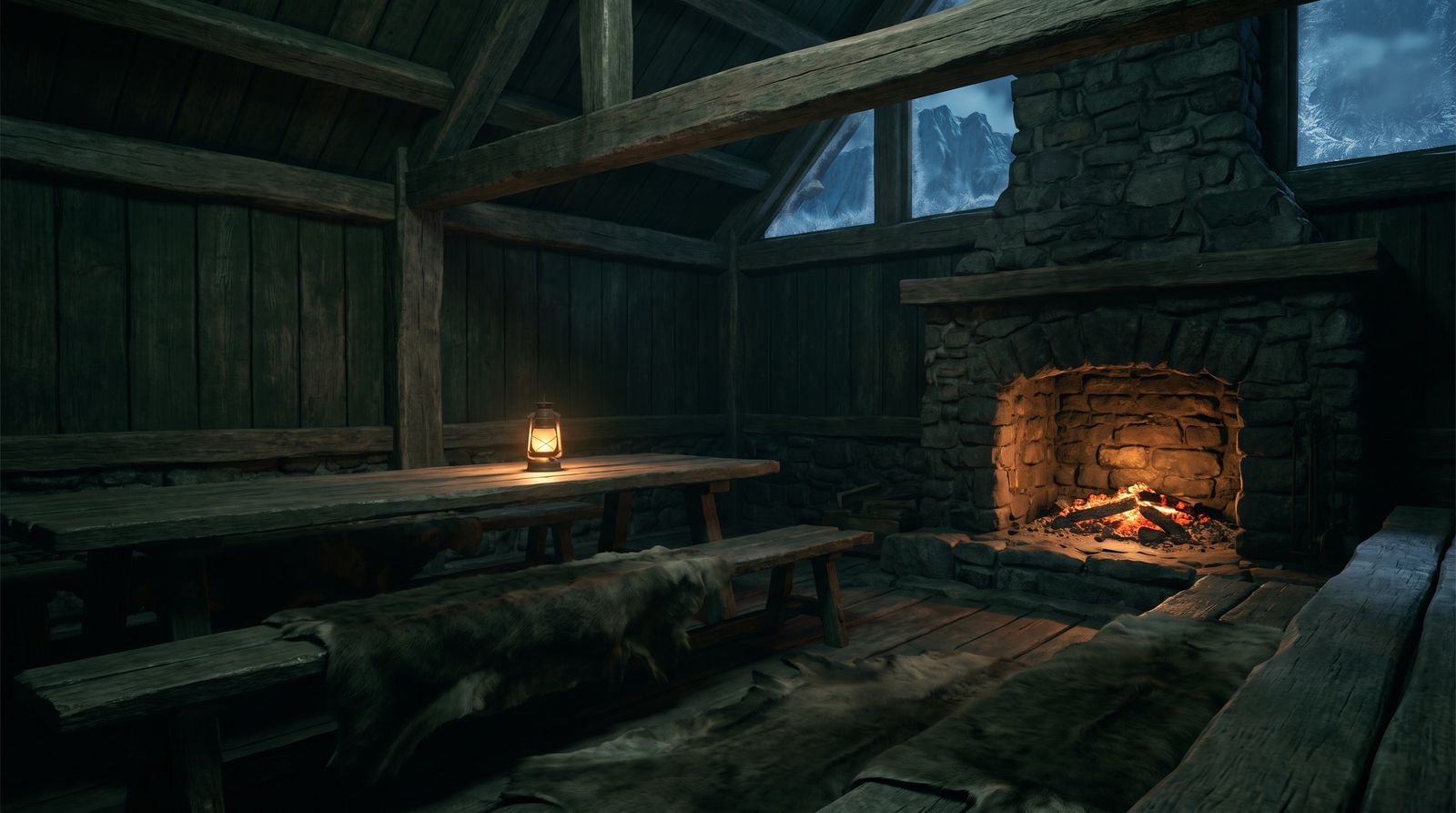
Wes was twenty-eight and already in the den body when Joss put the list on the stone table.
Early winter sat on Ashfall like a second skin. The Long Frost autumn had closed with a remating and a cell that held Mara, and none of that had taken Wes’s name off the paper. Hunters did not care that the alpha had eaten crow. Hunters cared about throats.
He had woken before the first pale strip of light found the den mouth. That was habit, not virtue. Betas who slept late missed the smell of a problem while it was still a problem and not a body. He had stretched in the nest he kept in the barracks loft—spare, honest, a pile of blankets that held his own pelt-scent and nobody else’s—and he had not shifted down. Human form was a tool. The den body was where he lived when the walls were pack: upright, speaking, hands that could hold a radio and a throat in the same hour, ears up, tail a line of balance and mood.
Smoke-dark pelt on his shoulders. Gold-brown eyes that had never learned to pass. A rumble he did not bother to swallow even for coffee.
The loft smelled of wet wool and last night’s stove and the faint iron of a knife he had oiled before sleep. Below, the barracks ticked with other early bodies. Niall’s bunk was already empty; the scout did not believe in mornings that started indoors. Gwen’s kit-room door was shut. Someone in the far bay snored like a man who had not been on a list.
Wes had been on a list since the autumn the hunters learned to write.
Last autumn he had stood in a different room and said burn it while Joss wanted paper, and the paper had come, and Mara had gone to a cell, and Wes’s name had stayed on the sheet like a joke that did not know it was a joke. He had watched Tamsin Greer walk back into a den with teeth. He had watched Joss eat crow in public and then in private and then at dawn. He had been glad, in the specific way a beta was glad when an alpha stopped bleeding on everyone else. He had not been soothed. Soothed would have meant the list got shorter. The list had gotten a header and a cleaner copy and two more seasons of Wicks’ men learning how to count trucks.
He had wanted fire. He had also wanted Ilya Venn in a den, and he had called the second want bookkeeping so it would fit in a briefing. Tamsin had seen through it from a doorway. She saw through most things from doorways. Wes had grinned without humor and gone to oil a knife.
Ilya. A nod on the Pine Hollow road that did not stop. A contractor’s truck that smelled like lumber and detergent and a throat scrubbed raw. Wes had wanted him before the haircut. He had wanted him in the years when Ilya still sat at the stone table with his ears up and his mouth dry around Wes’s name, a man who could rumble and chose, even then, to swallow it when Wes walked past. Wes had taken that swallow as manners. It had been a crate being built in real time. Wes had watched the boards go up and had not put a hand on the hammer.
He came down the ladder careful with his claws. Retracted enough not to scar the rungs. That was courtesy to the wood, not to anyone’s nerves.
He did not go to the stone table first.
Joss’s radio click at dawn had not been weather. Weather could wait ten minutes. A beta who skipped the inner wall because an alpha had paper in his hands was a beta who let a problem become a body. Wes crossed the yard in first snow that was not yet a storm, just a dust that made the pines honest, and he took the wall clockwise because clockwise was how he had always taken it and a list was not a reason to invent a new count.
The inner wall was timber and packed earth and the particular honesty of a line that had been mended after the Long Frost and still smelled of the mending. Wes walked it half-form, coat open, ears up. Tail for balance on the slick. He checked the north post first: Niall’s last scrape in the frost, a boot-heel that said I was here and I left toward a ridge, not a stranger. Good. He checked the east notch where the pines leaned in: no new glass-shine, no cigarette paper, no human cologne trying to be a tree. He put his throat close to the wood and breathed. Pack. Stove. Gwen’s antiseptic leaking from a kit-room that never quite shut. Sila’s stew starting in a house that was not the alpha’s. Under that, last autumn’s leftover: Mara’s loft-paper, faint now, a ghost of tidy ink. Under that, the bond-slick of a remating he had filed as weather.
He wanted Ilya on this wall.
He wanted Ilya’s winter-gray in the first snow, ears up, a man who did not have to scrub his throat to walk a line. He wanted it the way he wanted fire: specifically, not as a speech. He put the want in his glands and kept walking.
A younger wolf in human form was stacking wood by the barracks and pretended not to watch the beta take a wall as if a wall were a rite. Wes flicked an ear at him. The kid found a chore that was actually a chore. Manners. Wes did not make a minute of the watching. Watching was how pups learned a line. He had learned this line at twenty, twenty-two, twenty-five, every year the hunters thickened and Ilya’s hair got shorter and Wes’s loft got lonelier. He had learned it with his ears up because putting them away to look like a man the hollow would bless had never been his invoice.
Sila came out of the cook-house with a basket and stopped when she saw him. Graying. Competent. A nod that was not a vote.
“You’re early,” she said. “Or he’s early. The stone’s already got a smell of paper.”
“List,” Wes said. Speech. A rumble under it he did not swallow. “Same sheet. Same season.”
Sila’s mouth ticked. “There’s stew if you want a bowl that isn’t a treaty. I’m not Mara. I don’t sell maps. I also don’t sell you a reason to skip a wall.”
“I’m not skipping it.”
“Good.” She looked at his ears, then at the east notch, then at the gate road as if a contractor’s truck might appear if she stared hard enough. She did not say Ilya’s name. She did not have to. Sila had fed this den through a rejection and a remating and a cell. She knew which hungers sat in which lofts. “Eat after. Paper doesn’t fill a stomach. Neither does a man you won’t claim.”
Wes’s ears went flat, then up. Not a lie. A hit. Sila did not live in doorways. She lived in stew. That was a different kind of dry.
“I’ll eat after,” he said.
She went back in with the basket. That was a decent thing. Wes filed it and kept the wall.
West post: Oren’s night-scrape, enforcer-heavy, a man who sat like a porch and did not need a speech. South bench: clean enough for dawn. The high timber where Nessa had tied a rag last week so the younger ones would stop using the gap as a shortcut. The rag was still there. The gap was still a gap. Wes tested the knot with a claw-tip. Held. He spat once into the snow because his mouth had gone dry thinking about a dock, and he wiped it with his boot so it would not look like a mark a hunter could read.
He completed the circle at the den mouth.
Ten minutes. The stone would still have Joss. The paper would still have two names. The want would still be a system in a loft. The wall was clean. That was the only good news dawn had paid.
He went to the stone table because a clean wall did not make a list shorter, and because Ilya Venn was in a town that preferred its wolves in stories, and because Wes was twenty-eight and done pretending the walk was only duty.
The den’s main chamber held the leftover of a remating the way a house held smoke. Joss and Tamsin had chosen each other in public and then in private and then at dawn like people who had decided a bond was not a policy, and the stone still smelled of it. Wes filed that as weather. Not a lesson. He was happy for them in the way a beta was happy when an alpha stopped bleeding on the pack. He was not looking at their nest for a map of his own.
His map had a different name on it.
Ilya Venn. Thirty. A contractor’s truck. Two winters of a human face in Pine Hollow so the church lot could pretend the range was a story. Wes had wanted him before the passing started. He had wanted him in the years when Ilya still came to den meetings with his ears up and his mouth dry around Wes’s name. Then the hunters thickened and Ilya built a crate out of town clothes and a nod, and Wes had let him, because letting a listed wolf stay useful had sounded like strategy.
It had been cowardice with a better vocabulary.
He could have told Joss the year Ilya’s hair changed. He could have told Tamsin the first time Ilya swallowed a rumble when Wes walked past the stone table, a swallow so careful it was a craft. He could have told Niall the exact turnout on the Pine Hollow road where Ilya’s truck did not stop last autumn, and the way Wes’s ears had tracked it until the trees ate the tail-lights, and the way Wes had grinned without humor and said bookkeeping, Alpha with a mouth that was already a liar. He did not tell them. Telling them would have made it a project. Obsession, in his experience, was not a camera. It was a memory that wanted a system, and he had been building the system in a loft that smelled of his own pelt and nobody else’s.
Joss stood human-form at the table because he had a town meeting later and Pine Hollow preferred a face that passed. Thirty-one. Alpha. Gold eyes that did not flatten when the paper came out. He looked like a man who had learned, late and expensive, that paper could wreck a life.
Tamsin Greer leaned in the doorway, twenty-seven, mercenary who had become a mate by choice. Smoke-gray in the half-light, the scar through one ear visible even in human silhouette if you knew how to look. She did not come in. Doorway was the rule now. Settled couples did not steal rooms.
“You and Ilya,” Joss said. “Same sheet. Same season.”
Wes put his hands on the table edge. Claw-tips careful on stone. The copy was a grimy print-off, hunter-plain, names in a hand that did not care about pack titles. His own. Ilya’s. A contractor’s alias in Pine Hollow that would not last another moon if Wicks’ people could count trucks. Three other names that were already graves or already gone to ground. Mara’s old pipeline, still chewing.
He read it twice. Not because he could not read. Because the second time the letters stopped being ink and became a throat.
“Ilya’s in town,” Wes said. His voice was speech. A man’s. The rumble sat under it like a second sentence. “He’ll smell this before I can drive it down.”
“Then drive it down.” Joss did not look at Tamsin. He did not need to. The doorway held her attention like a blade in a sheath: present, not in the cut. “False trail. I want their camp looking at ghosts, not at the square. You two do it because you’re both on it, and because if I send Niall he’ll come back with a clean report and no fire. You want fire. Ilya wants him alive. Those are useful hungers. Don’t mix them with a claim you haven’t named.”
Wes’s ears flicked. He named nothing. Naming was a bite. He had not asked.
The den around them was waking in the slow way of early winter: a cook-fire, a laugh that died when it reached the stone, the particular quiet of a pack that had just survived an autumn and did not trust the next season to be kinder. Wes could smell Gwen’s antiseptic from the kit-room, Niall’s empty space on the wall where a scout leaned, the old-smoke of the hearth. He could smell, under all of it, the bond-slick leftover of Joss and Tamsin, and he could smell his own want sitting in his glands like a secret that had stopped being secret the first time Ilya walked past him in town clothes and Wes’s tail had gone still.
“I wanted to burn the east camp in the Long Frost,” Wes said. “You wanted paper. We got paper. Mara’s in a cell. The list didn’t get shorter.”
“I know what I wanted.” Joss’s mouth was a line. “I know what it cost. This is not last autumn’s argument with a new header. This is you and a man who has been passing so the hollow can sleep. If you take him into the trees to light a pretty fire because you’re angry at a sheet, I will pull you off the line and send Niall. Niall will not enjoy it. Neither will I.”
Tamsin, from the door: “He’s not angry at a sheet. He’s angry at two winters of smelling a man he won’t claim. Don’t make it a strategy meeting if it’s a throat meeting. I’m not in the room. I’m also not blind.”
Wes’s ears went flat, then up. Not a lie. A hit. Tamsin had come home with teeth and a scarred ear and a refusal to kneel for a title. She had earned the right to be dry in a doorway. She had not earned Ilya. Nobody had, including Wes.
“Ilya’s crate is his,” Wes said. “I don’t get to kick it because my name is next to his.”
“You get to keep him breathing,” Joss said. “That’s the invoice I’m handing you. False trail. East switchback. Old logging camp. Wicks’ people rotate when they think we’re looking west. Lay scent like a pair denning. Be gone when they come to the smell. Burn what you can if the canvas is thin. Do not play hero in their beds. Gwen is tired of stitching speeches.”
Wes grinned without humor. “I wanted fire last autumn.”
“You still do.” Joss tapped the list. “Fire that looks like ghosts. Not fire that looks like a beta showing a contractor what his mouth is for in a hallway I can scent from this table. Are we clear.”
They were clear. Wes’s tail lashed once and stilled. He took the copy of the list. Folded it. Put it inside the coat he would pull over the den body because humans liked silhouettes, and because he was done pretending the pelt was a costume he owed the range.
Two winters Ilya had worn town. Wes had worn this. The scent between them had been pack-and-not for longer than Joss wanted on a briefing.
“I’ll drive it down,” Wes said. “If he flattens for this paper, I’ll still smell him.”
Joss’s gold eyes held him. “That’s the problem.”
“That’s the point.”
Tamsin shifted in the doorway. “Warn the sheriff if the hollow is about to grow ears. He’s tired. Tired men pick porches. I’d rather he picked ours because we told him, not because you ambushed a church lot for pride.”
Wes flicked an ear. The sheriff had a name the pack used and a face the tourists got a different story about. In-the-know. Not pack. A porch. Wes filed the warning and did not promise Ilya’s skin to a briefing.
“Ilya decides the square,” Wes said. “I decide the trail. Those can be the same. They haven’t been.”
“Go,” Joss said. “Niall’s on the high ridge by moonrise. Radios. Oil. Don’t make me write a letter to a hardware store.”
Wes left by the den mouth. First snow. Pines. The yard a pale smear of packed earth and truck ruts. He did not shift down for the road. He pulled the coat over ears and tail and the upright line of a man who could speak and choose and put his hands on a wheel. The silhouette would still be wrong for the diner. He did not care. He had spent two winters caring enough for Ilya’s crate, and the list had not rewarded the courtesy.
The truck smelled of old coffee and his own pelt and a wrench under the seat. He sat with his hands on the wheel before he turned the key and let himself, for one private minute, want.
Ilya in town clothes. Ilya’s throat when he swallowed a rumble at the gate. Ilya’s nod that was pack only if you knew how to smell it. Ilya’s hands on lumber, human, careful, a man who had built a life out of not being seen and then locked the door from the inside.
Wes had stood in that yard last autumn and said bookkeeping, Alpha, not a love story, and it had been a lie with a grin on it. He had brought food to a barracks and told Tamsin he was going to stop pretending. He had watched Ilya pass them on the Pine Hollow road and not stop, because stopping was a tell, and Wes’s ears had tracked that truck until the trees ate it.
The rumble stayed in his chest the whole way to the hollow.
He took the inner wall’s leftover with him: Sila’s ladle, Oren’s night-scrape, Nessa’s rag on the high timber, Niall’s two fingers, a younger wolf stacking, first snow that made the pines honest. He had walked the line. The line was clean. The list was not. Those were different invoices. He was paying both by driving.
He used the drive the way he used a ridge: to count. One: the list in his coat, paper over a heart. Two: Joss’s voice saying don’t mix hungers. Three: Tamsin’s doorway-dry stop pretending sooner. Four: Ilya’s throat the last time Wes had smelled him on the gate road, detergent winning a fight it should not have won. Five: the cabin on the false line, a tool and a room Wes had wanted him in before the list got louder. Six: a hallway he had not stood in yet and already knew he would.
He was not a poet. He was a beta who lived in a den body and kept lists because lists were how you did not die of wanting. The sixth item was going to wreck the other five if he was not careful. He intended to be careful. He also intended to stop pretending careful and hungry were the same invoice.
The pack road down was ice in the shady ruts and wet black where the sun found the grade. Wes drove with claw-tips careful, retracted enough not to rip leather. Courtesy. Also a tell. He was already thinking about a cabin on a false line and a hallway behind a kitchen and a mouth he had not been given.
He passed the inner gate. Niall lifted two fingers from a scope-strap and did not ask. Good. Wes was not in a mood to file his scent for a scout.
He passed the tree line that was the end of pack and the start of the story Pine Hollow told itself. Human trucks. Salt. A church steeple that had opinions about weather and wolves. The diner’s lot already holding two pickups and the sheriff’s tired angle.
Wes did not park at the diner. He drove to the hardware’s loading dock because that was where Ilya’s crate lived in daylight, and because if he was going to put a list in a man’s hands he would do it where the man could still hear himself think.
He parked like a man who did not care about church lots. Coat open. Half-form underneath. Twenty-eight. Beta. The den walking into a town that preferred its wolves in stories.
Then he opened the door and let the hollow have the silhouette.
Coat open. Ears. The line of a tail under wool. Gold-brown eyes that had never learned to pass. Twenty-eight. Beta. The den walking into a town that preferred its wolves in stories.
Ilya’s hands stayed on the wood. Wes saw the white of the knuckles. He saw the swallow. He saw the moment Ilya’s human body wanted the other body and held, a hold Wes could smell like a hand on a door.
Wes got out of the truck.
He did not name anything.
Not yet.
He had a list and a hallway he had not stood in and a cabin on a false line and a sentence he had been carrying since last autumn. He would put the list on a dash. He would not put the sentence on a dock. The dock was Ilya’s crate. Wes was here to drive a man out of it, not to kick it in front of a sheriff and a church lot.
“You’re early,” Ilya would say, in a minute, town volume.
Wes already knew what he would answer. You’re on paper. So am I. Get in the truck.
The almost was already in the air between the truck and the wood.
Wes walked toward it as a man who lived in his pelt and was done pretending the pelt was a costume he owed the range, and the snow made the pines honest, and the list sat in his coat like a second heart, and Ilya’s scent said here and not yet and the other list, and Wes, twenty-eight, beta, did not flatten his ears for anyone on that dock.
He stopped at a distance that was a neighbor, not a hunt.
He waited for Ilya to look up.
Ilya looked up.
“You’re early,” Ilya said, town volume, hands still on the wood.
“You’re on paper. So am I.” Wes did not flatten his ears. He did not put the list on the dock. The dock was Ilya’s crate. “Get in the truck.”
Ilya’s swallow was a hold Wes could smell. The sheriff, no hat, tired, in-the-know, filed them as a porch and not a problem. The hardware woman stayed a silhouette with an apron. A boy in the church lot stared and thought better of it. Wes filed all of that as weather. The invoice was a man who might flatten and would still be smelled.
Ilya let go of the wood. Human knuckles. A contractor’s hands. He got in the passenger side because getting in was a choice he could still smell as his. Wes put the list on the dash, paper over a heart, and did not put the other paper next to it. The other paper lived in his chest. He cut the lot like a man who did not care about church steeples. Snow made the pines honest. Pack-scent leaked back into the world like a truth Ilya had been paying not to hear.
“If I shift in this truck,” Ilya said, clear as a nail, “I will not put it away for the square.”
“Then don’t shift on Main.” Wes’s claw-tips stayed careful on the wheel. “Shift on a wall. Shift in a cabin. Don’t shift for a church lot that already decided what you are.”
Ilya’s hands stayed on his knees. Not-touching was work. The cab was small enough that work had a temperature. Wes drove. Ilya watched the tendons in those hands and did not pretend he was counting trucks. He was counting how long he had pretended he didn’t want them. The gate road rose. The trees closed. The almost sat between them like a third person who had not been invited to speak.
The list sat on the dash and did not become a speech. Wes kept it paper. Ilya kept his hands. That was the drive.