Chapter one
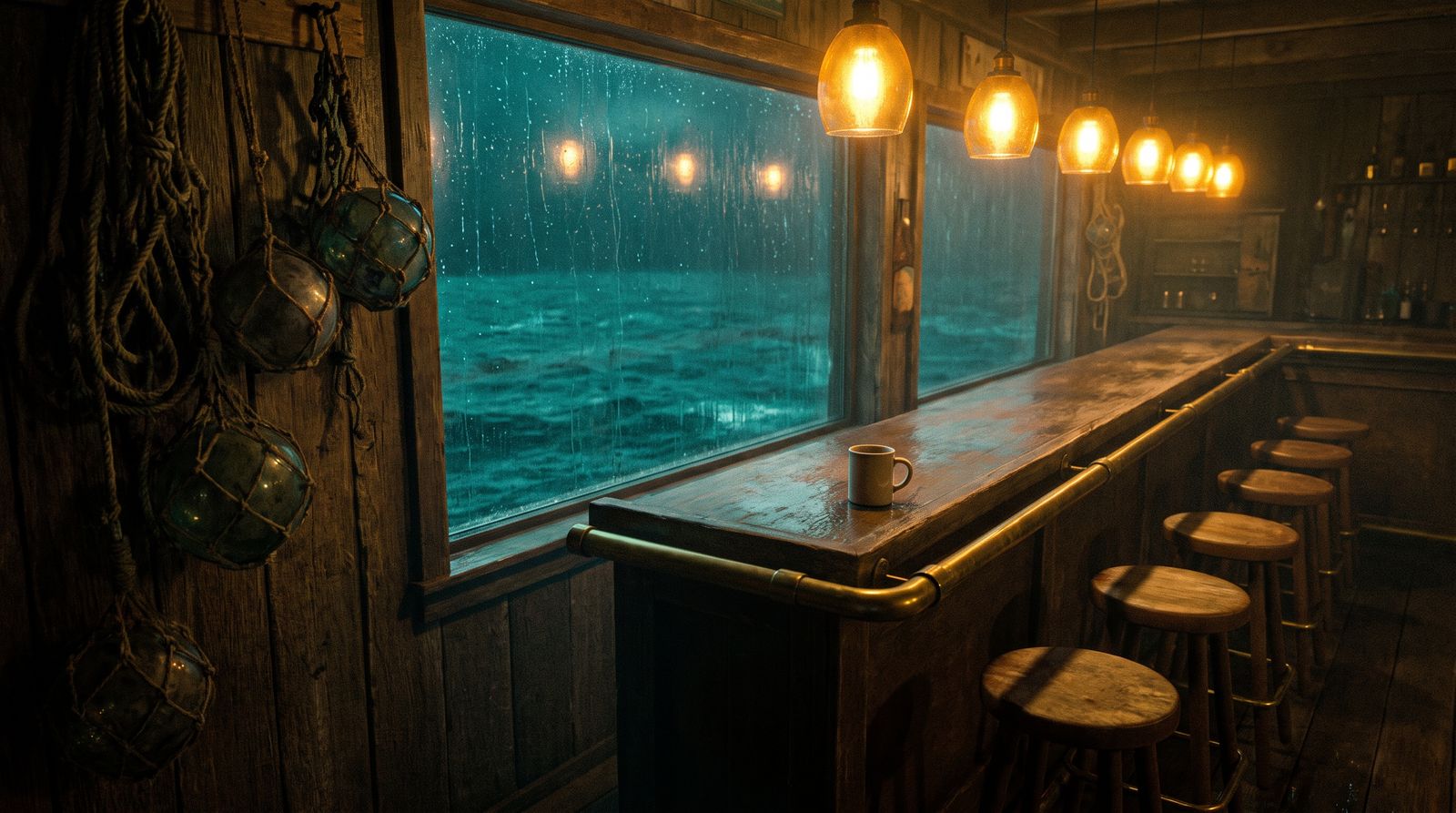
Paige Ellison was thirty-four and she had not moved to Wrecker's Bay to become anyone’s replacement wife.
The cottage behind Oak made the argument for her before the coffee did. One bedroom. A kitchen that believed in two burners and a stubborn drawer. A porch that collected moss like it was getting paid. She had signed the lease in August because the listing said quiet and the rent said teacher, and because Portland had started asking her to be a coordinator of other people’s rooms instead of a person who still wanted twenty-two fifth graders and a heater with opinions.
January had opinions too. The dark lasted. The heater in Room 12 at Bay Elementary clicked on at 6:40 like it was doing her a favor and then blew the same dry note it had been blowing since September. Paige stood in the doorway with her tote and a stack of conference folders and breathed in pencil shavings, wet wool, and the ghost of someone’s orange.
Parent-teacher night in a coastal town was not a ballroom. It was folding chairs, a sign-in sheet that Sharon from the office had printed in a font that wanted to be festive, and a schedule that assumed adults could tell time. Paige had eighteen conferences. She had coffee in a thermos that scored a four and would not become a six by being reheated. She had Kenji Okada’s folder on top because she was a professional and because she had been thinking about his father’s handshake for three days, which was not professional and which she was going to put in a box until after fractions.
Kenji was ten. He read above level and hid it. He had his mother’s mouth when he concentrated, which Paige knew only because the school photo from last year was still in the cumulative file and the town still said Maya Okada’s name like a lowered voice in a library. Mina was eight and in third grade down the hall with Ms. Patel, who had already warned Paige that the Okada children arrived with lunches packed by a man who labeled the containers and a grandmother who sent rice on Fridays.
Paige was not their nanny. She had said it to herself in the cottage mirror that morning, which was the closest she would come to a pep talk. She taught. She liked Kenji. She had not moved two hundred miles to audition for a vacancy in a house that already had a ghost and two lunchboxes.
The day that led to the folding chairs started the way January days started: dark, damp, and already behind on someone else’s clock. Paige woke at five-forty because the cottage roof had a drip with a personality, and because if she slept later she would arrive at school performing calm instead of being it. She stood in the kitchen in socks and a sweater that had not been chosen for anyone’s father. Coffee. Toast that was a four and would not become a five by wishing. She ate over the sink and watched the alley behind Oak collect puddles like it was saving them for later.
She had come from a Portland building with a staff of sixty and a principal who said capacity when he meant do more. Bay Elementary had a staff that fit in the lounge if nobody brought a tote. Ruth Detweiler, the principal, was fifty-two and ran the place like a harbor: lines, radios, no cowboying on the playground. She had hired Paige in July after a phone interview that lasted twenty minutes and a campus walk that lasted forty, most of it Ruth pointing at heaters and saying, “They have opinions. So do the parents. You look like you can tell the difference.”
Paige had said she could. She had been telling the difference for twelve years.
September had been a different weather. She had arrived two days before in-service with a Civic full of banker’s boxes and a sister in Bend who had texted don’t become a lighthouse keeper as if that were a useful warning. The cottage behind Oak had smelled like someone else’s pine cleaner. Paige had opened every window, wiped every shelf, and hung the Bend quilt because the walls needed a decision. She had walked to the café on Oak and scored an egg sandwich a six by being hot. She had stood in front of the Lena Myles clipping and thought, unkind and accurate, this town already has heroes; I am here to teach fractions.
In-service was three days of binders and a fire-drill map that assumed the tsunami siren was a personality. Ms. Patel, third grade, had taken Paige to the Hull after the second day and ordered chowder without asking. “You’re going to hear about Finn Okada,” Priya Patel had said, thirty-six, a woman who did not waste a booth. “Two kids. Kenji will be in your room. Mina’s in mine. He packs the lunches. He doesn’t make us be the second adult. If the town tries to hand you his house with the keys, you can say no. I’m saying it first so you don’t have to invent it.”
“I’m not applying for a house.”
“Good. The chowder’s a seven. Owen’s in love with the regular at the end and he thinks we haven’t noticed. We have. We leave it.” Priya had lifted her bowl. “Welcome to a staff that fits in a lounge.”
Paige had taught September like a person who intended to stay through winter. Twenty-two fifth graders. Kenji Okada in the second row, a book already open, a face that had decided not to look extra. She had not looked extra. She had learned his handwriting. She had learned that he would help Riley pass papers if you did not praise the helping. She had learned Mina’s two-finger wave at the third-grade turn. She had learned Finn Okada as a truck, a labeled container, a Ms. Ellison at pickup that did not linger.
October had brought the crate on Jude Harlan’s rocks and a town that said Pell like a lowered voice. Paige had kept it out of Room 12. She had taught the storm book anyway, because the book had been on the list before the crate, and because ten-year-olds deserved a town that stayed for reasons that were not a logbook. November had been the festival she attended as a person with a paper cup, not a ladle. She had seen Jude’s knee against Tessa’s. She had seen Owen’s rag slow when Beckett passed. She had seen Finn in the lot with a kid asleep against the window and a backpack on the dash, and she had not gone over, because the lot was not a conference and she was not a campaign.
December had been concerts and a rice Friday Keiko sent for the whole class without making it a story. Paige had written a thank-you note and mailed it to the ridge. Keiko had written back on a card that said you are his teacher. that is enough. Paige had put the card in the folder that was not Kenji’s cumulative file, the one she kept for the useful parts of the town.
January was conferences and a beach. January was a handshake. January was a rule she had said out loud before she had let herself want the mouth that went with it.
Room 12 faced the blacktop and a strip of cedar the district called a nature area and the kids called the wet trees. Paige unlocked at 6:35, flicked the lights, and let the heater lose its argument with the dark. She wrote the date on the board in the handwriting she used for public: clear, unfancy, no loops a ten-year-old could confuse for a letter. Monday, January 11. Conferences tonight. Field trip in ten days. She underlined nothing. Underlining was a campaign.
Riley Chen arrived at 7:10 with two tote bags and a travel mug that said a university Paige had also attended, in a different decade. Twenty-five. Student teaching through March. Competent, scared of Holt’s radio, not scared of glitter. Paige liked her.
“I put the tide-pool cards in reading-level stacks,” Riley said. “Is that tracking? I don’t want to track. I want them to find a crab and not drown.”
“It’s not tracking. It’s not handing a kid a card they can’t read while their boots are wet.” Paige handed her the volunteer clipboard. “Four parents. One is Finn Okada. Kenji’s dad. He knows swell. If he says inland, we go inland. You don’t have to like his face.”
Riley blinked. “I don’t have an opinion about his face.”
“Good. Keep it that way.”
The buses coughed in the lot at 7:50. Kenji came in with Mina as far as the third-grade turn, which was a habit Ms. Patel allowed because the hallway was short and the Okada children did not make it a production. Mina was eight, small, a backpack with a whale that had seen better whales. She waved at Paige with two fingers, optional, kind, a gesture she had probably stolen from a barstool she was not old enough to sit on. Kenji steered her toward Room 8 and came back alone.
“Grandma’s picking us up after,” he told Paige, which was information, not a plea. “Dad has conferences. Yours. He said not to make it weird.”
“It isn’t weird. It’s a folder.” Paige nodded at his hook. “Bag. Then the board. We’re doing the storm book in groups and I want your evidence, not Mason’s throwing arm.”
Kenji’s mouth did the stubborn line. He hung the bag. He sat. He was ten and he was already deciding how much of himself to show the room. Paige took attendance and did not look at him extra. She had three hours of teaching before she had to sit across from his father and pretend the handshake had not lived in her hands since Friday pickup.
Friday pickup. She should not have been thinking about Friday pickup. Finn had been late by four minutes, which in a school lot was a crime and also a man who had come from a roof. He had the look of someone who had washed in a shop sink. Mina had run at him and he had caught her without making it a show. Kenji had handed him a permission-slip envelope like a summons. Finn had said, “Ms. Ellison,” and she had said, “Mr. Okada,” and their hands had met over a clipboard, and that had been the whole problem.
She taught the morning anyway. Fractions on the board. A word problem about a pier that was longer than it was interesting. Kenji finished early and helped Riley pass papers without being asked, which was the kind of good that could become a hide if you praised it too loud. Paige praised the papers, not the helping. Mason Bell drew a boat with teeth in the margin and spelled pier as peer, which was almost philosophy.
At 9:40 they lined up for the library. The library was a converted classroom with a carpet that had outlived three levies. Ms. Gable, who was forty and ran it like a tide chart, let Kenji go straight to the above-level shelf and did not announce it. Paige loved her for that. She stood by the door and counted heads and thought about south beach and Holt’s swell protocol and a man who had a problem with pretty water.
Lunch was the lounge. The lounge was leftover birthday cake, a microwave that smelled like fish even when it was empty, and Sharon from the office eating an apple like it had wronged her. Sharon was fifty-eight and the reason the building functioned. She had already printed the conference sign-in in a font that wanted to be festive.
“Okada’s on your six-fifty,” Sharon said, not looking up. “I put him after the Bells so you wouldn’t have to start the night with a widower. You’re welcome.”
“He’s a parent. He’s a slot.” Paige unwrapped a sandwich that was a five. “Don’t do me favors that sound like plot.”
“I do everyone favors that sound like plot. It’s how I stay interested.” Sharon’s apple paused. “He’s a good one, for what it’s worth. Packs the lunches. Doesn’t make the teachers be the second adult in the house. Keiko—his mother—she’s the ridge. She’ll have the little one tonight. He doesn’t bring eight-year-olds to hear about decimals.”
“I know.” Paige did not say I already like that. “If he ma’ams me, I’m putting him on snack duty.”
Sharon smiled with her teeth. “I’ll allow it.”
The afternoon was science: what a tide pool was, what a tide pool was not, why you did not turn your back on a wave that had already decided to be bigger. Paige used Holt’s language because Holt’s language kept kids alive. Riley wrote INLAND on a piece of chart paper in letters you could see from the back. Kenji asked whether wreckage counted as a tide pool. Paige said, “Wreckage counts as a radio call. Not a souvenir.”
He nodded, like a person who had heard the word crate at a dinner table and was not going to bring it into Room 12.
At 2:15 they packed. At 2:25 the buses took most of them. Kenji left with Mina and a woman in a down coat who had to be Keiko Okada: small, precise, a tote that said she had come from a kitchen that did not believe in paper plates. She lifted two fingers at Paige from the sidewalk. Paige lifted two back. No campaign. A hallway courtesy.
The empty classroom after dismissal was a relief and a trap. Paige stacked chairs for the evening, laid out folders, tested the heater, and ate the other half of the sandwich standing up. She changed nothing about her clothes. She was not going to put on a nicer sweater for a man who built decks. She was going to put on the same sweater and be a teacher, and if her pulse did something inconvenient when he filled the doorway, that was her problem and not a conference agenda.
Ruth stuck her head in at 5:50. “You need anything?”
“Tissues. The second slot cries.”
“Second slot always cries. It’s the calendar.” Ruth looked at the Okada folder on top and did not comment. Ruth was good at not commenting. “Holt called the office. Swell’s a maybe for the twenty-first. He wants your volunteer list by Wednesday. I told him you’d have it because you are not a cowboy.”
“I’m not a cowboy.”
“I hired you for that.” Ruth left. The hall filled with the first parents, the ones who came early to get the good version of themselves on the record.
The first conference was the Bell family, who wanted to know why Mason was not in the highest reading group and did not want to hear that Mason spent reading time drawing boats with teeth. Paige was pleasant. She showed the work. She did not apologize for a ten-year-old’s taste in monsters. The Bells left with a packet and the particular disappointment of people who had wanted a different child.
The second conference cried. Paige handed tissues and a list of math games that did not feel like punishment. The third wanted to talk about the marina sale, which was not on the agenda. Paige said, “I can talk about the field trip and the permission slip. I cannot talk about Pell & Associates in a folding chair.” The parent looked startled, then grateful, as if someone had finally named the weather.
At 6:55 the doorway filled.
Finn Okada did not hover. He stood on the threshold like a man who built things for a living and had learned not to enter a room until he knew whether the floor would hold. Thirty-seven. Jude Harlan’s crew lead. Flannel that had been washed until the plaid was a rumor. Hands that had sawdust in the creases even after soap. He packed grief in the same bag as the lunches; the town had been watching him do it since 2024 and had not, to Paige’s knowledge, found a kinder verb.
Mina was at her grandmother’s for the evening. Paige knew because Kenji had told the class, proud and offhand, that Grandma Keiko had a guest room and a rule about not making Dad be two people on a school night. Finn had not brought an eight-year-old to hear about fractions. Paige filed that as the first decent thing he had done in her doorway, and then she filed the filing as unprofessional, and then she nodded at the chair.
“Ms. Ellison.” He had a handshake that did not perform humility. Warm. Dry. No squeeze-contest. “Kenji says you don’t talk to him like he’s a problem. I’m here to not be a problem either.”
“He’s not a problem. He’s ten.” She let go of his hand and sat so he would sit. “He reads above level and he hides it because the boy two seats over thinks reading is a personality defect. Sit. This is fifteen minutes. I’m not a nanny and I’m not auditioning. I’m his teacher.”
Finn sat. The folding chair accepted him the way cheap furniture accepted men who worked with their bodies: with a small complaint and then a truce. Something in his shoulders eased, which she filed as interesting and not her job.
The classroom at night was a different animal than the classroom at 8:10. The maps on the wall looked more like wishes. The tide-pool poster she’d laminated in September had a corner lifting. Someone’s left-behind mitten sat on the heater like a warning. Paige kept her hands on Kenji’s folder because if she left them empty she would look at Finn Okada’s mouth, and she was thirty-four years old and she had standards.
“Work first,” she said. “Then the trip. Then you can ask me whatever you came to ask that isn’t a campaign.”
His mouth almost moved. “I came to hear about my kid.”
“Good. That’s the only appointment I booked.”
She opened the folder. Kenji’s writing was small and ferocious. He spelled like a person who had read the words already and was annoyed the page wanted him to prove it. His math was clean until it got social; he could do the fraction and still refuse to explain it to Mason Bell. His reading log had three books she had not assigned and one he had listed as okay that was, in fact, a year above the shelf she’d pointed him at.
“He’s bored,” Paige said, and did not soften it. “Bored is not the same as bad. I’m not going to shame him for being quick, and I’m not going to let him use quick as a hide. I’ve got him in a group with two kids who also pretend they’re worse than they are. We’re reading a book about a storm and a town that has to decide whether to stay. He wrote a paragraph last week that I would frame if framing student work weren’t a lawsuit.”
Finn looked at the paragraph. He read it the way he probably read a cut list: once, then again for the part that could fail. Paige watched his face because food writing had taught Tessa Quinn to watch faces, and Paige had eaten enough of Tessa’s opinions at the Hull to steal the habit. Finn’s expression went from assessment to something quieter. Pride, maybe. Grief, maybe. The specific look of a man who had packed a lunch that morning and had not known the sandwich would come with a paragraph.
“Maya used to—” He stopped. The name sat on the table between the tissues and the permission slips. He did not pick it up and he did not shove it at her. “She liked when he got stubborn about a sentence. I don’t know how to like it without making it a memorial.”
“You like it by showing up and not calling him a problem,” Paige said. “That’s enough for a Monday. I’m not going to therapize you in a folding chair either.”
“Copy.”
The word was crew. It should have been annoying. It was not.
They talked the rest of the work: a missing homework that had been in the backpack the whole time; a recess where Kenji had sat with a book and then, astonishingly, played four-square; a note from Ms. Patel that Mina was inventing a language with two other eight-year-olds and it was not a crisis. Finn listened like a man who had been waiting for someone to be specific. Paige was always specific. It was the only way she knew how to be kind without becoming a brochure.
Then she turned the folder to the field trip packet.
“Thursday, January twenty-first. South beach. Tide pools, a local-history walk, Holt Voss on a radio if the swell gets cute. Twenty-two fifth graders. Four parent volunteers as of this afternoon. A student teacher named Riley Chen who is twenty-five and has already asked me twice whether harbor masters yell in person or only on handhelds.”
Finn’s mouth went tight at beach in a way that was not about anemones.
Paige waited. She was good at waiting. Teachers who filled silence got confessions they did not want and parents who thought the silence was a grade.
“The crate last fall,” he said. “Jude’s. I was on the tow that didn’t happen. If you’re walking kids where wreckage likes to land, I want a second adult who knows a swell. I’ll volunteer. That’s not a date. That’s a man who has two kids and a job on Jude’s crew and a problem with pretty water.”
“I need parent volunteers.” She did not look away. “I don’t need a speech about pretty water. I also don’t need a man using a field trip to stand closer to me.”
“I’m not.” He said it flat, then seemed to hear it, and the flatness got a crack. “I might want to stand closer to you in a different room on a different night. I’m not doing it with twenty-two ten-year-olds and a radio. I’m saying the beach. I’m saying I know what the south rocks do after a blow. I’m saying Kenji is going to be there and I would like to be a body that can count heads.”
Paige’s ears went hot. She was in a classroom with a mitten on the heater and a man who had just split the difference between a job and a want without making her responsible for either. She signed his name on the volunteer sheet because she needed the body and because the want was not a municipal code.
“You’re not a replacement anything in this room,” she said. “Don’t look at me like I might become one.”
He looked at her like she had moved a tool back to the right hook.
“Understood.” His mouth almost smiled. The almost was worse than a smile; it made him handsome in a way that was inconvenient and specific, not a catalog. “For the record, I’m thirty-seven, I can build a deck, and I have not asked a teacher for coffee since I was twenty. If I do, it will be coffee. It will not be a vacancy.”
“The diner does a decent egg,” Paige said, and heard herself, and did not take it back. “If you ask after the field trip, I might say yes. Before the field trip I say permission slips and don’t be late. Kenji still needs the slip signed. Mina is not on this bus. I checked the roster twice because I am not a person who loses an eight-year-old in a paragraph.”
“Mina’s with my mother tonight. Keiko. Ridge house. She does rice and a movie that is too old for them and she pretends not to know.” Finn rubbed his thumb along the edge of the folder, then stopped, as if the folder were not his to worry. “Kenji’s slip is in the backpack. I signed it on the hood of the truck. My handwriting looks like a crime. If you need it neater, I’ll do it again.”
“I need it signed. I don’t need calligraphy.” She slid the extra copy toward him anyway. “Read the swell protocol. Holt wrote it like a threat and a blessing. If the radio says inland, we go inland. If a parent wants a photo on the wet rocks, I will become unpleasant.”
“I can do unpleasant.”
“I noticed.”
He laughed, surprised, a short sound that had not been used enough this winter. The laugh made the inconvenient handsome worse. He had a scar on one knuckle, pale, the kind you got from a tool that slipped and then you went back to work. Paige looked at the scar and then at the permission slip and then at his face, because she was not going to start a crush on a knuckle in Room 12.
“If you ma’am me I will put you on snack duty with Sharon,” she said.
“I haven’t ma’amed you yet.”
“You were thinking about it. I could hear it from the folder.”
“Yes, ma’am,” he said, deadpan, and then held up both hands. “That one was on purpose. I’ll bring orange slices. I’ll put them in a bag that is not a campaign.”
“Sharon will still win,” Paige said. “Sharon has a system.”
They sat with that. The heater clicked. Somewhere down the hall a chair scraped and a parent laughed too loud, the sound of a conference that had become a reunion. Paige’s next slot was the Nguyen family at 7:20. She had four minutes. She used one of them to stack Kenji’s work so the paragraph was on top, because Finn should leave with the stubborn sentence and not only the beach.
“Kenji likes you,” Finn said. He stood. He did not loom. He just took his height back. “Mina likes that Kenji likes you. I’m trying not to make that a campaign.”
“Don’t.” Paige stayed in her chair so the doorway would stay a doorway. “Hold fast to being their dad. I’ll hold fast to being the teacher. If something else happens, it happens after the kids are at grandma’s and the door is locked. I’m not subtle about that. I’m not going to be a secret in a kitchen they can walk into, and I’m not going to be a bedtime story you tell them to make the house feel full.”
Finn Okada looked at her for a long second, then nodded once, like a man who respected a brace.
“After grandma’s,” he said. “I’ll remember.”
He paused at the door. The mitten on the heater had started to smell like wet wool deciding to be a problem. He glanced at it, then at her, and for a stupid second she thought he might offer to fix the heater, which she would have to refuse on principle.
“The paragraph,” he said. “The one you’d frame. Can I take a picture? I won’t post it. I just—Keiko will want to see it. Kenji won’t show her. He thinks pride is a thing you do in private.”
“You can take a picture.” She held the paper. He used his phone like a man who did not live on his phone. The flash was off. He checked the image, nodded, and put the phone away face down, which she noticed because she was a person who noticed phones in rooms with children.
“Thanks. For not talking to him like a problem.” He almost smiled again. “For not talking to me like one either.”
“You’re not a problem. You’re a conference slot.” She let the corner of her mouth move. “Don’t be late on the twenty-first. The bus does not wait for crew leads.”
“Copy.”
He left. The doorway was a doorway again. Paige sat in the folding chair that still held his heat and wrote Okada — volunteer, swell, not a date on her legal pad, and then she crossed out not a date because it was a note to herself and she did not need a paper trail for her own pulse.
The Nguyens arrived with a Tupperware of spring rolls and the particular hope of people who had read every email. Paige talked spelling and a science fair that involved too much glitter. Linh Nguyen wanted to know if the beach trip was safe. Paige said Holt’s words: above the wrack, inland if the radio said inland, no souvenirs that had ever been a boat. Linh relaxed a fraction. Her kid, An, was one of the ones who pretended to be worse at reading than they were. Paige said so. Linh’s eyes went wet and then proud. Paige handed tissues because the second slot was not the only one who cried. It was the calendar.
After the Nguyens, the hallway produced a gap. 7:40 to 7:55 had been the Morales family, who had texted from a shift at the cannery. Paige sat in the folding chair that still held a ghost of Finn’s heat and looked at Kenji’s paragraph again. The town in the novel stayed because staying was work. The sentences were short on purpose. He had crossed out pretty and written specific. She wanted to tell Finn that. She had already used her minutes. She wrote specific — yes in the margin in the pencil she used for student work, not the pen she used for legal pads, and she closed the folder.
Ruth Detweiler passed the doorway with a clipboard of her own. “Okada go all right?”
“He signed the volunteer sheet. He knows swell. He did not make it a campaign.”
“Good.” Ruth glanced at the mitten-shaped empty on the heater. “Keiko raised him. If he gives you trouble it will be the useful kind. Holt wants the list Wednesday. I already told you that. I’m telling you again because January makes people forget they have radios.”
“I’ll send it tomorrow.”
Ruth nodded and moved on. Ruth did not linger. Ruth was a harbor.
The last hour was the rest of the town in folding chairs: a father who wanted more homework, a mother who wanted less, a couple who argued about whether the marina sale was going to raise their rent and then apologized for arguing in a classroom. Paige kept them on the folder. She was good at the folder. The folder was a brace. At 8:25 she drank the thermos coffee and scored it a three, which was honest, and she thought about a diner egg that was not a vacancy and a man who had said after grandma’s like a cut list.
At eight-forty the last parent shook her hand and left a casserole invitation she would not use. Riley Chen appeared in the doorway with a tote and the expression of a person who had survived their first parent night by hiding in the copy room.
“Was that Kenji’s dad?” Riley asked. “The tall one. He looks like he could lift the building.”
“That’s Finn Okada. He’s thirty-seven, he’s a volunteer for the beach, and we are not going to make him a story in the lounge.” Paige stacked chairs. “You’re twenty-five. You’re going to hear the town say widower like it’s a plot. It isn’t your plot. It isn’t mine. We count heads and we teach fractions.”
Riley flushed. “I wasn’t—sorry. I just. He said thank you to Sharon on the way out. Sharon looked like she’d been paid.”
“Sharon has a system,” Paige said. “Help me with the chairs.”
They stacked. The mitten went into Lost and Found. Paige locked Room 12 and walked the hall past the third-grade wing, where Ms. Patel’s door was already dark, and out into a January night that smelled like the bay and someone’s woodstove and the particular metal of a school parking lot after rain.
Finn’s truck was gone. Of course it was gone. He had a ridge and a mother and two children who would want to know whether Ms. Ellison had said he was a problem. Paige stood under the lot light and let herself be thirty-four and a little stupid about a handshake, and then she got into her Civic that had never died on Jude Harlan’s gravel and drove to the cottage behind Oak.
The cottage was small and clean and not a shrine. She had made sure of that on purpose. No ex’s hoodie on a hook. No photographs of a life she was trying to recreate. A quilt her sister had sent from Bend that scored a seven for warmth and a four for taste. Soup in the pot that she had started that morning because parent night was a meal you forgot unless you bullied it into existing.
She ate standing up. The soup was a six. She scored it out loud because Tessa Quinn had ruined her for silent food, and because the Hull on Sundays had turned scoring into a town sport. Paige had been in Wrecker's Bay since September. She had learned the café on Oak, the Lena clipping on the board, the way Owen wiped the bar like the wood might leave. She had learned that Jude Harlan did not take tourist work and that Tessa had made him take a season anyway. She had learned that Finn Okada packed lunches and did not stay for the second beer at the Hull because he had a bedtime that was not his.
She had not learned his mouth. She was not going to learn it before the field trip. She had said coffee after. She had said locked doors and grandma’s house. She had meant both.
Her phone buzzed on the counter.
Unknown number, then a text that had the grammar of a man who wrote cut lists:
This is Finn Okada. Sharon gave me the class contact list. If that’s a crime, tell me and I’ll delete it. Kenji wants to know if you said he was bored. I said you said he was quick. If I got it wrong, I will take the correction. — F
Paige stared at the em dash. She was a teacher. She had feelings about em dashes. She also had feelings about a man who asked for a correction instead of a compliment.
She typed, deleted, typed.
Not a crime. Quick is accurate. Bored is also accurate. He can be both. Tell him the paragraph was good and I expect another one. Do not tell him I said that to you first.
A minute later:
Copy. After grandma’s. I remember.
She put the phone face down. She washed the pot. She locked the door because she always locked the door, and because she had made it a rule out loud and she was a person who kept her own rules even when the cottage was empty and the only person who could walk in was a woman who wanted a widower’s mouth and was not going to have it on a Monday.
In bed she read half a page of a novel that was trying to be about a lighthouse and was actually about a marriage. She turned it face down. She thought about Kenji’s stubborn sentence and Mina’s invented language and a beach that had already given this town one crate.
She thought, unkind and accurate: You are going to have to be very boring until the twenty-first, Ellison, and you are going to be bad at it.
She slept anyway. The heater clicked. The moss on the porch kept getting paid. Wrecker's Bay did what small towns did in January. It got darker. It got louder with water. It did not ask her to become a wife.
Tuesday morning Kenji came in with his backpack on one shoulder and a face that had decided not to look at her extra.
Paige did not look at him extra. She took attendance. She collected permission slips. His was signed on the hood of a truck, the letters cramped and honest, F. Okada in a hand that would never get hired for a wedding. She initialed it and put it in the envelope with the others and said, “Thanks, Kenji. You can put your bag on the hook.”
He put his bag on the hook. He sat. He opened his book. Halfway through the silent-reading block he glanced up, caught her eye, and then went back to the page like a person who had received a message and was not going to make it a scene.
At recess Mason Bell said reading was for people who couldn’t throw. Kenji threw. The ball went where he meant. Then he sat on the wall with the book anyway. Paige, on duty, walked the line of the blacktop and did not praise him where Mason could hear. She stopped beside the wall.
“Quick and bored,” she said, quiet. “Both. Another paragraph when you’re ready. Not a performance.”
Kenji’s ears went red. “Dad said you said the first one was good.”
“Dad was authorized to say that. I am still your teacher.”
“I know.” He picked at the book’s corner. “Mina wants to know if you like soup. I told her that’s a weird question.”
“It is a weird question. Tell Mina I like soup and I like third graders who invent languages, and I am not coming over for dinner.”
Kenji nodded, relieved, as if she had defused a bomb he had not wanted to carry. “Grandma makes soup. Dad makes eggs. Tessa says Dad’s eggs are a six if he’s paying attention.”
“Tessa scores everything,” Paige said. “Don’t let her score your homework.”
He almost smiled. Then Mason yelled for fourth-square and Kenji went, book under his arm, a ten-year-old who could do both.
Paige stood on the blacktop with a whistle she did not use and a pulse she was not going to give to a child’s soup question. She was thirty-four. She could like a kid and like his father and keep the two likes in separate drawers. She had said she was not subtle about locked doors. She could also be subtle about recess.
After school she walked to Oak for a sandwich because the lounge coffee had given up and because if she sat in Room 12 with empty hands she would reread Finn’s text. The café was three tables and a pastry case and the Lena Myles clipping, staple rustier than September. Paige ordered the egg sandwich. It was a six by being hot. She sat by the window and wrote field-trip groups on a legal pad: tide-pool A, tide-pool B, history walk, Holt’s radio person.
She wrote Okada — swell and did not write his first name.
Willa Crowe came in with a notebook and the look of a woman who had already fought a CMS that morning. Thirty-six now, January, the Bay Weekly still ugly and still hers. She nodded at Paige the way she nodded at municipal facts.
“You the beach trip?” Willa said. “Holt mentioned it on the radio like a weather event.”
“January twenty-first. South beach. Tide pools. No treasure hunts.”
Willa’s mouth twitched. “Good. Last October already had a crate. I’m not writing a sequel because a fifth grader finds a pretty rock.” She ordered coffee. “If the swell does something, you call Holt. You don’t call me for a quote while you’re counting heads.”
“I teach. I don’t leak.”
“I noticed. That’s why I’m being polite.” Willa took the coffee and paused. “Finn Okada’s on your volunteer list. He’s a decent man. He’s also a man the town wants to marry off like a municipal improvement. You can ignore that. I do, in print.”
“I’m his kid’s teacher.”
“I said you can ignore it.” Willa left. The bell on the door made a sound like a small opinion.
Paige ate the sandwich. She wrote no treasure hunts on the legal pad. She walked back to school in a drizzle that was not weather so much as the town’s personality, and she hung siding in her head that was not her job.
Wednesday she taught the storm book. Kenji’s group argued about whether the town in the novel should stay. Kenji said staying was a kind of work. Mason said staying was for people who couldn’t throw. Paige did not look at the ceiling. She asked for evidence from the page. Kenji found it. He did not hide the finding as hard as usual.
After the groups she put a map of the south beach on the board—Holt’s photocopy, the wrack line drawn in a Sharpie that had opinions—and she walked them through the rule again. Boots above the line. Hands on the buddy’s sleeve if the water got cute. No souvenirs that had ever been a boat. Mason asked if a crate counted as a boat. Paige said, “A crate counts as a radio. We have been over this.” Kenji’s pencil stopped. He did not look up. She did not look at him extra.
At pickup Wednesday the lot was a mess of heaters and opinions. Paige stood on the painted line with the clipboard because Ruth believed in a visible adult at the curb. Finn’s truck pulled in behind the Bells. He was still in work clothes. Sawdust on one cuff. He got out and Mina ran from the third-grade door and he caught her without making it a show, the way he had on Friday, the way that was going to live in Paige’s hands if she let it.
Kenji reached him second, backpack on one shoulder, the storm book under his arm. Finn said something that made Kenji’s ears go red and then not. He looked over Kenji’s head and found Paige on the line. He did not wave. He nodded once, brace-respect, conference leftover. She nodded back. She did not walk over. She was the curb. He was the truck. Mina was eight and talking with both hands about a language that had a word for soup. Kenji was ten and pretending the book was not a personality. The lot was full of other people’s children. That was the whole point of the line.
Finn buckled them in. He did not linger. The truck left. Paige wrote Okada — on time on the clipboard because Sharon liked a record and because if she wrote he nodded she would have to fire herself.
Thursday she stayed late and laminated tide-pool cards. Riley helped and asked, once, whether Mr. Okada was coming to the volunteer meeting Monday after school.
“He’s on the list. The meeting is twenty minutes and a map. It is not a social.”
“I know. I just—Holt’s going to be on the radio. I don’t want to sound twelve.”
“You’re twenty-five. Sound like a person who can count to twenty-two. Holt respects counting.”
Riley laminated like it was a prayer.
Friday the Hull did a fish sandwich that Tessa had already threatened in public. Paige went because she was a person who lived here now and because the cottage soup had become a personality. Owen Keene was thirty-three and sunshine for a living. Beckett Reed sat on his stool with a soda and a shoulder that found Owen’s when Owen passed. Settled. Not Paige’s paragraph. Good. She was full of other people’s paragraphs.
“Teacher,” Owen said, and made it fond. “You want the sandwich or the soup that Marisol is about to win an argument with.”
“Sandwich. If I eat Marisol’s soup I will have to have an opinion, and I have conferences in my spine.”
Owen plated. “Finn Okada was in last night. Soda. Driving kids. He did not ask about you. That’s how I know he wants to ask about you.”
“I’m not a special.”
“You’re a person who just turned the color of my good mustard.” Owen wiped the bar, the professional wipe, not the long one. “I’m not making a speech. I’m saying the soda. I’m saying he left a tip like a man who is trying not to be a story. Beckett told me to leave it. I’m leaving it. The sandwich is a seven. I’m being honest.”
Paige tasted it. The bread was doing its job. The slaw had not drowned. “Seven and a half. The pickle is a crime against texture, but I’m feeling kind.”
Owen laughed like she’d paid the tab. Beckett’s mouth twitched. Cal and Willa had a table and a proof sheet. Jude and Tessa were not in; Tessa had a laptop that was also a van office, and Jude had a roof. The town went on being a town. Paige ate, paid, and walked home in the dark with her hands in her sleeves and Finn Okada’s After grandma’s sitting in her phone like a tool on the right hook.
She walked home in a drizzle that had decided to be rain. Oak was three blocks of honesty even after dark: hardware that was not a chain, the café’s pastry case already put to bed, the Lena clipping still doing its rust. Paige’s cottage sat behind the last house like a secret that paid rent. She took her keys. She locked the door because she always locked the door, and because she had said the sentence out loud to a man in a folding chair and she was going to keep being the person who meant it.
Inside, the stubborn drawer stuck. She opened it anyway and put the volunteer clipboard on the table face down, the way Finn had put his phone down in Room 12. She heated leftover soup that had been a six at noon and was a five now, which was still edible. She ate standing up. She was not going to sit at the table and compose a text that sounded like a vacancy.
Her sister in Bend had sent a photo of snow that afternoon. Paige had liked it and not called back. If she called, Lauren would ask whether the town had produced a man yet, and Paige would have to say yes, and he has two children and a dead wife and I am his kid’s teacher, and Lauren would say that’s a lot of clauses and be right.
Paige washed the pot. She laid out Monday’s copies. She checked the swell protocol Holt had emailed, language like a threat and a blessing, and she forwarded it to the volunteer list without adding Finn’s name to the body of the message like a highlight. She was thirty-four. She had a field trip on Thursday the twenty-first. She had a rule.
She held fast to the rule.
The rule, inconveniently, held her back.
In bed she thought about the handshake again, which was stupid, and about Kenji’s paragraph, which was not. She thought about a beach that had already given this town one crate and a logbook that said Pell, and she told herself the south rocks would give her tide pools and a crab and nothing else.
She did not believe herself. She slept anyway. The drip on the roof kept getting paid. Wrecker's Bay did what small towns did in January. It got darker. It got louder with water. It did not ask her to become a wife.
She had not asked it, either.
Not yet.