Chapter one
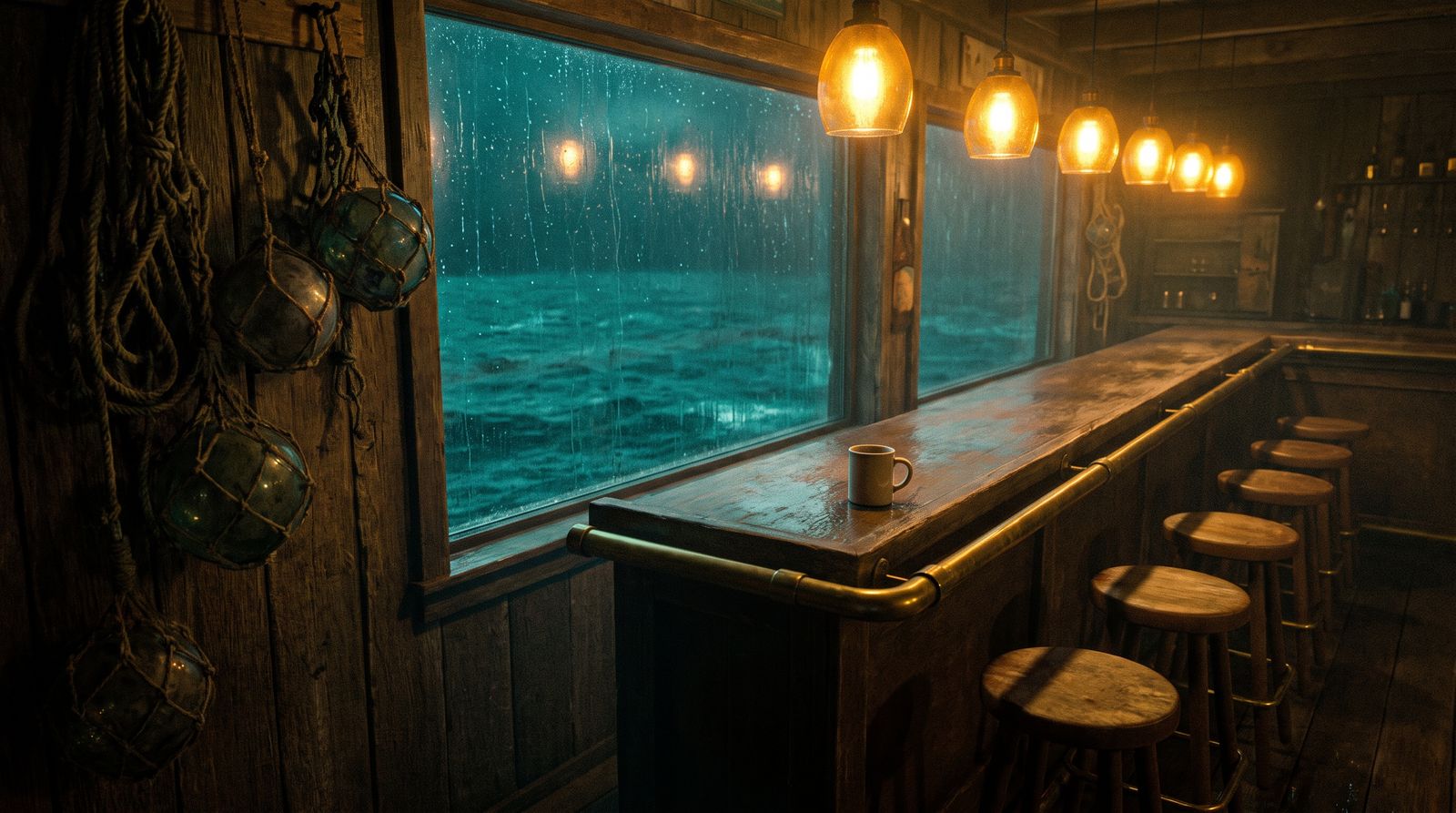
Hannah Harlan was thirty-eight and she had come home to stop a sale, not to like the man who could write the check.
The coast highway in April did not care about her folder. It never had. Rain found the same seam in the driver’s-side window it had found when she was twenty-eight and driving the other direction with a duffel and a job offer and a brother’s voice still on her phone that she had not yet learned to stop expecting. Portland sat three hours behind her like a desk that would wait. The desk had a name—Kline Municipal Review, a four-person shop on the east side that read other towns’ waterfront deals so those towns did not have to learn the fine print by drowning. Hannah had taken the job because it was the closest she could get to the Bay without living in it. She had stayed because she was good at it, and because being good at it let her pretend the Hester was a case study instead of a kitchen.
Portland at six had been wet in a city way: drains that worked, a streetlight that did not list. Hannah had locked the apartment she did not love and did not hate—one bedroom, a desk that faced a brick wall, a closet that held the jacket she used for councils and the boots she used for sites. She had stood in the kitchen and eaten toast that was a four because she was already gone. The marine forecast on her phone had said small craft and she had turned it off, because small craft was how she started writing speeches.
This morning her partner, June Kline, forty-six and allergic to sentiment, had stood in the doorway of Hannah’s office with a travel mug and a look.
“You’re taking April,” June had said. “And May if it runs. I can cover the Astoria file. I cannot cover you pretending a Zoom from the café is the same as a body in a room. Go. Be rude. Bring me a compact that isn’t a brochure, or bring me a no I can put in a memo. Don’t bring me a man.”
“I’m not bringing you a man.”
“You have Jude’s mouth and none of his silence. That’s how men happen.” June had handed her a second mug for the road. “Ellis stays dead. You already know. I’m saying it so you hear it from someone who didn’t grow up on that jetty. If the new buyer wants a special, you walk. If he wants numbers, you walk him. Text me if the pass closes. I don’t do weather as metaphor.”
Hannah had taken the mug. She had not promised the man part.
Now the highway did what it always did: it got smaller, then wetter, then honest. Wrecker's Bay sat ahead like a sentence she had been editing for ten years and had never been allowed to file.
She took the inside lane on the curve that made tourists take pictures. She was not a tourist. She had been born here in 1990, same year as Beckett Reed and Lena Myles, and she had left because staying after Ellis drowned had felt like agreeing to call it weather. Portland had given her a salary and a voice that councils listened to. It had not given her a way to stop checking the marine forecast like a prayer she did not believe in.
The sign said WRECKER'S BAY 8 and then 4 and then the jetty came into view the way it always did: a broken sentence of rock and a nickel-colored bay that had not asked anyone’s permission to keep existing.
Hannah did not look at the water longer than she had to. Pretty water had been a problem since Holt Voss called her on a Thursday in October 2018 and said her brother’s name like a harbor report.
She parked behind Salt & Timber, in the gravel slot Jude had texted her like a municipal code: house is open. key under the paint can that isn’t paint. don’t make the loft weird. The shop’s bay door was cracked. A hull sat in straps. The radio muttered marine weather at a volume for a man who already knew the forecast.
The little house behind the shop was three rooms and a porch that listed west. Jude had kept it for overflow and for the version of Hannah that used to come down for Thanksgiving and leave before the leftovers became a conversation. She had taken it for the season. Portland could have a laptop. The sale could not have her absence.
She unlocked the door. The kitchen smelled like lemon oil and a man who had tried. There was a note on the table in Jude’s block print: TESSA LEFT EGGS. DON’T START THE MEETING WITHOUT EATING. LOVE, A HAMMER.
Hannah set the folder down next to the eggs. The folder was not a personality. It was invoices, a logbook copy, a barge number, an unsigned captain list Willa had already killed as a hit, and a delay Lena Myles had refused to be a stamp for. It was ten years of a town saying accident and two years of a sale limping from one jacket to the next.
She put water on. She did not make it a ceremony.
Through the kitchen window she could see the shop’s metal roof and a slice of bay that insisted on being beautiful. She looked at the eggs instead.
Hannah Harlan, thirty-eight, municipal-contract reader, sister, woman who had spent a decade in Portland explaining other towns’ waterfront deals to councils that wanted a brochure, had not come home to be soothed by a view. She had come home because Pell & Associates had a new face, and new faces were how stains survived.
She ate standing up. The eggs were a seven. Tessa still scored food like it was a civic duty. Hannah had learned to live with that the way she had learned to live with Jude’s silence and Owen’s health codes and the fact that Ellis was dead.
Ellis stayed dead. That was the first rule. The second was that the drowning and the sale had never been separate, and if the new face could not hear that sentence without turning it into a plaque, she would be ruder than Owen.
She washed the plate. She put the folder under her arm. She walked around to the bay door because if she sat in the house with the water in the window she would start writing a speech, and speeches were how towns lost.
Jude was under a skiff that was not Ellis’s. Ellis’s skiff had been moved years ago; Holt had made it a radio item and Jude had made it a fact. This one was a customer. Jude’s boots stuck out. His voice, when he heard her, was the same as it had been when she was twelve and he was fourteen and she had stolen his good wrench.
“You’re early.”
“I’m on time. You’re under a boat.”
He rolled out. Forty years old as of January, salt at the temples, a flannel that had given up being a color. He looked at her the way he looked at leaks: locate, assess, decide whether it was his problem. Then his mouth did the thing it did for her and almost nobody else. Fond, out loud, for half a second.
“You look like a folder,” he said.
“I am a folder.” She leaned on the painted line and did not cross it, because manners were still manners even when you had grown up in the sawdust. “Is she here?”
“Tessa’s at the van. It’s an office now. She still sleeps in the house. Don’t make a paragraph out of it.” He sat up, wiped his hands. “Meeting’s at six. Holt’s already in a mood. The new guy’s been in town since Monday. Rental on Oak. He walked the south finger yesterday and didn’t take a picture, which is either manners or a strategy.”
“Name.”
“Callahan. Rhys. Forty-something. Bought Pell’s position in January. Cal says he asked about load ratings like a person. Willa says he didn’t leak a quote. Owen says he tipped like he’d waited tables, which Owen treats as theology.” Jude stood. “I’m a witness if they need one. I’m not the hero of Ellis’s water. That’s yours if you want it, Han. Or it’s Holt’s. Don’t make it a show.”
“I know.”
“You say I know the way I say I’ll look in the morning.”
“Then you already know I heard you.” She tipped her head at the lot. “Is the van still a crime against transportation?”
“The van is a three-year argument that starts every morning and loses. She writes in it. She files chowder. She does not file Ellis.” His jaw tightened, then let go. “She’s thirty-three. I’m forty. We’re still here. That’s the whole update. You can inspect us at the Hull like everyone else.”
Hannah’s throat went tight and she hated it. Jude had stayed. Ellis had not. She had gone to Portland and built a career out of reading the fine print other people used to drown towns slowly. Coming back for a season was not a resurrection. It was a job.
“I’m not inspecting you,” she said. “I’m glad. That’s allowed. Tessa can keep you. I already told her that at the festival when I was thirty-six and she was still pretending the van was a maybe.”
“She wasn’t pretending.”
“I know. I was being a sister.” Hannah shifted the folder. “If Callahan smiles like winter I will leave the room and come back ruder. If he listens, we walk the site. That’s the whole plan. You don’t have to like it.”
“I don’t have to like most things.” He jerked his chin at the house. “You sleeping back there or are you going to haunt the loft and scare the boxes?”
“House. The loft is yours and hers and a trunk I am not opening.” She meant it. She had opened enough of Ellis for one lifetime. “I’ll see you at six. Eat something that isn’t coffee.”
“Tessa already made that a municipal code.”
Hannah walked to the van because if she didn’t, Tessa would come find her with pie and a face that saw too much.
The van sat under the Salt & Timber sign like it had decided to be furniture. The side door was open. Maple, two burners, a laptop, a notebook with grease on the corner. Tessa Quinn looked up from a sentence and smiled the way she smiled at people she had decided to keep: sunshine, specific, not a brochure.
“You’re here,” Tessa said. “Jude said folder. I said eggs. Did you eat the eggs?”
“I ate the eggs. They were a seven. Don’t get smug.”
“I’m thirty-three. Smug is a seasoning.” Tessa stood, ducked the doorframe, and hugged her hard enough to be a Harlan. She smelled like coffee and smoked paprika and the particular cleanliness of a woman who lived in a house now and still kept a kitchen on wheels because the kitchen had been the point. “You look like you haven’t slept since January.”
“January is when he bought the stain.” Hannah let herself be hugged. She was bad at it and Tessa was good at ignoring that. “I’m fine. I’m rude. I’m on time.”
“Those can all be true.” Tessa pulled back, hands on Hannah’s shoulders, inventory. “Jude’s a witness. I’m a doorway. We’re not the plot. I still want you to eat at the Hull after, because if you go home and stare at the bay you’ll write a speech and speeches are how you get a plaque.”
“I am not writing a plaque.”
“You’re thinking in complete sentences. That’s a plaque waiting for a wall.” Tessa squeezed once and let go. “Callahan came into the café yesterday. He ordered like a person. He did not ask me for a quote about the Hester. I almost liked him for that, which I will not tell Willa, because Willa would put it in a sidebar.”
Hannah’s mouth twitched. “Don’t like him yet.”
“I didn’t say I liked him. I said he didn’t ask. There’s a difference. Tourists ask. Jackets ask. He sat by the window and looked at the water like it owed him a number.” Tessa glanced at the shop. “Jude’s going to hover at the meeting and pretend he isn’t. Let him. Then send him home. He’s forty and he still thinks he can stand between you and a feeling.”
“He’s my brother. That’s his whole job description.”
“He has a better one now. It includes a house and a van-office and a woman who steals his coffee.” Tessa’s smile went softer. “Go unpack. The house has towels that aren’t shop towels. I put them there so you wouldn’t have to ask him and make it a liability statement.”
Hannah walked back to the little house with the folder and the rain starting again, light, April, the kind that was a personality instead of a crisis. She unpacked the way she unpacked for a council hearing: hanging bag, boots that could do a site walk, the good jacket that was not a Portland costume, the folder on the table where she could see it. Two sweaters. The black skirt she would later regret taking to a rental with a desk. A travel kit that was toothpaste and not a personality. The laptop June would expect her to open by Friday.
She opened it anyway, sitting on the porch with the rain as a neighbor, and sent the only email that mattered: On site. Meeting tonight. Buyer is Callahan, not a rebrand smile. I’ll walk the fingers if he can hear a record. If he can’t, I’ll bring you a no.
June’s reply came while Hannah was still watching the send icon pretend to be courage. Bring me the no or the compact. Not a mood. Also tell Jude I said the hammer note was almost literature.
Hannah snorted, which was the closest she came to a laugh before six o’clock in this zip code.
She did not unpack the photograph at the bottom of the duffel. Ellis and Jude on a boat, last good day, the copy she had taken when Jude wasn’t looking because she had been twenty-eight and stupid with grief and she had needed a face that was not a phone call. She left it in the bag. The meeting did not get a photograph. The meeting got a folder.
The afternoon she spent on the porch with the invoices and a legal pad, rewriting the sentence until it would stand up in a room.
The drowning and the sale were never separate.
Not a lede. Not a special. A fact, the way load ratings were a fact.
She laid the paper out the way she laid out a council packet: oldest first, so the room could not pretend the ending had no beginning.
October 12, 2018. Holt’s harbor note, dry as salt: Hester overdue. Pell charter. Weather within limits. Search ongoing. A later line, the one the town had learned to say out loud: accident. Hannah had been twenty-eight and in a Portland conference room when that word arrived. She had said thank you to Holt because someone had to, and then she had gone into a stairwell and been sick.
October 24, 2026. Jude’s logbook line, copied, the ink of the copy already a little tired: charter moved to Hester — buyer: Pell & Assoc. — Ellis said yes. I said I’d do gutters. Hannah had not been there when they opened the crate. She had been on a Zoom about a different marina, and Jude had called after, and he had not asked her to come. She had not offered. That was a fact she lived with. It was not a fact she put in the packet.
January 2027. Paige Ellison’s field-trip write-up, teacher-plain: hatch lid, south beach, kids turned inland. Finn’s crew addendum: barge number, current, not 2018. Holt’s sniff: stencil matches the money. Nobody cowboys.
November 2026. Willa’s killed hit. The unsigned captain list. Cal’s name easy to steal. Willa had written no in the margin in a handwriting that could have cut glass.
May 2027. Lena’s recert, entered as hers. Holt’s delay through the summer. The jacket’s smile, not attached to a conviction.
July 2027. Claire Bennett’s no to a September buyout that would have sold the Widow’s Light to the marina group in all but deed. Sadie’s name on the same email chain, a planner who had decided to stay.
January 2028. The purchase. Rhys Callahan. Assignment of position. Not a rebrand press release. A stack of paper that said the stain had a new signer.
She read it through twice. It was a paper trail, which was not a lede and was not yet a yes, and a yes was the thing a room would ask her for at six.
At four she walked to Oak because the house was too quiet and the bay was too loud.
Oak Street in April was three blocks of honesty. Hardware that was not a chain. Rain gear that had given up being fashionable in 1998. The café, open, pastry case raided by the same fishermen and the same church people, the corkboard still a corkboard. Lena Myles was no longer a clipping. Lena Myles was in town, married to the harbor in all but paperwork, a clipboard with a pulse. The staple rust where the article had been was a paler square. Hannah touched it once, like a superstition, and ordered a coffee that was a six.
Sharon from the Tide Rest came in and looked at her the way Sharon looked at anyone who had been a kid here and then a rumor.
“Harlan,” Sharon said. “The one with opinions. You staying or are you a weekend?”
“Season,” Hannah said. “If the sale lets me.”
“Sale’s been letting itself limp since your brother’s girlfriend made the van a house.” Sharon’s smoker’s alto could have scored a chowder. “New guy’s in the Oak rental. Pays on time. Doesn’t run a generator. I like him better than the last jacket, which is a low bar and also a review.”
“Don’t review him to me.”
“I’m reviewing the drain. The drain still sucks. Tell Owen I said so.” Sharon took her coffee the size of a threat and left.
Hannah sat by the window and did not write a speech. She wrote a list.
Working slips.
Local terms.
Harbor board keeps the vote.
No sunset charters dressed as heritage.
The Hester in a town record: date, names, Pell & Associates. Not a podcast. Not a plaque. Not a true-crime special with a sad piano and a sister’s face.
Jude on gutters, because that was the line he had already lived and she would not make him live it into a microphone.
She finished the coffee. She did not go back to the house. She walked south, past the hardware, past the rain gear, down the cut that locals used when they did not want to be on the green. The marina opened the way it always had: fingers like a hand that had worked, slips that were not pretty, the Sparrow in fourteen like a fact, the Marrow with a hull that had plated twelve and refused to be a yacht. A site trailer sat on the gravel with a lock that had opinions. Hannah did not try it. She was not here to cowboy.
The south finger was where the first crate had landed in October 2026. Jude had opened it. Tessa had held a light. The logbook had said Pell and gutters and Ellis said yes. Hannah had been in Portland when Jude called, and she had sat on her kitchen floor with the phone on speaker and listened to her remaining brother sound like a man who had found a sentence he already knew.
She walked to the end. The water was April-ugly, which was honest. She put both hands on the rail and did not pretend it was a communion.
“You’re still dead,” she told the nickel. “I’m still doing the folder. If the new one wants a sunset, I will be worse than I was at thirty-six.”
A man was on the next finger.
She knew it was him before she had a name for the knowledge. The jacket. The way he stood: not a tourist’s lean, not a local’s claim. Inventory. He had a notebook that was not a phone. He wrote something. He did not take a picture. He looked up, and the distance between fingers was enough that they could have pretended not to see each other.
They did not pretend.
Hannah lifted two fingers, Beckett-style, optional. Rhys Callahan—she was sure now, the face from Willa’s notes, the mouth that did not perform—lifted his notebook once, like a receipt. He did not smile. He did not come over. He went back to the numbers, and she went back to the rail, and the bay sat between them like a third person who had already drowned someone they both had to account for.
She walked to the harbor office because if she went home she would write a speech.
Holt Voss was forty and allergic to pretty water. The office smelled like radio and coffee that had gone bitter on purpose. Lena’s jacket hung on the peg like a fact. Holt looked at Hannah, at the folder, at the wet on her shoulders.
“You’re early for a meeting and late for a decade,” he said.
“I’m on time for a sale.” She sat without asking, because she had sat in this office at sixteen waiting for Jude and at twenty-eight waiting for a body they did not find the way movies found bodies. “You going to gavel him or are you going to let me.”
“I’m going to gavel the room. You’re going to be a folder. He’s been here since Monday. He asked for load ratings. He asked about the barge number without calling it storm debris. He did not ask me for a quote about Ellis.” Holt’s mouth twitched. “I almost liked him. Don’t make me sorry.”
“I don’t make you things. You make yourself things and then you put them on the radio.”
“That’s a personality.” He slid a single page across. “Public comment list. Finn’s on it. Cal’s on it. The hardware. The café. Claire sent a letter instead of a body, which is manners. If you turn this into a memorial I will shut you down and I will be right.”
“I’m not doing a memorial. I’m doing a record.”
“Those can look the same from the back row.” Holt held her eye. “Jude’s a witness. He’s not a eulogy. Tessa’s a season. She’s not a campaign. You want the Hester named, we name it on paper. We do not name it on a stage. I’ve spent two years sniffing this money. I will not watch a sister use a drowning as a gavel.”
Hannah’s throat went tight. She let it.
“I know he’s dead,” she said. “I have been thirty-eight long enough to know the difference between a record and a show. If I forget, you can be rude. You’ve had practice.”
“I’ve had your brother on a roof in my head since 2018. I don’t need practice.” Holt took the page back. “Ten tomorrow if the walk happens. South finger first. Wear boots. Don’t wear the jacket like a costume. He already knows you’re from Portland. You don’t have to prove it.”
She stood. “Is Lena coming?”
“If she wants. The clipboard is hers. The recert is hers. If he tries to buy her name I’ll throw him in the channel and I’ll write it up as weather.” Holt almost smiled. “Go eat. Tessa will make it a code if you don’t. I’m not refereeing Harlans on an empty stomach.”
Hannah walked back in the wet. The Split Hull’s windows were fogged. Someone had written WASH ME again. Someone else had added PLEASE. The town was consistent that way.
At five-thirty she changed into the jacket that was not a costume and the boots that could do a site if the meeting became a walk, and she went to the Hull the long way so she would have to pass the jetty and prove she could.
Then she went to the meeting.
The Hull’s back room in April 2028 smelled like fryer and a two-year headache.
Pell & Associates had limped since October 2026: a crate, a festival, a hatch lid, a delay, an inn that had said no. The vote had been tabled until after the November festival and then the sale had learned to be a season of its own, a smell that grew a second nose and then a third. Now the money had a new face.
Hannah took a chair in the first row because she was not a sidebar. The folder sat on her knee. Around her the town assembled the way it assembled for weather and for soup: Holt at the table with a gavel he used like a radio, Lena beside him with a clipboard that was hers, Willa with a notebook and fonts already a crime, Cal against the wall like a working captain, Rowan in a clean shirt that still looked like epoxy, Marisol with foil-pan energy even without a pan, Finn in the back with Jude’s crew stillness, Paige not there because it was a school night and the kids were not a prop. Owen behind a coffee urn he had no business making excellent. Beckett in the doorway, thirty-eight, two fingers on a mug, optional, kind.
Jude sat in the second row with Tessa, her knee against his, a doorway couple, not the plot. He did not stand. He had already said his sentence. Hannah loved him for staying in the chair.
Claire Bennett and Sadie Ruiz had sent a letter instead of their bodies. The Widow’s Light was an inn that had already said no to hospitality-as-sale. Hannah had the letter in the folder. She would not waste it on an opening joke.
Rhys Callahan came in at 5:58 like a man who knew what lateness did to a room.
He was forty-three. She knew because Willa’s advance notes had a birthday and a purchase date and a habit of being accurate even when the accuracy hurt. Dark hair. A mouth that did not perform sorry. A jacket that had cost money and then been worn in weather, which was either honesty or a better costume than the last three. Hands that had probably signed worse things than this and—if the problem was as bad as she thought—wanted not to.
He looked at the room the way she looked at a contract: inventory first, people second. When he looked at her, he did not smile. He sat. He set a thin folder of his own on the table, not a prop, a stack of paper that had been read.
Holt gavels were not theatrical. He cleared his throat.
“Harbor board. Public. April. We’re here because the marina sale is still a sale and the position formerly held by Pell & Associates is now held by Rhys Callahan, who bought it in January and asked for a room that wasn’t a press conference. You get five minutes each before we start talking like adults. Harlan, you asked to go first. You’re first. Don’t make me sorry.”
Hannah stood before Holt could finish being a radio.
“Working slips,” she said. “Local terms. No sunset charters dressed as heritage. My brother did the gutters in 2018. Ellis drowned on your predecessor’s pretty water. If you think you’re here for an amenity, you can take the jacket back to Portland.”
The room did the thing rooms did when a Harlan used Ellis’s name in public: a held breath, a glance at Jude, a glance at the floor. Jude did not move. Tessa’s hand was on his knee. Hannah kept her eyes on Callahan, because if she looked at Jude she would make it a show by accident.
Rhys looked at her. Really looked. Not a leak. A person.
“I’m here for numbers that survive a winter,” he said. His voice was lower than the jacket suggested, no performance, a little rust. “If the numbers include working-local, I’ll hear it. If they include a true-crime special about your brother, I won’t fund it and I won’t print it. I’m not interested in drowning as brand.”
Hannah’s pulse jumped. She had come in ready for a smile like winter. She had not come in ready for a man who said the ugly sentence first.
She opened the folder.
“Invoices,” she said, and she made it a folder, not a eulogy. “The 2018 logbook line my brother already lived: charter moved to Hester — buyer: Pell & Assoc. — Ellis said yes. I said I’d do gutters. The 2027 barge number off Paige Ellison’s field-trip beach. The unsigned captain list Willa Crowe killed as a hit in November of twenty-six. The delay Lena Myles refused to be a stamp for last May. The Widow’s Light letter that says the inn is an inn. This is not a campaign. This is the paper trail of a sale that was never just a sale.”
Willa’s pen moved. Cal’s mouth was a line. Lena did not smile. Rowan sat forward like a hull diagram was about to be required.
Hannah held the logbook copy up long enough for the room to see it was a copy, not a relic.
“The drowning and the sale were never separate,” she said. “That’s the sentence. If you can hear it without turning it into a plaque, we can walk the site. If you can’t, I will be ruder than Owen.”
Owen, behind the coffee, put a hand on his chest. Beckett’s mouth twitched. The room breathed.
Holt said, “Callahan.”
Rhys did not stand. He sat like a man who understood that standing was a kind of smile.
“I bought a position that had already failed twice,” he said. “Pell rebranded. The money didn’t. I’m not going to pretend I purchased a sunset and discovered a drowning in the footnotes. I purchased both. I can put capital on terms that aren’t a brochure. I cannot put capital on a special, a podcast, or a sister’s grief as leverage. If that’s what this room wants, I’m the wrong check.”
Hannah felt the hit land and hated that it was fair.
“It isn’t leverage,” she said. “It’s the record. You don’t get to buy the marina and leave the Hester as weather. You also don’t get to buy the Hester as content. Those are the same no.”
“Then we agree on a no.” His mouth almost moved. “I’d like to hear the yes.”
Holt pinched the bridge of his nose. “The yes is a walk. Fingers. Load ratings. Current barge smell. Working boats that are not photo boats. Harlan, you want the walk, you get the walk. Callahan, you want numbers, you get numbers. Nobody cowboys. Nobody quotes Willa a paragraph in the lot. We are not doing October 2026 again with better jackets.”
Cal said, from the wall, “Sparrow’s in fourteen. She’s a working boat. If your numbers need her to be a cocktail cruise, say it now so I can save us a week.”
“I don’t need a cocktail cruise,” Rhys said. “I need slips that pay in February.”
Rowan made a sound that might have been respect. Marisol’s eyes narrowed, pleased.
Lena tapped her clipboard. “Recert’s mine. If you want my name as a door prize, you can drown that idea in the channel. I already had this conversation with the last shirt.”
“I’m not here for your name,” Rhys said. “I’m here for whether the jetty holds. If it doesn’t, I don’t write a check that pretends it does.”
Hannah watched his hands. They were still. He was not performing stillness. He was a man who had learned that fidgeting was a tell and had decided not to have one. She hated that she was watching his hands.
Holt ran the rest like a radio: public comment, two minutes, no speeches about heritage that meant yachts.
Public comment ran the way public comment ran in a town this size: specific, then sideways, then specific again. The hardware man said his brother’s hours were a slip and a winter and a kid in community college. The café woman said July paid the mortgage and January paid the lights and she wanted a marina that did both. A retired teacher Hannah half-remembered from the middle school wanted “heritage experiences” and used the word authentic like a condiment. Hannah wrote no in the margin without looking up.
Finn Okada did not use the word authentic. He stood in the back with his crew stillness and said, “I’m thirty-eight. I hang bumpers. If the fingers go pretty, I still have January. January doesn’t care about a sunset. My kids aren’t here because this isn’t their meeting. I’m here because work is.” He sat. Paige would hear it later, at a table that was a family and not a campaign. Hannah put a check by his name.
Cal Briggs, forty-one, did not repeat himself. He had said the Sparrow was a working boat. That was the comment.
Willa, from the side table, did not comment. She wrote. Hannah trusted that more than a speech.
Hannah sat. The folder cooled on her knee. She could feel Jude behind her, not touching, a brother who had promised to be a witness and was keeping it.
When Holt asked if there was anything else before he gavels the walk, Rhys looked at Hannah again.
“I’m staying at the rental on Oak,” he said. “If you want to yell at me, yell at a table and not a microphone.”
Hate at first sight. It felt like fear. She had been afraid of pretty water since she was twenty-eight and a phone call from Holt had made Portland too far and not far enough.
“Table,” she said. “Tomorrow. If you smile like winter I will leave.”
He did not smile. That was worse.
Holt hit the table once. “Walk’s tomorrow, weather allowing. Ten. South finger first. Harlan, Callahan, me, Lena if she wants, Rowan if they want. The rest of you can lurk like civilians. Owen, this room is a fire code.”
“This room is a church that serves fryer,” Owen said. “I mopped. Be discreet about your feelings. Feelings drip.”
People stood. Chairs scraped. Willa closed her notebook like it might bite. Cal went to her and did not make a speech; he put his hand on the back of her neck for one second, public-adjacent, and she let him. Jude stayed in his chair until the aisle cleared, which was how Hannah knew he was about to be a brother in the lot.
Rhys did not come over. He collected his thin folder, nodded at Holt, and went out the side door that led toward Oak. Hannah watched the door longer than the door deserved.
Tessa appeared at her shoulder with two coffees and a look that was kind and not a paragraph.
“You’re full of jackets,” Tessa said.
“I’m full of a man who listened,” Hannah said, and then hated that she had said it. “Don’t score it.”
“I’m scoring the coffee. The coffee is a six. Owen got generous because he was nervous.” Tessa handed her a cup. “Jude’s in the lot. Go let him kiss your hair and tell you Ellis stays dead. Then come back if you want pie. Rowan brought some and they’re pretending it’s for the room.”
Hannah went to the lot.
The rain had opinions. Jude stood by his truck with his hands in his jacket pockets, forty and trying not to be a roof. Tessa’s van-office sat two spaces over like a chaperone. When Hannah reached him, he kissed her hair the way he used to when she was the one with opinions and he was the one with a hammer.
“You’re allowed to want him to be a person,” Jude said. “You’re not allowed to resurrect Ellis to win a vote. He’s dead. He stays dead. The Hester gets a record, not a podcast.”
“I know.” She squeezed his wrist. His pulse was steady. Hers was not. “I didn’t make it a show.”
“You made it a folder. That’s worse and better.” He looked at the side door Rhys had used. “He didn’t smile. I hate that I noticed.”
“I noticed too. That’s the problem.”
Tessa waited at the truck, sunshine with a van-office, and blew Hannah a kiss that was not a paragraph.
“Go home,” Hannah told Jude. “I’m full of jackets.”
“You’re full of a man who listened,” Tessa said, kind, carrying the sentence Hannah had already failed at. “That’s new. Score it later.”
Rowan caught her at the side door with a tin of pie and a look that was cousin-adjacent even though they were Tessa’s cousin, not hers. Thirty-three. They/them. Epoxy under one nail they had missed.
“You didn’t make it a show,” Rowan said. “Good. The Marrow isn’t a photo boat. If he tries to reallocate the slip for guest experience I will bring a hull diagram and I will not be cute about it.”
“I know.” Hannah took the tin because refusing pie from a Quinn was a kind of crime. “Tell Marisol the letter from the Light is in the folder. The inn already did this fight. We’re not selling the green to pay for their no.”
“Marisol already knows. She plated twelve last season and she’s going to plate twelve this one. Pretty is how jackets kill working boats.” Rowan glanced at the lot, at Jude’s truck, at the dark that led toward Oak. “He asked me yesterday about the Marrow’s draft. Not her Instagram. I almost said thank you. I didn’t. Thank-yous are how I get in trouble.”
“Don’t sleep with a thank-you,” Hannah said, and Rowan’s mouth did the almost-smile that meant the town had taught them the same joke.
“I didn’t. I have a chef for that, and she’s a partnership, not a brochure.” They shoved the tin more firmly into Hannah’s hands. “Eat. You’re going to a table tomorrow. Tables are worse than microphones if you like the mouth.”
“I don’t like the mouth.”
“Uh-huh.” Rowan went back inside for the rest of the pie, which was how Hannah knew she had been obvious.
She walked. The long way. Past Salt & Timber, where the bay door was still cracked and the radio was still arguing with the Pacific. The loft light was on. Tessa’s silhouette moved once, a woman putting a kettle on in a room that had once been grief boxes and was now a season. Hannah did not go up. She had manners. She also had a pulse that would have made the loft a conversation she was not ready to score.
The jetty again, because she was stubborn.
The wind came off the water and found the gap at her throat. She did not shiver on purpose. She also did not hide it. At twenty-eight she had stood in this same wind and waited for a body they did not find the way movies found bodies. They had found the Hester in pieces and Ellis in the way the town said accident afterward, which was a kind of not-finding. Holt had been kind and official. Jude had been a roof. Hannah had been a stairwell in Portland and then a highway and then a funeral that was a harbor report with casseroles.
She put her hands in her jacket pockets and felt the house key, the folder’s edge through the bag, the nothing else she carried on purpose.
“You’re dead,” she said again, because repetition was not a séance. “Jude’s forty and he has a van-office in his lot. I’m thirty-eight and I have a table tomorrow. If I use you to win it, Holt will be right, and I will not be able to live in the house behind the shop.”
The bay did not answer. That was the correct behavior for a bay.
She went to the little house because the Hull would turn her into a stool and a story, and she was not a story tonight.
The kitchen was dark. She turned on one light. The folder went back on the table. The eggs were gone. The note from Jude was still there, LOVE, A HAMMER, which was the most he had ever written in his life that wasn’t a parts list.
She sat. She took off the jacket. She put her head in her hands for exactly one minute, which was the allowance she gave herself when the water got in.
Ellis was dead. The sale was not weather. Rhys Callahan was forty-three and had said I’m not interested in drowning as brand like a man who had already met the version of himself that would have funded it.
She sat at the table with the folder and a glass of water and did the thing June had told her not to do: she thought about a man.
Not as a date. As a problem. Rhys Callahan, forty-three, had bought a stain in January and shown up in April without a smile and without a special. He had looked at her. Really looked. He had said numbers that survive a winter like he meant February, not a brochure. He had said I’m not interested in drowning as brand before she could accuse him of it, which was either a spine or a better strategy than the last three jackets had owned.
Hannah had spent ten years reading men like him. Most of them wanted a waterfront that photographed. A few wanted a waterfront that paid. Almost none wanted a waterfront that remembered a name without selling it.
She took the photograph out of the duffel because she was thirty-eight and she was done pretending the bag was a boundary.
Ellis and Jude on a boat. Last good day. Jude’s smile not yet a liability statement. Ellis’s shoulders bright, like the water had never won. She set the frame on the table next to the folder and did not apologize to either of them.
“I’m not using you,” she told the glass. “I’m naming you. There’s a difference. If I forget, Jude will be rude, and Holt will be ruder, and Tessa will score me a two.”
The house ticked. Somewhere in the shop, a hull settled in its straps. The bay did the thing the bay did at night: it got louder, as if darkness were a permission.
Hannah texted June: Meeting done. He listened. Walk tomorrow. No special. No smile. I hate that.
June wrote back in under a minute: Hate is information. Sleep. Don’t draft the compact at 1 a.m. That’s how plaques happen.
Hannah put the phone face down. She washed the glass. She put the photograph back in the duffel because the table was for paper and the paper was for daylight.
Hannah Harlan, thirty-eight, sister, resident for the season, woman who had come home to stop a sale, looked at the dark window and did not look through it at the bay.
She lay in the bed Jude had made up with towels that weren’t shop towels and she did not dream a secret survivor, because she did not allow her sleeping mind that kindness. Ellis stayed dead. The Hester stayed a boat that had gone out. The new face stayed a problem she was going to have to walk in daylight, on a finger, with her boots and her sentence and the particular fear that a man who could be moved was more dangerous than a cartoon.
In the morning she would eat. She would not write a plaque. She would go to a table on Oak and find out whether Rhys Callahan’s no was a strategy or a spine.
Tomorrow was a table.
If he smiled like winter she would leave.
He had not smiled.
That was worse.