Chapter one
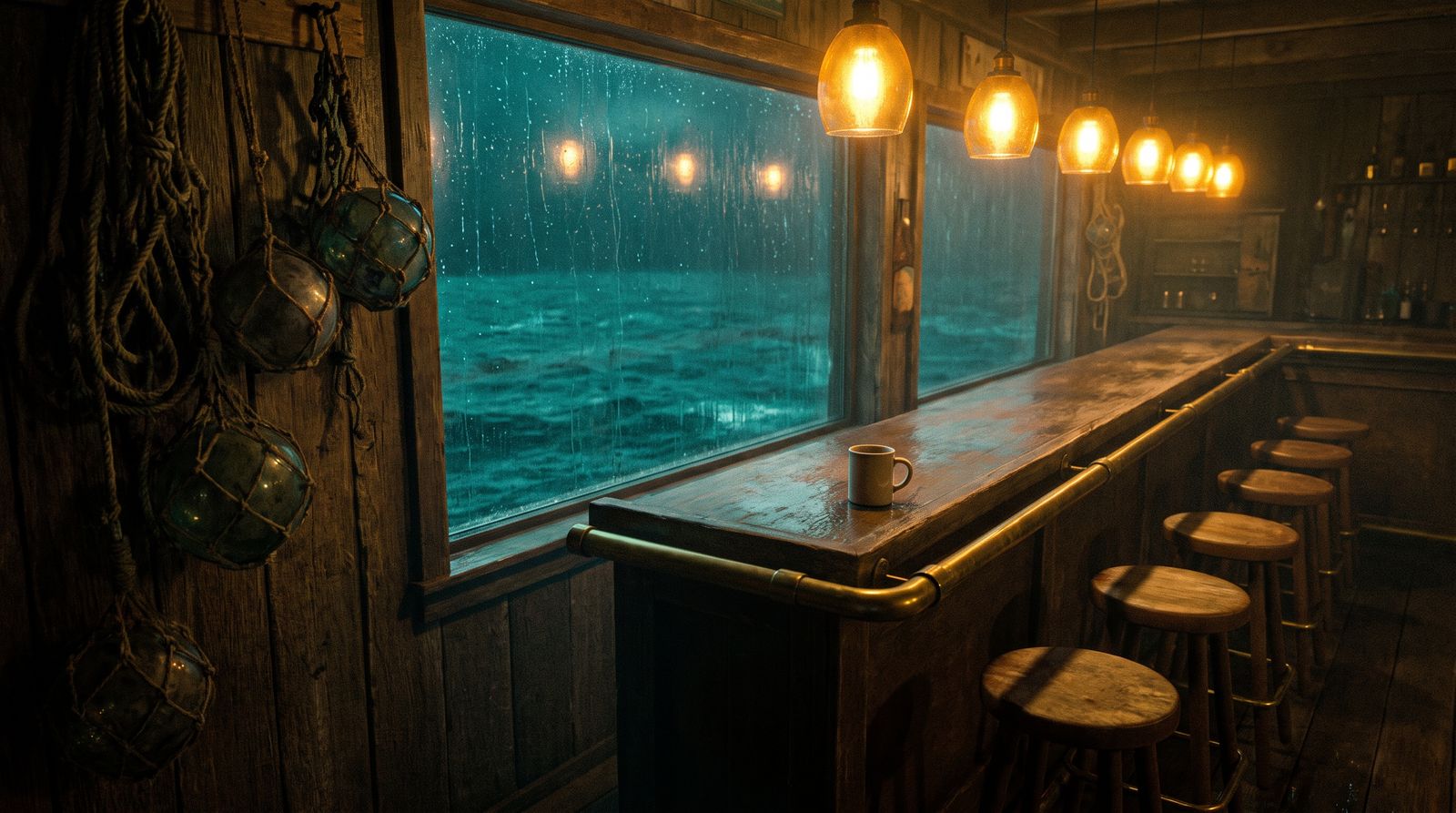
Lena Myles was thirty-seven, a trans woman with a Coast Guard contract and a clipboard that did not care about anyone’s feelings, and she had never set foot in Wrecker's Bay except as a name on a café board.
The coast road south of Astoria did not apologize for that. It offered her a left-hand Pacific the color of old nickels, a right-hand wall of fir, and a series of towns that had decided to stay small on purpose and then charged you for the decision in motel coffee. She had left the yard at six with a thermos that was already a three and a bag of meters that had survived three other jetties and one supervisor who liked the word optics. She did not do optics. She did numbers. She did rust. She did the sentence a structure told her when she put a boot on it and asked it to hold.
May swell was already talking. Not a storm yet. A mood. The kind of water that made tourists take pictures and made contractors check the date on a recertification that should have happened last year.
WRECKER'S BAY 8, the sign said, and then 4, and then a curve that wanted a postcard. She took the inside lane. She was not a tourist. She was a woman with a clipboard and a contract number and more than a decade of being herself, which was long enough to be bored of other people’s curiosity and short enough that she still noticed when a town looked at her and saw a job instead of a lesson.
She passed a turnout that wanted a postcard and did not take it. She passed a logging road that had given up being a road. She passed a sign for a festival that had already happened in November and had not been taken down, which she respected. Towns that left their signs up were towns that told the truth by accident. She could work with an accident that told the truth.
The radio in the truck was marine weather, not music. May swell already talking. Not a storm yet. A mood. She drank the three and made a face and did not pull over to pour it out, because pouring it out would have been a performance and she did not perform for a thermos. Thirty-seven. Contractor. Not a clipping. A trans woman who had been herself long enough to be bored of other people’s curiosity and short enough that she still noticed when a town looked at her and saw a job instead of a lesson.
She wanted the town to see a job.
She was already, unhelpfully, prepared to notice if it saw a person.
Those could both be true. She had not yet told anyone the rule. She intended to use it anyway.
The town arrived as a scatter of roofs and a jetty like a broken sentence. Salt & Timber sat under a sign the salt had been eating since before she turned thirty. The Split Hull’s windows were already fogged at nine in the morning, which she respected. A white inn clung to the rise above the south beach like it had opinions about lemon oil. The harbor master’s office was a squat building with a radio mast and a parking lot that had never been designed for jackets.
She parked in a stall that was not a slip lane, because the file had a note in a tight hand: Holt will have a stroke on the radio. She sat with both hands on the wheel until the engine ticked. Thirty-seven. Contractor. Not a clipping.
The café on Oak was three tables and a pastry case and a corkboard that had forgotten what year it was. She ordered coffee because the thermos had committed a crime, and she stood in front of the board while the machine hissed like it wanted a union.
There she was. Coast Guard story, 2025, staple rust a five if you were being kind. A face that looked like it did not suffer fools, which she would allow. The paper had gone soft at the corner from people touching it. Tessa Quinn had written her as specific, not cute. Lena had read the piece in a yard in Newport and thought: that woman can score a staple. She had not thought: I will go there and be adopted.
“You’re the clipping,” the person behind the counter said. They/them, flour on a wrist, a nametag that said PEPPER in letters that had been written by someone who liked pie more than fonts. “I keep meaning to take it down. People touch it like a relic.”
“Leave it,” Lena said. “Relics are cheaper than public relations.” She took the coffee. It was a four. She said so, because she had spent October of last year reading a food writer’s rules and they had stuck. “I’m Myles. I’m here for the jetty, not the board.”
Pepper’s mouth twitched. “Holt’s already on the rocks. He was in at six for a bun he did not enjoy. He talks like a radio even when he is buying carbs.”
“I can work with a radio.” Lena clicked her pen. The sound settled something in her chest that the drive had loosened. “What I can’t work with is a town that wants me to be a paragraph.”
“We want you to be a pass,” Pepper said, not unkind. “The jackets want you to be a brochure. There’s a difference. Don’t let Cal’s captain face talk you into a quote. Don’t let Willa. She’s decent, but she has a masthead.”
“I don’t do quotes. I do ratings.” Lena left a tip that was not a performance. “If the bun is better than the coffee, I’ll come back.”
“The bun is a six. The coffee is a personality defect. We’re working on it.”
Monday at the case, after the four and before the marina, Lena stood with the coffee and let Pepper look at her the way people who baked looked at a proof.
“You’re staying through the rail,” Pepper said. Not a question.
“I’m staying through the report. The rail is a number. The report is a number. I’m not a number. Don’t mix the tools.”
“I’m a they. I don’t mix tools. I mix flour.” Pepper’s mouth twitched. “Holt’s going to want you gone by Friday. He’s going to want you on a ridge. He’s horrible at holding two facts until he holds them, and then he’s a hammer about it. I’m not your mother. I’m the person who kept a clipping up through a winter because the staple rust was honest. If you want it down, say so. If you don’t, leave it. Relics are cheaper than public relations. You already said that. I like repeating it. It’s a they thing.”
“Leave it.” Lena clicked her pen. “If a jacket comes in here and asks for color on the contractor, you don’t have color.”
“I have buns. I have pronouns. I have a coffee that is a personality defect.” Pepper leaned on the case. “Don’t let Owen put you on the specials board. He will. He’s sunshine. Sunshine leaks.”
“I don’t do specials boards. I do ratings.” She left the four on the counter like a period. “If the bun is better than the coffee, I’ll come back.”
“You will,” Pepper said, and the they of it was fond, and Lena went out into May that was lying, and walked the three blocks to a jetty that was not.
Outside, May had decided to be bright in a way that lied about the swell. Lena walked the three blocks to the marina with the clipboard under her arm and the bag of meters bumping her hip. Diesel. Low tide. Wood that had been wet and then not. A thirty-six-foot hull in a slip that smelled like a galley and epoxy—Rowan Quinn’s Marrow, if the file was right, supper-club not yacht, a slip Holt had already refused to reallocate for guest experience. She did not go over. She was not here to plate twelve.
The jetty was worse than the photos.
She stood at the landward end and let the structure talk. South finger listing a degree that would become two in a winter. Cleats with bolts that had been painted instead of replaced. Rail that had been sistered by someone who knew wood and someone else who had been in a hurry. Pilings with the particular black of salt and neglect. Recertification should have happened last year. The town had tabled a marina vote through a festival and a hatch lid and a winter of barge smell, and in the meantime the jetty had gone on being a jetty: useful, ugly, one bad swell from becoming a story.
Holt Voss was already on the rocks with a radio and a face like a forecast.
Thirty-nine. Harbor master. The man who had told Jude Harlan to move a skiff in October and tabled a marina vote through a festival and a hatch lid. He looked at her the way he looked at a leak: locate, assess, decide whether it was his problem.
He was tall in the way of people who had spent a life reaching over cleats. Dark hair gone a little weather at the temples. A jacket that had been a color once. Hands that knew line. He did not smile. She liked that immediately and was annoyed about it.
“You’re Myles,” he said. “I expected a committee.”
“You got a contractor.” She held out a hand. He shook it. Dry, competent. No flicker of a reveal, because there was nothing to reveal. She was a woman on his jetty. If he had read her file, he had read a name and a cert number. “I need three days, access to your fingers, and for Pell & Associates not to send a jacket to walk behind me like a caption.”
“I want the sale stopped and I want recertification to not become their door prize.” His mouth was flat. “I also want you gone before you become a brochure. That’s not personal. That’s eight years of pretty water killing people.”
“Ellis Harlan,” she said, because the file had a drowning and she did not do cute. “2018. Pell sunset. I’m not writing a special. I’m rating your jetty. If it fails, I close it. If it passes, I still don’t work for the jackets.”
Holt’s eyes went sharp, then almost respectful. “You’re not what the café clipping looked like.”
“I’m older and I’m on a rock. The clipping is 2025. Staple rust is not a personality.” She clicked her pen. “Walk me. You’re thirty-nine and you talk like a radio. I can work with that. What I can’t work with is you deciding I’m a tourist with a clipboard.”
“You’re not a tourist.” He started walking. “You’re a problem I requested. That’s worse.”
She almost smiled. The bay smelled like salt and a town that had decided to stay small on purpose. She was not a secret. She was a woman with a clipboard. The rest—body, history, the decade it had taken to be this bored of other people’s curiosity—was hers. He would meet her. That was the whole deal.
If she wanted him, and the inconvenient heat under the May wind said she might, it would be because he knew a jetty and he did not perform kindness. Not because the town needed a lesson.
“South cleat,” she said. “Don’t make me compliment you twice.”
Holt’s mouth twitched. “That’s my line.”
“It’s a good line,” Lena said, and followed him into the job.
Monday on the walk from the lot to the south finger, before the painted cleat, they did a job that was only names.
“Voss,” he said, because he had said Myles and had not given her the return. “Holt. I don’t do mister. I do the radio. If you need a harbor master in a room, that’s the title. If you need a man on a plank, that’s Holt.”
“Lena.” She clicked her pen. “I don’t do miss. I do the clipboard. If a jacket calls me Ms. Myles like a handshake, you may watch me not smile. I’m thirty-seven. I’ve been myself more than a decade. I don’t do welcome wagons and I don’t do captions. I do rust. I do numbers. I do the sentence a structure tells me when I put a boot on it.”
“Copy the rust.” He glanced at her truck, then at her boots, then at her, and the assessment landed somewhere south of leak and north of problem. “I requested you because the last man Portland sent wrote adequate in a font I wanted to feed to a cleat. I requested you because the 2025 clipping was specific. I did not request a committee. I got a contractor. I’m adjusting.”
“Adjust on the wood. I’m not a clipping and I’m not a sequel.” She stepped onto the landward plank. The jetty talked. She listened. “If you were hoping for a woman you knew when, you requested the wrong contractor. I don’t have a childhood in this zip code. I don’t have a nickname you can pull out of a drawer. I have a cert number and a bag of meters and a town that kept my name on a board. That’s the file.”
“I wasn’t hoping for a when.” His mouth was flat. Honest. “I was hoping for a pass I could hide and a woman I could send back to Newport. I’m already failing both. I’m telling you on a plank so it isn’t a sneak in an office.”
“Then don’t hide the pass and don’t send me yet.” She crouched at the first board that wanted a look. “Three days. Fingers. Rail. Logs. If a jacket walks behind me I will recertify his face. You’re going to let me. That’s the procedure.”
“Please don’t recertify faces. Paperwork.” The almost-smile again. She filed it. “South cleat. Don’t make me compliment you twice.”
“That’s still my line,” she said, and they went to the cleat, and the cleat moved, and she wrote it, and he held the tape like a man who had forgotten he had hands.
The south finger was a plank and a negotiation.
Holt went first because it was his harbor and because he had already decided she was the kind of contractor who would take the outside edge if he let her. She let him have the first ten feet. Then she stepped around him, crouched, and put her palm on a cleat the way another person might take a pulse.
“Painted,” she said.
“Two winters ago. I didn’t have the budget for stainless and I had a council that wanted the slips to photograph.” He crouched opposite her, radio bumping his hip. “I wrote the request. They bought banners for the festival.”
“Banners don’t hold a line.” She scraped a flake with her thumbnail. Under the paint, the bolt head was a suggestion. “This one moves. Not a lot. Enough.”
“I know.”
“Then you know I’m going to write it.”
“I requested you so you would write it.” He met her eyes over the cleat. His were the color of the water when it decided to be honest. “I also requested you so Portland couldn’t send me a man with a smile and a Pell-adjacent invoice. The last contractor rated this finger a pass with comments. Comments are how jackets sell pretty.”
Lena sat back on her heels. The swell shouldered the pilings and the whole finger answered, a low complaint in the wood. She had been on worse. She had been on better that failed because someone wanted a ribbon-cutting. “If I pass you, they will put my name on a slide. If I fail you, they will put my name on a rescue. You said that already, in different words.”
“I said I want you gone before you become a brochure.”
“And I said I don’t work for them.” She stood. Her knees popped, thirty-seven and unashamed. “You’re going to have to decide whether you trust a clipboard or you only trust a delay. Those are not the same tool.”
He stood too. Closer than the plank required. He smelled like coffee that had gone bitter and a soap that had given up being a brand. She noticed. She filed it under inconvenient and picked up her tape.
“Hold this.”
He held it. He held it like a man who had forgotten he had hands and then remembered all at once. The tape stretched true from cleat to cleat. She wrote the number. She wrote the next. She did not look at his mouth.
“North side,” she said. “Then the rail. Then I want your last three inspection logs and the hatch-lid file, because I don’t rate a structure in a vacuum and your town has a habit of washing evidence onto rocks.”
“The hatch lid is Finn’s. Field-trip beach. January. It’s in my cabinet, not a court.” He started walking. “You’re thorough.”
“I’m expensive. Thorough is the polite word.”
They walked the north side. A piling that needed sistering. A slip that had dragged in a night last month and now sat true because someone—Jude, or Finn, or Holt himself at an hour he would not admit—had put it back. She photographed the sistering. She photographed the drag marks. She did not photograph Holt, though the May light was doing something unhelpful to the lines at the corners of his eyes.
“You live here,” she said, not a question.
“Ridge. Not Cal’s. The other one.” He said it like an address and a warning. “Radio on the counter. Eggs that are a five if I’m being generous.”
“I score coffee. I don’t score a man’s kitchen on the first hour.”
“You will.” His mouth almost moved. “Tessa infected the zip code. Even Beckett rates the chowder now, and Beckett doesn’t talk.”
“I read her piece. The staple rust was honest.” Lena stepped over a gap that would be a lawsuit in Portland and was a personality here. “I’m not here to be a sequel.”
“Good. I don’t read sequels.” He offered a hand at a slick board. She did not take it. She also did not pretend the offer had been about her balance. “Office after the rail. I’ll pull the logs. If a jacket calls, I will let it go to weather.”
“Copy,” she said, and meant it, and the heat under the wind did not go away just because she had used a radio word.
The rail was a story in three parts: original, repaired, hoped.
Lena put a meter on the posts and watched the numbers lie and then tell the truth. Corrosion where the galvanizing had been kissed by a winter of spray. A weld that had been done by someone who loved the town and did not love procedure. A section amidships—if a jetty could have an amidships—that moved when the swell hit just so.
“This is the one that will take someone,” she said.
Holt’s jaw did a thing she had seen on men who had already buried a name. “I know.”
“Then we close this section until it’s sistered or replaced. I can write a partial. I can write a full fail. What I will not write is a pass with a footnote you can hide in a drawer.”
“I don’t hide footnotes.” He put his palm on the rail the way she had put hers on the cleat. “I hide them from using a pass as a door prize. That’s different.”
“It sounds the same from this side of the clipboard.”
They looked at each other. May wind in her hair. Radio on his hip muttering a small-craft advisory that was still a maybe. She was thirty-seven and she had been looked at by a lot of men who were deciding whether she was a problem. This was the first one in a while who seemed to mean the jetty.
“Office,” he said. “You’re shivering.”
“I’m thinking. It looks similar.”
“You’re shivering and you’re thinking. I can hold two facts.” He turned toward the landward end. “Coffee in the office is a three. I won’t pretend.”
“I already had a four on Oak. I’m building a data set.”
She followed him off the finger. Her boots left wet commas on the planks. Behind them the jetty kept talking to the swell, and she already knew what she was going to write, and she already knew he was going to hate the sentence and request it anyway.
That was worse than a committee. That was a man.
Monday after the rail, before the office, they stood on the landward planks and did a job that was only a look.
The jetty behind them kept talking to the swell. Lena already knew what she was going to write. Holt already knew he was going to hate the sentence and request it anyway. A crabber lifted a hand from a cabin. Holt lifted two fingers back. Lena did not wave. She photographed the landward boards. She photographed the pitch of the lot from the wood. She did not photograph him, though the May light was doing something unhelpful to the lines at the corners of his eyes.
“You’re staring at my eyes,” he said.
“I’m staring at a weld I haven’t written yet. The eyes are incidental.”
“Uh-huh.”
She almost smiled. She did not. She clicked her pen. “Office. Logs. Hatch-lid file. I’m not Jude. I’m not Willa. I’m not going to put Ellis in a paragraph because you showed me a photograph. I’m saying that on a plank so you don’t have to fish for it at a desk.”
“I showed you a photograph so you wouldn’t think I was being romantic about delays.” He started walking. “I haven’t shown you the photograph yet. I’m showing you the sentence first. You’re thirty-seven. You’ve been doing this long enough to know when a town is using a woman as a stamp. I’m trying not to. I’m also trying not to lose the slips. Those two sentences are going to fight. I wanted you to hear them before the cabinet.”
“I heard them.” She followed. Her boots left wet commas on the planks. “I have been myself for more than a decade. I hid enough years before I got to be boring. I will not be your secret stamp and I will not be their door prize. My report stays mine. You can argue the vote. You cannot argue my name off the page. I’m going to say that at the desk too. Learn it twice.”
“Copy twice,” he said, and the office, when they reached it, was a desk and a radio that had never learned to whisper and a cabinet that had been a color before the salt got involved, and she set the clipboard down and the bag of meters and the part of herself that performed competence for people who needed a show. He did not need a show. He needed numbers. She could do numbers until the bay dried up.
The harbor master’s office was a desk, a radio that had never learned to whisper, a wall of charts with pencil corrections, and a cabinet that had been a color before the salt got involved.
Holt hung his jacket on a hook that had been expecting it since the Clinton administration. He did not offer to take hers. She liked that too. She set the clipboard down and the bag of meters and the part of herself that performed competence for people who needed a show. He did not need a show. He needed numbers. She could do numbers until the bay dried up.
“Logs,” he said, and pulled a stack that had been clipped, dated, initialed in that same tight hand. HV. HV. HV. A winter of no written like a weather report. “Festival vote was tabled November. Sale’s been limping since. Rowan kept the Marrow slip in March because I made a room say working-local out loud. Pell smiled like winter and went back to Portland to change their shirt.”
“Same money.”
“Same sunset, different slide deck.” He set the hatch-lid file on top. A photograph of swollen wood, a stencil that matched a logbook Jude Harlan had already opened on other rocks. “This is not your recert. This is why I don’t let pretty water get a ribbon.”
Lena opened the lid file because she was thorough and because he had put it in her hands like a test. She read enough. Pell barge, current, not a ghost. Kids had been on that beach in January. Finn Okada had hung a bumper. Paige Ellison had written a permission slip. The town had a habit of asking its contractors to also be its memory.
“I’m not Jude,” she said. “I’m not Willa. I’m not going to put Ellis in a paragraph because you showed me a photograph.”
“I showed you a photograph so you wouldn’t think I was being romantic about delays.” He sat on the edge of the desk, not behind it. The distinction felt like a slip assignment. “You’re thirty-seven. You’ve been doing this long enough to know when a town is using a woman as a stamp. I’m trying not to. I’m also trying not to lose the slips. Those two sentences are going to fight. I wanted you to hear them on day one.”
She looked at him. Really looked, the way she looked at a weld. He could take it. That was in the file too, if you knew how to read a man who talked like a radio.
“I have been myself for more than a decade,” she said, because it was a fact she kept in her own pocket and sometimes she liked the weight of saying it to a room that did not flinch. “I hid enough years before I got to be boring. I will not be your secret stamp and I will not be their door prize. My report stays mine. You can argue the vote. You cannot argue my name off the page.”
“Copy.” No flicker. No kindness performance. He said it the way he would say a swell height. “Three days. Fingers. Rail. I’ll keep Portland off your six unless they show up with a warrant, which they won’t, because they prefer smiles.”
The phone on the desk rang like it had been waiting for a lie. Holt glanced at the ID, mouthed jacket, and let it go to the weather machine. The machine, to its credit, did not pick up either. After four rings the office returned to the radio’s mutter and the particular quiet of two people who had already decided not to perform.
“They’ll leave a voicemail about synergy,” he said. “I delete those. It’s a harbor skill.”
“I delete those and then I write the wood louder.” Lena turned a log page. November: vote tabled. festival first. do not let them call it a pause. January: hatch lid. Finn. kids off beach. bumper. March: Marrow slip. working-local. jacket smiled. May, blank, waiting for her. “You write like a man who expects to be quoted in a room.”
“I write like a man who has been misquoted in a room.” He pulled a second folder, thinner, labeled FINGERS in block print. “South has been on a watch list since the quilt storm last October. I had Jude walk it after the second gale. He said the sistering would hold a winter. It held a winter. It will not hold a pretty summer if they put a photo boat on it.”
“Then we don’t put a photo boat on it.”
“We don’t get to be kings. Town votes. Town forgets to vote. Town lets a slide deck do the remembering.” He rubbed his thumb along the folder’s edge. “I can hold a delay. I cannot hold a fantasy that the jetty is fine because the café coffee improved by half a point.”
“It didn’t. Still a four.”
“I know. I drink it so Pepper doesn’t put me on a list.”
She almost smiled again. The office had a window that looked at the lot and a slice of nickel bay. A skiff moved in its slip like a thought. She watched it instead of his hands. “I need a key to the south gate after hours. I don’t like doing rails in a crowd, and if the swell comes Thursday I want a baseline I took when the wood was only lying a little.”
“Key’s on the hook. Signed out, signed in. I’m not a king and I’m not a locker at a gym.” He took a brass key off a pegboard that would have made Jude Harlan nod. “If you go after dark, you take a radio. That’s a regulation. I don’t need a contractor in the drink. We’ve had enough stories.”
“I don’t do stories. I do baselines.” She put the key in her pocket. It was warm from the office. She refused to make that a metaphor. “I’m going to walk the landward approach and the parking lot drainage before the Hull. Your lot pitches toward the south finger like it wants to help the swell.”
“It does. I have a request in for regrade. They bought the banners.”
“Of course they did.”
The radio crackled. A crabber wanting a finger. Holt answered without looking away from her, voice even, a man who could hold a conversation and a harbor at the same time. She watched his mouth shape south is closed until I say and felt the inconvenient heat again, lower, specific, the kind that had nothing to do with a lesson and everything to do with competence.
He signed off. Caught her watching. Did not smirk.
“Widow’s Light has a room,” he said. “Claire Bennett. Forty-two. She inherited an inn she does not look like she wants. Software’s a crime. Don’t let her put you in the suite that’s closed for repair unless you like a water stain as a roommate. Sharon’s is a last resort. Drain’s a personality.”
“I booked Claire. I don’t do last resorts on day one.” Lena picked up the clipboard. “I’ll be on the north finger at seven tomorrow. If you’re late I will start without you and you will hate my footnotes.”
“I’m never late.” He stood. The office suddenly had less air. “Hull’s open if you eat. Owen will pour you coffee without the tourist menu. That’s not a welcome wagon. That’s a fact about Owen.”
“I don’t do welcome wagons either.”
“Good.” He opened the door. May came in, bright and lying. “Myles.”
She paused in the frame.
“You’re not what I requested,” he said. “You’re better. That’s going to be a problem.”
“For the sale,” she said.
“For the sale,” he agreed, and his eyes said and for me, and he did not say it, because he was thirty-nine and he had learned to let a woman walk off his dock with her own clipboard.
Monday after the office, before the landward approach, Lena sat in her truck in the harbor lot and did a count.
One: the jetty was worse than the photos. Two: he talked like a radio and she could work with a radio. Three: he had said you’re better like it was a violation. Four: she wanted his hands on a tape measure and was annoyed about it. Five: she was a trans woman in a town that had her name on a board and had not asked for a speech. Five was not a plot. Five was a fact she had lived in her body for more than a decade.
She could work with that.
She could want him and still close his rail.
Those could both be true. She intended to use the rule.
She put both hands on the wheel until the engine ticked. The office window had him at the desk. Legal pad. Tight hand. She did not wave. She was not a tourist. She was a woman with a clipboard who had just been called better than a request, and she was going to walk a drainage pitch and a grate and a wrench’s bay door, and she was going to let the town try if it kept using her name.
She started the count again from one, because she liked a chorus, and then she got out, and the May light lied, and the jetty did not.
The landward approach was a slope of cracked asphalt and optimism.
Lena walked it with the clipboard and a habit of looking where water wanted to go. The lot pitched south. A grate at the bottom had been stuffed with last autumn’s leaves and this spring’s pride. She photographed the grate. She photographed the pitch. She wrote regrade deferred in the margin because banners could not be the only sentence in a town.
A man came out of Salt & Timber wiping his hands on a rag that had given up being a color. Jude Harlan. Thirty-nine now, if the birthday math held. Flannel. The leak-assessment look, then the upgrade to person when he saw the clipboard instead of a camera.
“Myles,” he said. “Holt said you’d be uglier than the photos. He meant the jetty.”
“The jetty is uglier. I’m exactly as advertised.” She did not offer a hand because his were greasy and she respected a job in progress. “I’m not here for Ellis. I’m saying that so we can skip the part where you decide I’m a writer.”
“Tessa’s the writer. I’m the wrench.” Something in his shoulders eased, which she filed as interesting and not her job. “Rail’s the one that’ll take someone. I told him that in October. He knows. He still has to get a room to say the word close without hearing value.”
“I’ll say close. I don’t hear value unless it’s a torque number.”
Jude’s mouth almost smiled. “You’re going to get along with him or you’re going to kill him. There’s no middle with Holt. Middle is for people who like banners.” He glanced at the loft window above the shop, where a light was on in the day like a domestic crime. “If you need a sistering crew, Finn and I can do a weather window. Not a campaign. A fastener. He likes it when people say it that way.”
“I already said it that way. He hated that I was right.”
“That’s his love language. Don’t tell him I said love. I have a shop to keep.” Jude nodded at her truck. “Don’t park in the slip lane. He’ll have a stroke on the radio, and I don’t need the harbor master in my business twice in one week.”
“I read the file.”
Monday in the Salt & Timber lot, after Jude’s drawer warning and before the drainage, Lena stood with the clipboard and let a wrench go back to a hull.
She did not follow him in. She was not here for Ellis. She had said so. He had believed her, or decided to, which was the same tool on day one. The loft light was on. Tessa would be scoring something. Lena did not wave up. She was not a sequel.
She walked the drainage to the south gate with the brass key already warm in her pocket and the town already trying, and she let it try, and she did not make it a welcome wagon.
“The file doesn’t say he makes eggs that are a five and pretends they’re a meal.” Jude’s eyes were kind and unyielding, a man who had learned to stay in a room and was now illegally giving advice. “If he offers the ridge, go. If he offers a drawer for your report, don’t. Those are different keys.”
“I don’t take drawer assignments.”
“Good.” He went back toward the bay door, then paused. “The clipping on Oak. Tessa wrote you specific. The town kept you up through a winter. That’s not nothing. It’s also not a welcome wagon. I don’t do welcome wagons. I do boats and houses that belong to people who live here.”
“I’m not asking to live here,” Lena said.
Jude looked at her the way he had probably looked at a van on his gravel last October. “Nobody asks the first day. That’s the only true thing about this zip code.”
She walked the drainage to the south gate, used the brass key, and stood on the landward planks with the bay in her face.
Without Holt the jetty was louder. Wood talking to water. A cleat ticking when the swell shouldered a piling. She took the baseline she had asked for: photos, measurements, a sketch that would not become a slide because she did not date her sketches like invitations. Section B rail. The move. The weld. She put her palm on it and felt the give that would be a person in the water if she was polite about it.
“I see you,” she told the rail. “You’re not going to be a footnote.”
A jacket would call that anthropomorphism. She called it inspection. Structures talked. People who liked banners did not listen.
Her phone buzzed. Unknown Portland number. She let it go to a voicemail she would delete. A second buzz: email, Pell & Associates, subject line Recertification Support / Investment Timeline. She opened it far enough to see excited to partner and closed it. Partner was a word jackets used for a stamp.
Holt had given her a key and a regulation and a sentence about eggs. She put the phone away and finished the baseline. When she locked the south gate she signed the key back in on the pegboard slip without going into the office, because she was not a woman who lingered on day one unless the wood required it.
The radio inside said her name anyway. Not on the air. Through the open window. Holt, on the phone now, voice even: She’s on the wood. You’re not. If you want a caption, write one in Portland.
Lena walked to her truck with her ears hot and her clipboard honest, and she did not let herself enjoy being defended until she had started the engine and the jetty was a sentence in the mirror.
Holt Voss was thirty-nine and allergic to pretty water, and the contractor on his jetty had a mouth that made him want to put his own mouth on the place her pulse showed when she argued about a bolt.
That was his problem and not a harbor regulation.
He stood in the lot after her truck pulled out—white, municipal-adjacent, a bumper that had seen other counties—and watched her take the turn toward the Widow’s Light like she already knew the town’s drainage. She did. Files did that. He had requested Lena Myles because the 2025 clipping had been specific and because the last man Portland sent had smiled at the south finger and written adequate in a font Holt wanted to feed to a cleat. He had not requested the heat. The heat had arrived anyway, inconvenient as a May swell, and he was not going to make it her job to manage.
He went back inside and turned the radio down, which was how he admitted a feeling.
The logs were still on the desk. Her pen had left a small dent in his blotter where she had leaned. He put his thumb on the dent and then took it off because he was not a man who kept dents like relics. He pulled the Pell folder—the one with the changing letterhead—and wrote a date at the top of a legal pad: 10 May 2027. Myles on site. Partial likely. Do not let them walk behind her.
Portland would try. They always tried. A jacket would appear by Wednesday with a smile and a sentence about investment-ready infrastructure. Holt had been saying no since October, since the crate, since the festival table, since March when he had made a room say Rowan Quinn’s slip out loud. No was a muscle. It got tired. A delay was how you rested a muscle without putting it in a sling.
He wanted the sale stopped. He wanted recertification to not become their door prize. He wanted her gone before she became a brochure.
He also wanted to watch her crouch on a cleat again and say this one moves like the wood had personally disappointed her.
“Get in line,” he told the radio, and the radio, for once, did not argue.
Claire Bennett opened the door of the Widow’s Light before Lena could knock, which meant Claire had been watching the lot.
Forty-two. A widow with an inn she did not look like she wanted. Lemon oil and grief, in that order. The foyer had a desk, a keyboard, and a screen that was currently eating a reservation and then spitting it back like a cat.
“Myles,” Claire said, without hello. “Harbor said contractor. I have you in three. The window sticks. The shower does not. If the system tries to cancel you in the night, ignore it. I’m at war.”
“I’m not a guest personality. I’m a clipboard that needs a bed.” Lena signed the card. Claire’s handwriting was better than Holt’s and sadder. “If I drip rust on your towels, bill the contract.”
“I’ll bill the contract for the rust and the town for the rest.” Claire handed her a key that had been labeled with masking tape. “Holt’s a hammer. He’s not wrong. Don’t let him talk you into burying a pass. Don’t let Portland talk you into a pretty one. I’m not your mother. I’m the woman whose overflow parking is going to become your problem in July.”
“July is not my paragraph.”
“July is everyone’s paragraph if the marina sale limps into summer with a brochure.” Claire glanced at the screen. It flickered, guilty. “Dinner’s not included. Hull’s four blocks. I don’t cook for contractors. I barely cook for grief.”
“Copy.” Lena took the key. “Your software is a four. I’m being kind.”
Claire’s mouth twitched, the first unplanned thing in the foyer. “If it were a jetty, you’d close it.”
“I would,” Lena said, and went up the stairs with her bag and her meters and the May light lying on the landing, and she did not look back to see if Claire was still at war with the keyboard.
She was. The keys sounded like a small fight. Lena filed it under not my job and then, unhelpfully, under someone should send a woman who wrecks systems on purpose.
Room three had a window that stuck, a shower that did not, and a print of a lighthouse that had never been this one. Lena unpacked the way she unpacked a site: meters on the desk, clipboard on the chair, clothes in one drawer, the good bra on the hook because she was thirty-seven and she had stopped living out of a duffel as a personality.
She stood under the shower until the drive rinsed off. She did not look in the mirror to have a feeling. She looked at the tile because the grout was a six and Claire had not lied about the water pressure. She dressed in clean jeans and a shirt that had never been a brochure. She put the clipboard in the truck and then took it back out, because she was not a woman who left her numbers in a lot.
The walk to the Split Hull was four blocks if you cut behind the hardware that was not a chain. She did not cut. She took the street so she could look at the jetty from town and confirm what the structure had already told her. Partial. Rail closed. Fingers if they sistered. A pass would be a lie. A full fail would be a weapon. The truth lived in the middle, which was where jackets hated to sit.
The Hull’s door stuck the way good doors stuck. Fryer, beer, lemon oil. Owen Keene looked up from the tap and poured her coffee without the tourist menu, which Holt had said was a fact about Owen and not a welcome wagon. Owen was thirty-three now, if the file’s birthday math was right, handsome in a way that made tourists tip too much, and tired in a way that did not show on the specials board.
“Myles,” he said. “You’re the clipping. Coffee’s on me if you don’t make me referee a sale at lunch.”
“I don’t do lunch sales. I do chowder if it isn’t a crime.”
“Marisol’s was an eight last week. Today is Beckett’s day to pretend he doesn’t have an opinion, which means the pot is a seven.” Owen slid the mug. “Booth or bar. Bar if you want to be left alone. Booth if you want Tessa to score you in person.”
“Bar.”
“Good call.”
She sat. The wood had been oiled until it remembered every elbow. Two stools down, a man lifted two fingers and did not talk. Beckett Reed. Thirty-seven. Veteran. Last call as a personality. Owen’s, if the way Owen’s eyes flicked there was a file. Lena lifted two fingers back. Beckett’s mouth twitched. Optional. Kind.
The coffee was a four, consistent with Oak, which she respected. She wrapped her hands around the mug and let the room happen.
Tessa Quinn waved from a booth, Jude’s knee against hers. Settled. Not Lena’s paragraph. Tessa looked like a woman who had turned a season into a house and still scored coffee like it owed her. Jude looked like a man who had learned to stay in a room. He nodded once, the leak assessment, then something almost kind.
“You’re the clipping,” Tessa called, because Tessa did not do indoor voices when she was delighted. “The staple rust was a five. You’re an eight in person.”
“Coffee’s a four,” Lena said.
Tessa looked delighted.
Willa Crowe was at the end of the bar with a notebook and a face that had already decided the jetty was a sentence. Thirty-six. The Bay Weekly. Decent, Pepper had said, and a masthead. Cal Briggs stood at the wall like a dock piling, forty, captain, a soda he was not enjoying. Lena met Willa’s eyes and gave her the jetty, not a biography.
“Recert. Three days. No quote.”
Willa’s pen paused. “I can do no quote. I cannot do no jetty. The jackets will send me a slide if I don’t write the wood.”
“Write the wood. Leave my name as a contractor. If you write me as a comeback I will rate your masthead a two.”
Cal made a sound that might have been a laugh. Willa wrote contractor in letters that would hold. “Fair. Holt already growled at me this morning. You’re going to have a week of men who talk like radios.”
“I requested the radio,” Lena said. “The men are incidental.”
Rowan and Marisol came in smelling like a galley and a partnership. Rowan Quinn, thirty-two, they/them, pie as a weapon, epoxy on a wrist they had not quite gotten off. Marisol Adeyemi, thirty-four, foil pans, a stride that had won the specials board and a hull. They nodded at Lena the way people nodded at a sistered piling: you belong if you hold.
“Don’t let them reallocate my slip because your rail is ugly,” Rowan said, without hello.
“Your slip is not my recert. Your slip is Holt’s mouth in a room.” Lena tasted the chowder Owen set down. Seven. Beckett had an opinion after all. “I’m here to close a rail, not a restaurant.”
Marisol’s smile was quick, not cute. “Close the rail. I’ll plate the jackets if legally allowed.”
“It isn’t,” Owen said, mild. “I’ve checked.”
The town looked at Lena and saw a contractor. She sat in that looking and felt something in her chest ease that she refused to name. Second chance with a town was a sentence other people liked to award. She was here to stamp a structure. If the town wanted to try again with her name, it could use her name. That was the whole deal.
Monday at the bar, after the chowder and before Holt filled the door, she let the room happen for a full mug.
Owen wiped a glass. Beckett did not talk. Tessa scored her an eight from a booth and was delighted about a four. Willa had a notebook. Cal had a wall. Rowan had a slip they did not want reallocated. Marisol had a smile that was not cute. The coffee was a four, consistent with Oak, which she respected.
She was thirty-seven. She was a trans woman. She was a contractor. Nobody in the Hull had asked for a speech. Nobody had looked at her like a twist. If anyone had a curiosity, they had put it where Holt put synergy voicemails.
She could work with that.
She could want a man who had not yet come through the door and still close his rail.
Those could both be true. She had not yet told him the rule. She intended to use it anyway.
She wrapped her hands around the mug and waited for a forecast to decide to come inside. When it did, she did not look for a full minute, which was how she knew she was looking, and then she ate, and she paid, and she left a tip that was not a performance, and at the door she paused, because she was thirty-seven and she had stopped pretending she did not do pauses.
The door opened. Holt Voss filled it like a forecast that had decided to come inside.
He saw her at the bar. He saw Owen’s coffee. He saw Tessa’s wave and Willa’s pen and Beckett’s two fingers. He did not come to the bar. He went to the end and took a stool that had been waiting for a hammer, and he ordered a soda because it was still afternoon and he was still on the radio, and he did not look at her for a full minute, which was how she knew he was looking.
She ate. She paid. She left a tip that was not a performance. At the door she paused, because she was thirty-seven and she had stopped pretending she did not do pauses.
“Seven,” she said, to the room or to him. “North finger. If you’re late I start.”
“I’m never late,” Holt said, to the soda.
“That’s what you told the office.”
“It’s still true.”
Tessa, from the booth, made a noise like a woman scoring a paragraph. Jude put a hand on her knee. One doorway’s worth of settled. Lena went out into May and did not smile until the Hull’s door had shut and the street could have it.
Monday after the Hull, before room three, she walked the four blocks the long way so she could look at the jetty from town.
Partial. Rail closed. Fingers if they sistered. A pass would be a lie. A full fail would be a weapon. The truth lived in the middle, which was where jackets hated to sit. She stood on the landward asphalt with the clipboard under her arm and let the structure confirm what it had already said. A skiff moved in a slip that was not south. A radio muttered from the office. He was back at the desk. Of course he was. The harbor did not take lunch the way people did.
A woman from the quilt guild—face like a well-made binding, a gait that suggested she would tell the rest of the guild in a font Willa would hate—stopped on the sidewalk and asked if the contractor was the clipping.
“I’m the contractor,” Lena said. “The clipping is 2025.”
“Good,” the woman said. “The rail will take someone. We’ve been saying so since the rummage used the north lot. Don’t let them put a photo boat on it. I’ll tell the guild. The guild will tell the room. That’s not a campaign. That’s a binding.”
“Copy the binding,” Lena said, and the woman walked toward Oak, and Lena filed it under the town trying and did not make it a welcome wagon.
At the Widow’s Light the foyer was still a war. Claire was still at the keyboard. The screen still ate a name. Lena went up the stairs with her bag and her meters and the May light lying on the landing, and she did not look back to see if Claire was still stabbing. She was. The keys sounded like a small fight. Lena filed it under not my job and then, unhelpfully, under someone should send a woman who wrecks systems on purpose.
Room three after the walk, before the shortbread, she stood under the shower until the drive and the finger and the Hull rinsed off.
She did not look in the mirror to have a feeling. She looked at the tile because the grout was a six and Claire had not lied about the water pressure. She dressed in clean jeans and a shirt that had never been a brochure. She put the good bra on the hook because she was thirty-seven and she had stopped living out of a duffel as a personality.
She spread the jetty photos on the bedspread. South cleat. North sistering. Rail that would take someone. She wrote the start of a report in the voice she used for structures: no adjectives that could be turned into a slide. She did not write Holt’s mouth. She did not write the way he had said you’re better like it was a violation. She wrote Myles, L., contractor, because that was the name the town had kept on a board and the name she was going to make a room say.
She was a trans woman in a town that had kept her name through a winter. That was a fact, not a plot. The plot was wood and a sale and a man who wanted her gone and did not want her gone. She had been herself long enough to know the difference between a town trying and a town performing. Wrecker's Bay, so far, had used her name. She would let it try a second chance if it kept doing that. She would not stay for a lesson. She would stay for a jetty that told the truth, and, if she was being honest in a room with a stuck window, for a harbor master who held a tape like he had forgotten he had hands.
The window stuck when she opened it. May air. Salt. A radio somewhere on the other ridge, faint, a man talking to a crabber about a finger.
She left it open.
Holt watched the door for longer than the soda required.
Owen wiped a glass that was already dry. “You’re being subtle. It’s horrible.”
“I’m being a harbor master.”
“You’re being a man who requested a contractor and then looked at her like she was a swell he wanted to take personally.” Owen’s voice stayed sunshine for the room and dropped for the bar. “She’s not a tourist. Don’t treat her like one. Don’t treat her like a stamp. Beckett likes her and Beckett doesn’t like anyone until last call.”
Beckett lifted two fingers. Agreement. Holt wanted to argue with a gesture and had no regulation for it.
“I want her gone by Friday,” Holt said.
“Uh-huh.”
“I want the sale stopped.”
“That part I believe.” Owen poured him more soda he had not asked for. “The other part is going to sit on your ridge and eat your eggs. Don’t say I didn’t warn you. I warn everyone. It’s in the job.”
Holt left money on the wood. He walked back to the office because the radio did not take lunch the way people did. Portland had emailed. He did not open it. He opened the weather instead. Thursday a system was walking down the coast like it had a reservation. Three days. Fingers. Rail. A storm in the middle if the models were being honest.
He wanted her gone by Friday.
He also wanted to put his mouth on the place her pulse showed when she argued about a bolt.
He wrote both sentences on the legal pad and then scratched the second one out, because some things were not a forecast you left on a desk.
Monday at the Hull, after she left, before he paid, Beckett lifted two fingers a second time.
Holt looked at the gesture. Beckett did not add a word. Owen wiped a glass that was already dry and said, “That’s a yes. Don’t make me translate. He’s been translating for me since last call. I’m sunshine. He’s a wall. You’re a hammer. She’s a clipboard. The zip code is doomed. I already told you. You’re not listening. That’s fine. Thursday will listen for you.”
“I want her gone by Friday.”
“Uh-huh.”
Holt left money on the wood. He did not look at Tessa’s booth. He did not look at Willa’s pen. He looked at the door she had gone through and then he stopped looking, because looking was how you became a seating chart, and he still had a radio and a grate and a legal pad and a heat he had not requested.
He walked back to the office the long way so he could look at the jetty from town. Partial. Rail that would take someone. A pass would be a lie. He had requested the lie’s opposite. He had gotten a woman who said this one moves like the wood had personally disappointed her. He stood on the landward asphalt and said both sentences out loud like a fool, and a skiff bumped a piling, and he tied it, because he was still the harbor even when he was a man with a dent in a blotter.
Portland’s email sat in his inbox like a smile. He opened it because deleting it without reading it was how you got surprised in a room. Ms. Myles’s recertification will be a valuable data point as we move toward a summer transaction window. Data point. Transaction window. They had not asked him. They had cc’d him, which was worse. He forwarded it to Willa with one line—they’re already writing the slide—and to Lena with one line—you don’t have to answer this—and then he sat with his hands on the blotter dent and hated that he had sent the second one like a man offering a welcome wagon.
His phone rang. Jude.
“She’s real,” Jude said, no hello. “She’s going to close your rail. Don’t make it a drawer.”
“I requested her so she would close the rail.”
“You requested a clipboard. You got a person. Try not to be an idiot about the difference. I’ve been an idiot. It’s expensive.” A wrench clinked in the background. “Finn can do fasteners Wednesday if the weather holds. Paige has the kids after school. Don’t you dare schedule it like a photo.”
“Copy.”
“And Holt.” Jude’s voice dropped into the register he used for ghosts and gutters. “She said she isn’t here for Ellis. Believe her. Don’t make her carry him because you and I still do.”
Holt looked at the hatch-lid photograph and at the legal pad and at the scratched-out sentence. “I’m not putting him on her clipboard.”
“Good. Come eat later if you can stand Owen’s commentary. Tessa already scored her an eight. The zip code is doomed.”
Jude hung up. Holt sat in the doomed zip code and answered a crabber, a sailboat that wanted a finger it could not have, and a voicemail from a jacket named synergy. He deleted the voicemail. He did not delete the image of Lena Myles on his south finger saying this one moves like the wood had personally disappointed her.
At four he walked the lot she had already photographed. The grate was still stuffed. He cleaned it with his hands because a request for regrade would not be answered by Thursday and because he needed to put the wanting somewhere that was not her mouth. Leaves. A candy wrapper. A festival button from November that had no business in a drain. He threw the button in the office trash and washed his hands at the slop sink until the water ran clear.
The radio said small craft Thursday. He said copy to the Pacific, which did not care, and he locked the office at five-forty because the Hull would have her and he was not a man who let a contractor eat chowder in his town without a hammer in the room.
Lena ate Claire’s leftover shortbread in room three—a five, butter honest, grief in the crumb—and spread the jetty photos on the bedspread.
South cleat. North sistering. Rail that would take someone. She wrote the start of a report in the voice she used for structures: no adjectives that could be turned into a slide. Partial restriction recommended. Section B rail closed to pedestrian traffic pending sistering or replacement. Finger hardware: deferred maintenance exceeding one recert cycle. She did not write Holt’s mouth. She did not write the way he had said you’re better like it was a violation.
She was a trans woman in a town that had kept her name on a board through a winter. That was a fact, not a plot. The plot was wood and a sale and a man who wanted her gone and did not want her gone. She had been herself long enough to know the difference between a town trying and a town performing. Wrecker's Bay, so far, had used her name. She would let it try a second chance if it kept doing that. She would not stay for a lesson. She would stay for a jetty that told the truth, and, if she was being honest in a room with a stuck window, for a harbor master who held a tape like he had forgotten he had hands.
The window stuck when she opened it. May air. Salt. A radio somewhere on the other ridge, faint, a man talking to a crabber about a finger.
She left it open.
She slept like a contractor on day one: hard, then not, then hard again, clipboard on the chair, meters on the desk, the bay still there when she woke at five-fifty and put her boots on without a ceremony.
At two she had gotten up and opened the stuck window wider because the room had been holding its breath. The bay had been a dark plate. A single porch light on the other ridge—his, she knew, without knowing how she knew—had been on like a regulation. She had stood there in a shirt that was only a shirt and thought the sentence she did not write in reports: I want his hands on a tape and I am annoyed about it and I am not going to make it a secret in my own head.
She was a trans woman. That was a fact she had lived in her body for more than a decade, through yards and contracts and one supervisor who had wanted a diversity slide. Wrecker's Bay had her name on a board and a hammer on a jetty and a widow at a keyboard. Nobody had asked for a speech. Nobody had looked at her like a twist. If Holt Voss had a curiosity, he had put it where he put synergy voicemails.
She could work with that.
She could want him and still close his rail.
Those could both be true. She had told him both-true was allowed. She intended to use the rule.
Holt was never late.
She intended to be earlier.
Monday night after the alarm, before sleep, she stood at the stuck window one more time and did not write a sentence.
The porch light on the other ridge was on. The bay was a dark plate. The grout on the shower tile was still a six. She was thirty-seven, a trans woman, a contractor, a name on a board, a woman who had shaken a harbor master’s hand and wanted, already, to put her mouth on the place his pulse would show if she argued about a bolt.
She did not make it a speech.
She made it a five-forty alarm.
She made it meters on the desk.
She made it boots without a ceremony.
She could work with that.
She could want him and still close his rail.
Those could both be true. She had told herself the rule. She intended to use it until a harbor decided what to do with her, and then—though she did not know this yet, though the jetty already did—she intended to stay.
Monday afternoon, after the office and before the Hull, Lena walked the wreck-of-the-Hester path because the file had a drowning and she did not do cute, and because she needed to know the water that had made Holt allergic to pretty.
There was no plaque that said the name. There was a point, a scatter of rock, a view of the jetty’s ugly useful line. The Pacific did the nickel trick. She stood with the clipboard under her arm and did not take a photograph. She was not Willa. She was not Tessa. She was a woman who rated structures and had just shaken a harbor master’s hand and wanted, already, to put her mouth on the place his pulse would show if she argued about a bolt.
“You’re not a tourist,” she told the water. “I’m not a sequel. We’re going to have to live with that.”
The water did not answer. She respected that.
Monday on the Hester path, after the point and before the two fingers, she sat on a rock that had never been a plaque and did a count.
One: Ellis Harlan, 2018, Pell sunset. Two: Jude on a roof doing gutters. Three: Holt allergic to pretty water. Four: she was not here for ghosts. Five: she wanted a harbor master’s mouth and was annoyed about it. Five was not a eulogy. Five was a fact she was going to keep in her own pocket until a kitchen earned it.
She did not take a photograph. She was not Willa. She was not Tessa. She was a woman who rated structures and had just shaken a harbor master’s hand. The Pacific did the nickel trick. The jetty’s ugly useful line cut the water. She looked at the line until the line was a number again.
“I’m not a sequel,” she told the water a second time, because some sentences needed a chorus. “You’re not a tourist. We’re going to have to live with that.”
The water did not answer a second time. She respected that twice.
On the way back she passed a rental couple taking a picture of the point. She did not tell them the name. She did not tell them the year. She kept the clipboard under her arm and the count in her pocket and let Salt & Timber be the next sentence.
On the way back she passed Salt & Timber again. The bay door was cracked. A radio muttered marine weather. Jude was under a hull. He lifted two fingers without coming out, the Beckett dialect, and she lifted two back, and that was the whole conversation, and it was enough for day one.
Holt, Monday evening after the Hull, did not go straight to the ridge.
He went to the south finger with a flashlight and walked the landward twenty feet she had already walked, because he needed to see her numbers with his own boots. The painted cleat moved. The rail gave. The lot pitched. She was right. She was going to close a section. Portland was going to call it a talking point. He was going to want her gone and he was going to want her in his kitchen, and he stood on his own jetty at dusk and said both sentences out loud like a fool.
A skiff bumped a piling. He tied it. He was still the harbor even when he was a man with a dent in a blotter.
At the office he opened Portland’s email again and wrote a reply he did not send: She’s not a data point. She’s a rating. You’re not walking behind her. He deleted it. He sent nothing. He forwarded nothing else. He sat with his hands on the desk and thought about her mouth making Ellis Harlan, 2018, Pell sunset like the file was a person she refused to pretty.
He went home. He left the porch light on. He made eggs he did not eat. He showered. He did not take himself in hand. He lay in the bed that looked at the bay and practiced you’re not a tourist until it sounded like stay, and then he took stay back because it was Monday and he had not earned a harbor yet.
Lena, in room three, wrote the first page of the report until the grout on the shower tile was a more interesting six than her adjectives.
She deleted the adjectives. She wrote the wood. She wrote her name as Myles, L., contractor, because that was the name the town had kept on a board and the name she was going to make a room say. She did not write trans in the report. That was a fact for her own head and for anyone who met her, not a line item in a recert. She had been herself more than a decade. She was not a footnote. She was a woman with a clipboard in a town that had looked up.
She set an alarm for five-forty. She put the meters on the desk. She opened the stuck window. The porch light on the other ridge was on.
She slept.
She was earlier.
The north finger at six-forty was all pewter and complaint.
Holt was already there. Of course he was. Coffee in a thermos that would be a three, radio on, jacket the same jacket, face the same forecast. He looked at her truck, then at her boots, then at her, and the assessment landed somewhere south of leak and north of problem.
“You’re early,” he said.
“You’re earlier. I hate that.”
“I requested you. I don’t get to be late to my own request.” He held out the thermos. “It’s a three. I’m not proud.”
She drank. It was a three. She said so. His mouth twitched.
“North side first,” she said. “I want torque numbers on the sistered piling before the day-warm hits the fasteners. Then the mid-finger slip that dragged. Then I want you to show me where you stood when you told Jude to move a skiff in October, because I like a harbor that has a memory.”
“That’s a lot of sentences for six-forty.”
“I’m expensive.”
He walked. She followed. The finger was quieter in the early, the swell a muscle not a show. She put the torque wrench on the sistering and the number came up short. She showed him. He swore once, precisely, the way she liked a person to swear.
“Finn did that in a weather window,” Holt said. “I’ll have him back. He’s got kids and a teacher and a bumper he hung in January. He’ll come if I don’t make it a campaign.”
“Don’t make it a campaign. Make it a fastener.” She wrote the number. Their shoulders were close on the plank. She could have moved. She did not. “October. The skiff.”
Holt pointed with his chin, not a tour-guide finger. “There. Jude had Ellis’s skiff on a cleat like a ghost with a slip assignment. I told him to move it. He moved it. I was not kind. I do not do kind on the radio. He still shows up when I need a witness and then is not needed, which is the best kind of Harlan.”
“I’m not here for ghosts.”
“I know. I showed you anyway.” He looked at her. Really looked, again, and she let him, because there was nothing to find except a woman with a wrench. “Three days. You’re going to close my rail. You’re going to write a partial. Portland is going to call you a complication. I am going to want you gone and I am going to want you to eat eggs on my ridge. I’m saying that now so it isn’t a surprise when I make the eggs.”
Lena’s ears went hot. The May wind did not help. She was thirty-seven, a trans woman, a contractor, and she had not come to Wrecker's Bay to be adopted or desired or delayed. She had come to stamp a structure.
She was also, inconveniently, a woman who liked his hands on a tape measure.
“If you make eggs,” she said, “I will score them. I’m never kind about fives.”
“I’m never kind about brochures.” He held the tape without being asked. “South cleat next. Don’t make me compliment you twice.”
“That’s my line now,” Lena said, and the jetty, ugly and useful and one swell from a story, held them both while she did the job she had been sent to do.
She clicked her pen.
The town, from here, was roofs and a white inn and a bar that oiled its wood. It had kept her name on a board. It had sent her a hammer instead of a committee. It had not asked her to be a lesson.
She could work with that.
She followed him down the finger, and she did not let herself check whether he was watching her boots on the wet boards.
He was. She found that out later.
At the time she only knew the swell had a personality, the rail would take someone if she let it, and she was thirty-seven years old and still very good at putting one number in front of the other until a harbor decided what to do with her.
Tuesday on the north finger after the thermos, before the dragged slip, they did a job that was only torque and a sentence.
The number came up short. She showed him. He swore once, precisely, the way she liked a person to swear. Finn had done the sistering in a weather window. Finn would come back if nobody made it a campaign. She wrote make it a fastener in the margin and then scratched it out, because her book was not a pep talk.
“October,” she said. “The skiff. You pointed. I’m asking for the sentence under the point.”
Holt looked at the water, then at the cleat Jude had used like a ghost with a slip assignment. “I told him to move it. He moved it. I was not kind. I do not do kind on the radio. He still shows up when I need a witness and then is not needed, which is the best kind of Harlan. I’m not putting Ellis on your clipboard. I’m showing you a harbor that has a memory. Those can both be true.”
“Both true.” She put the wrench on the next fastener. “I’m not here for ghosts. I’m here for a rail that will take someone if I’m polite about it. I’m not going to be polite. I’m going to write a partial. Portland is going to call me a complication. You’re going to want me gone and you’re going to want me to eat eggs on your ridge. You already said that. I’m saying it back so it isn’t only your forecast.”
His ears went a color. Accurate. “I’m never kind about brochures.”
“I’m never kind about fives.” She stood. Their shoulders were close on the plank. She could have moved. She did not. “Hold the tape. South cleat next. Don’t make me compliment you twice.”
“That’s my line now,” he said, and she almost smiled, and the jetty, ugly and useful and one swell from a story, held them both while she did the job she had been sent to do.
The town, from here, was roofs and a white inn and a bar that oiled its wood. It had kept her name on a board. It had sent her a hammer instead of a committee. It had not asked her to be a lesson.
She could work with that.
She followed him down the finger, and she did not let herself check whether he was watching her boots on the wet boards.
He was.
She found that out later. The later was a kitchen and a desk and a truck and a room that wrote Myles, L. The later was not Tuesday at six-forty. Tuesday at six-forty was a short torque number and a man who held a tape and a woman who clicked a pen and a swell that had a personality.
She clicked her pen.
She wrote the number.
She was earlier.
He was earlier still.
She hated that, and she liked it, and those could both be true, and she intended to use the rule until a harbor decided what to do with her, and then she intended to stay anyway, which she did not know yet, and which the jetty, if you asked it, already did.