Chapter one
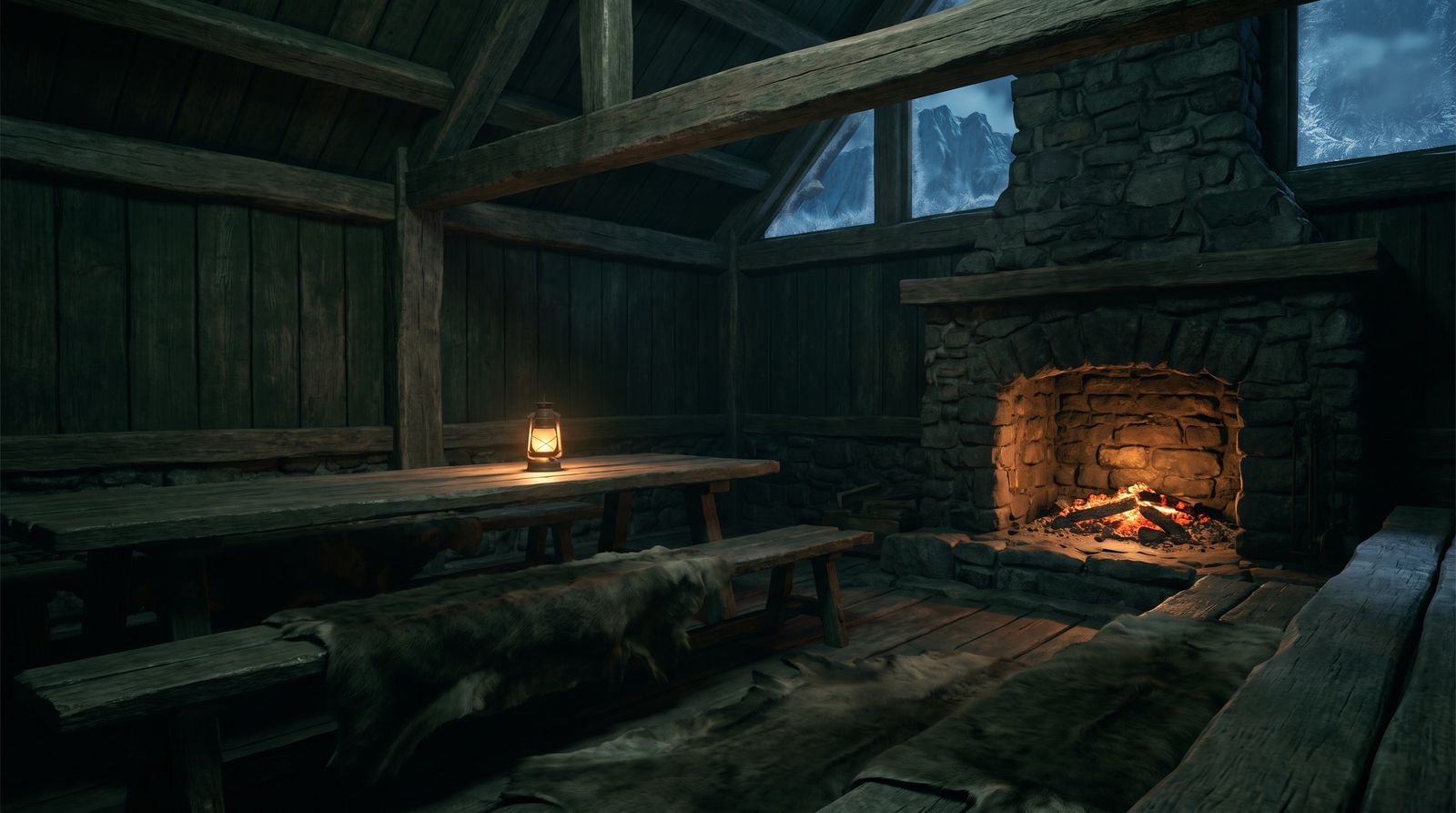
Pim was twenty-eight and the road knew her ears before it knew her name.
Thaw had started in the low places the way it always did: drip first, then rotten snow, then mud that took a print and kept it like a gossip. She walked the Denborn track upright, speaking to the two foxes and one wolf who had come as far as the Ironfang marker, hands out so the trees could see she was a person. Daily half-form. That was not a costume. That was the body she woke in, cooked in, argued in, wanted in. Red-brown pelt on shoulders and thighs. Ears up. Tail for balance in the slick. A muzzle-adjacent face that still had a mouth made for speech and coffee and telling an enforcer no.
She did not put the ears away. She had not put them away for the last town. She would not put them away for Pine Hollow. Denborn kept the den-body as a self. Pine Hollow’s in-the-know humans treated that as rare, not carnival, until they didn’t. She had heard about a wolf who stopped passing in a square. She approved. She intended to be less polite about it.
The last camp had been a scrape of canvas and a pot that Nessa had counted twice. Dawn had come wet and without ceremony. Pim had sat on a fallen cedar with a tin of oats and watched the drip find the same groove in the bark it had found yesterday, and she had thought, not for the first time, that a road was a kind of honesty. You could not iron a road. You could only walk it or refuse it.
She had been a road for years before this thaw. Not a leader in the wolf sense—Denborn did not do alphas the way Ironfang did—and not a poster. A person other foxes walked behind when the next town needed a mouth that would not flatten. She had learned the job in small ugly rooms: a feed clerk who said mascot; a priest who looked at the floor; a man who asked her to shift so his mother could stand her; a woman who asked her to shift for an hour of skin and meant play. She had left the first three. She had stayed the hour for the fourth and put the ears back on before she slept. She had filed those invoices apart so they would not rot into one policy.
She had hunted. She had counted. She had refused maps when a coyote road offered money. She had heard, last midwinter, that Ashclaw had almost died of maps, and she had been glad she had refused. She had heard of a mercenary who came back because a bond would not die, and an alpha who jailed paper instead of a mate, and a beta who lived half-shifted, and a town-wolf who stopped passing in a square. She had approved. She had intended to be less polite. She was twenty-eight. She had walked farther than most wolves’ pride. Pride was weather. Weather you could wait out if you had food and a road and a refusal that did not need a committee.
That was the self she was walking to Ironfang. Not a costume. Not a cure waiting to happen. A fox who kept the den-body as a name.
Nessa, twenty-six, fox, also half-form, a lieutenant in the only sense Denborn used rank—the one who counted food—had packed the pot without looking at Pim’s face. “You slept like a woman who already picked a fight.”
“I slept like a woman who is going to be offered a flattening,” Pim said. “That’s not a fight. That’s a joke I intend to enjoy.”
“Enjoy it after we eat.” Nessa’s ears flicked toward the wolf at the rear. “Colm’s truck is still two hollows back. If their gate wants a face that passes, he can drive it. If their gate wants a person, they get you.”
Colm was the cousin who could pass when the track needed a truck: human-form, quiet, useful in the way a spare coat was useful and not in the way a self was. He said nothing. Pim did not need useful. She needed the marker.
She licked oat from the side of the tin because a muzzle-adjacent mouth made a spoon a negotiation, and she did not make it a gag. She made it breakfast. That was the whole theology.
They broke camp the Denborn way: no speech about destiny, a count of what was left, a look at the sky that was weather and not omen. Thaw smelled like wet pine and old leaf and the particular sweetness of snow giving up. Pim’s pads found the slick and her tail corrected. Nessa walked on her left. The second fox—Tova, older than Pim by a handful of winters, ears already going silver at the tips—took the right and did not offer advice. Tova’s advice was walking. Pim liked that about her.
“Ironfang gate by dusk if the drip holds,” Nessa said, when the track widened enough for three. “Their alpha jailed an elder and mated a mercenary and took a coyote’s maps. They might stand us. They might send a man to make you presentable.”
Pim’s ears flicked. “If they send a man, I’ll laugh. I’m not a poster. I’m a road of allies. They can have the road as I am or they can have a riot they will then have to fold. I’m not flattening for their hardware store.”
Tova made a sound that was almost a laugh and almost a cough. “You said that at Low Water. Low Water had a feed clerk who asked if you were a mascot.”
“Low Water got a receipt and a no.” Pim’s tail lashed once, not anger, a period. “I bought salt and I did not buy a costume. The clerk will live. I intend Pine Hollow’s clerk to live too. Living is easier if they fold before they throw something.”
The track climbed. Rotten snow in the shade. Mud in the sun. A jay argued with a jay about a branch that would not be theirs by midsummer. Pim listened with her ears the way she listened with her feet: information, not poetry. She had walked farther than most wolves’ pride and she had learned that pride was a weather you could wait out if you had food and a road and a refusal that did not need a committee.
Denborn did not sell maps. That was the first thing she would say at a stone table if they gave her one. Maps were how Ashclaw had almost died last midwinter, and how hunters still thickened when a bench looked like money. Denborn hunted. Denborn counted. Denborn kept the den-body as a name. If Ironfang wanted a fox who would put the ears away for a town, they had the wrong road and the wrong season.
She had heard the stories on other tracks. A mercenary who came back because a bond would not die. An alpha who ate crow in public and jailed the paper elder instead of the mate. A beta who lived half-shifted. A town-wolf who stopped passing in a square and made a crease. A healer who stitched a coyote and then, if the rumor was kind, kept him. Those were not posters. Those were a pack that had spent an autumn and a winter learning that coats were not policy.
Pim intended to spend their thaw teaching them the rest.
“You’re thinking about their enforcer,” Nessa said. Not a question. Nessa counted more than food.
“I’m thinking about a man who will tell me to shift.” Pim smiled with all her teeth that were still a person’s teeth. “I like to be ready to laugh. Laughing is a self too.”
“He’s going to smell you before he sees you.” Nessa’s ears went sideways, practical. “You smell like a road that has not flattened in twenty-eight years. That’s a want or a problem. Enforcers like to file wants as problems until someone makes them pick.”
“Then I’ll make him pick.”
Colm, behind them, cleared a human throat. “If they send rifles instead of a man, I can still get the truck up the old spur. I’m not a speech. I’m a door that opens the other way.”
“You’re a cousin,” Pim said, without turning. “I don’t sell cousins as glue and I don’t use them as a flattening. If they send rifles, we leave. If they send a man, I laugh. Those are different invoices. Don’t mix them.”
He nodded. Human. Passing. A truck two hollows back. She did not need him to be brave in a den-body. She needed him to be a person who could drive if the road asked for a different grammar. That was allowed. Denborn did not cure people of the coats they chose. They refused to be cured of the one they lived in.
By midday the drip had found every needle. Pim walked with her mouth slightly open because thaw air carried more if you let it: pine pitch, rot-sweet leaf, a distant cook-fire that was not Denborn, a thread of diesel from a spur she did not take. She did not take spurs that wanted a passing face unless Colm was the one being spent, and she was not spending him on a rumor. Ironfang was not a rumor anymore. Ironfang was a scent-line and a story about a jailed elder and a mercenary who had come back because a bond would not die. Pim approved of bonds that refused to die. She did not approve of packs that called a refusal a costume.
They stopped at a seep to drink. She cupped water in her hands because she had hands, and she drank, and Tova watched the trees, and Nessa counted how much oat was left by tipping the sack with an ear-flick that meant enough through tomorrow if nobody performs hunger. Nobody performed hunger. Denborn ate when there was food and walked when there was road and did not make a religion of either.
“You’re going to want him,” Tova said, which was not advice, only weather. “I can smell it on you already and you haven’t seen his face. That’s a problem or a compact. Don’t mix them at the first post.”
“I mix what I mix.” Pim shook water from her fingers. People’s fingers. Pads wet. “If he’s a problem I leave. If he’s a compact I laugh first so he knows I have a mouth. If he’s both I make him pick. I’ve done this on other roads. Other roads had smaller men.”
Nessa snorted. “Other roads didn’t have a town that already creased for a wolf. Pine Hollow thinks it graduated. Graduates throw bottles when the next test isn’t the one they studied.”
“Then they fold.” Pim’s tail lashed once, a period. “Or they get a war they will have to explain to their hardware store. I’m not flattening to spare them the explanation. I’m twenty-eight. I have explained myself to worse clerks.”
She thought, walking again, of the first town that had asked her to put the ears away for a funeral. She had not. She had stood in the back with her hands visible and her tail still, and a woman had cried on her pelt without asking if the pelt was allowed, and that woman had been a person, and Pim had been a person, and the priest had looked at the floor. Priests who looked at the floor were a kind of fold. Pine Hollow’s church lot would not look at the floor. She filed that. She did not file it as fear. She filed it as a porch she would need someone else to be.
The afternoon went long the way thaw afternoons did: bright, wet, a lie about spring. She talked to Nessa about the six who would come if the drip held and Ironfang stood a person—Rell, Piet, Yarrow, Ansel, Hester, Bex—names that were feet, not posters. She talked to Tova about salt and whether Low Water’s clerk would still sell to a fox next season. She did not talk to Colm about courage. Courage was a coat he did not owe her.
When the pines changed—older, denser, a claim in the drip—she felt the road narrow into someone else’s sentence. That was all right. She had come to walk into someone else’s sentence as herself.
The marker announced itself as scent before it announced itself as wood.
Pim stopped. The others stopped because that was what a road did when the person at the front had a reason. She lifted her face into the drip and let Ironfang come: pine, den-smoke, wolf, a coyote thread that was new, a claim-pair that was beta and town-wolf. And under it, closer, an enforcer’s scent: oil, leather, a rumble that had not decided if she was a problem or a want.
She had smelled enforcers before. Other packs. Other roads. Men who stood like doors and thought doors were the same as ironing. This one was cleaner than most. Less blood in the leather. More porch. She filed that. Porches were useful. Irons were not.
Nessa’s ears went forward. “He’s already on the line.”
“I know.” Pim’s tail hooked once, a private pleasure at being right. “Good. I hate waiting to laugh.”
Tova said, “If you want us at the marker, say. If you want us a decent distance, say that. I’m not walking into their first sentence unless you spend me.”
“Decent distance.” Pim looked at them—two foxes in the body they lived in, one wolf in the body he used for trucks—and felt the particular fondness that was not glue and not a sale. “You’re a road. You’re not a parade. If their man wants a parade he’ll have to invent one. I am one person with ears. That’s the whole show they don’t get.”
Nessa touched Pim’s wrist with two fingers, public, brief, the Denborn version of count yourself. “If he irons you with his mouth I will count him as a problem.”
“If he irons me with his mouth I will leave.” Pim’s ears were up, humor and a spine. “If he wants me as I am, that’s a different list. Don’t sing if the second list happens. Denborn don’t sell beds as glue.”
“I’ll count food,” Nessa said. “You count him.”
Pim walked the last stretch alone enough to be a sentence.
The pines here were Ironfang pines: older, denser, a claim in the way the drip hit stone that had been stacked by hands. The marker was a post that had been recarved after some older war, the new cut paler, the old cut holding lichen. She put her palm on it because she was handed and because a person announced herself to wood the same way she announced herself to a table.
Upright. Speaking. Daily.
She thought of Low Water’s clerk and the word mascot. She thought of a square she had not seen, a wolf who had stopped passing, a crease that had not become a riot. She thought of her own face in a diner mug, awkward, not a gag, coffee. She intended to drink Pine Hollow’s coffee as she was. She intended to make an enforcer say like this before a town got a vote.
The rumble in the trees got closer. Not a growl. A chest that had started without a meeting to blame.
Pim smiled.
“He’s already here,” she said, to Nessa behind her and to the post and to the man she had not yet seen. “Good. I hate waiting to laugh.”
She stepped past the marker with her ears up and her hands visible and her tail lazy, a woman twenty-eight years into a body she would not put away, and she let the drip introduce her before she used his name, because she did not have his name yet.
She would. She could smell that much.
The road, behind her, waited like a compact that had not been written.
The enforcer, ahead of her, was already a want she had not filed as a problem.
Pim did not flatten her ears for either.
The night before the marker she had not slept like a woman who had already picked a fight. She had slept like a woman who intended to be offered a flattening and intended to enjoy the joke. The camp had been a scrape of canvas two hollows back from Colm’s truck, a pot Nessa counted twice, Tova’s rope, a jay that did not know it was in someone else’s sentence yet.
Pim had sat the last watch because she liked last watches: drip starting in the dark, rotten snow going honest, the particular sweetness of a season that had not asked anyone’s permission. She had oiled nothing. She had counted her own hands. People’s hands. She had thought of Low Water’s clerk and the word mascot and the receipt she had taken anyway. She had thought of a square she had not seen, a wolf who had stopped passing, a crease that had not become a riot. She had thought of coffee in a diner mug, awkward, not a gag, and she had intended to drink Pine Hollow’s coffee as she was.
Colm had come to the watch in human form, quiet, a cousin. “If their gate wants a face that passes, I can drive it. If their gate wants a person, they get you. I’m not confused about which one I am tonight.”
“You’re a door,” she had said. “I’m a road. Don’t mix them because you’re fond of me.”
“I’m fond of you,” he had said, and gone back to the crate, unused, allowed.
At first pale she had eaten oat from a tin and watched drip find the same groove in a cedar, and she had thought that a road was a kind of honesty. You could not iron a road. You could only walk it or refuse it. She had walked. She had not refused. She had put her palm on no post yet. She had kept her ears up because she always did, and because the next post would know her ears before it knew her name, and that was the point of arriving as a self.
The hollow before Ironfang pines was a place Pim knew by a different clerk.
Not Low Water. A scrape of a settlement that had a feed shed and a woman who sold salt out of a crate and did not ask if foxes used salt. They had stopped there yesterday because Nessa’s count had gone thin on salt and because roads that skipped salt invented hunger later. Pim had walked in as she lived. Ears up. Hands visible. Tail lazy. The woman had looked at the ears the way she looked at a wet dog and then had looked at the hands and had sold the salt.
“You’re the one from Low Water,” the woman had said. “Clerk there still talks about a receipt. I don’t care about receipts. I care if you pay. You pay. That’s a neighbor. If Ironfang’s hollow asks if I sold to a storybook I sold to a person. Don’t make me write a third sentence. I have two. They’re enough.”
“They’re enough,” Pim had said, and paid, and not flattened, and walked out with salt that Nessa had counted twice before it hit the sack.
That was yesterday. Today the pines were changing. Older. Denser. A claim in the drip. Pim walked with her mouth slightly open because thaw air carried more if you let it: pine pitch, rot-sweet leaf, a distant cook-fire that was not Denborn, a thread of diesel from a spur she did not take. She did not take spurs that wanted a passing face unless Colm was the one being spent, and she was not spending him on a rumor.
She talked to Nessa about the six because names that were feet needed saying before a den invented posters out of rumors. “Rell walks like a hunt. Tell him a den is not a hunt when we get there. Piet will want a pot. Give him a pot or he will invent rank out of someone else’s fire. Yarrow is quiet until he isn’t. Ansel will put a palm on every post he sees. Let him. Hester will laugh. Don’t let her laugh at a throat. Bex bought salt beside me at Low Water’s other end. She didn’t buy a costume. If Ironfang stands a person, they come. If Ironfang sends rifles, they don’t. Those are different invoices.”
“I don’t mix.” Nessa’s ears flicked toward Tova, then Colm, then the claim in the pines. “You’re thinking about their enforcer again.”
“I’m thinking about a man who will tell me to shift.” Pim smiled with all her teeth that were still a person’s teeth. “I like to be ready to laugh. Laughing is a self too. If he’s a porch I might want the porch. If he’s an iron I leave. I have left irons. I have stayed an hour with a woman who asked for skin and meant play. I have not stayed with a man who asked so his mother could stand me. I’m filing those apart so this road doesn’t rot them into one policy.”
Tova made a sound that was almost a laugh and almost a cough. “You said that at Low Water. You said that at the salt crate yesterday. You’re going to say it at a marker. Saying it is how you keep it. I’m not tired of hearing it. I’m tired of towns that make you say it. Say it anyway.”
“I will.”
Colm, behind them, cleared a human throat. “If they send rifles instead of a man, I can still get the truck up the old spur. I’m not a speech. I’m a door that opens the other way.”
“You’re a cousin.” Pim did not turn. “I don’t sell cousins as glue and I don’t use them as a flattening. If they send rifles, we leave. If they send a man, I laugh. Don’t mix them because you’re fond of me.”
“I’m fond of you,” he said, and that was allowed, and he did not make it a third time.
They stopped at a seep she had not used yesterday. Different cedar. Same thaw. She cupped water in her hands because she had hands, and she drank, and Tova watched the trees, and Nessa tipped the oat sack with an ear-flick that meant enough through tomorrow if nobody performs hunger. Nobody performed hunger. Denborn ate when there was food and walked when there was road and did not make a religion of either.
Pim thought, drinking, of the first town that had asked her to put the ears away for a funeral. She had not. She had stood in the back with her hands visible and her tail still, and a woman had cried on her pelt without asking if the pelt was allowed, and that woman had been a person, and Pim had been a person, and the priest had looked at the floor. Priests who looked at the floor were a kind of fold. Pine Hollow’s church lot would not look at the floor. She filed that. She did not file it as fear. She filed it as a porch she would need someone else to be.
She thought of her father counting pots and dying of a winter that didn’t care about counts. Faraday wasn’t a pack name. It was a road name. She had walked it after. She had not put the ears away since she had decided, at sixteen, that flattening was a sale and she did not sell. Twenty-eight now. Twelve years of a self that towns kept trying to rent by the hour. She was done renting.
“You’re going to want him,” Tova said again, weather, not a hymn. “I can smell it on you and you haven’t seen his face.”
“I mix what I mix.” Pim shook water from her fingers. People’s fingers. Pads wet. “If he’s a problem I leave. If he’s a compact I laugh first so he knows I have a mouth. If he’s both I make him pick. I’ve done this on other roads. Other roads had smaller men.”
Nessa snorted. “Other roads didn’t have a town that already creased for a wolf. Pine Hollow thinks it graduated. Graduates throw bottles when the next test isn’t the one they studied.”
“Then they fold.” Pim’s tail lashed once, a period. “Or they get a war they will have to explain to their hardware store. I’m not flattening to spare them the explanation. I’m twenty-eight. I have explained myself to worse clerks.”
The afternoon went long the way thaw afternoons did: bright, wet, a lie about spring. A jay argued with a jay about a branch that would not be theirs by midsummer. Pim listened with her ears the way she listened with her feet: information, not poetry. When the pines changed for good—Ironfang pines, a claim in the drip—she felt the road narrow into someone else’s sentence. That was all right. She had come to walk into someone else’s sentence as herself.
She put her palm on no post yet. She kept her ears up because she always did. She let the drip introduce her before she used a name she did not have yet. She would have it. She could smell that much: oil, leather, a rumble that had not decided if she was a problem or a want.
Pim smiled.
She stepped toward the marker with her hands visible and her tail lazy, a woman twenty-eight years into a body she would not put away, and she did not flatten her ears for a road or a rumble or a compact that had not been written.