Chapter one
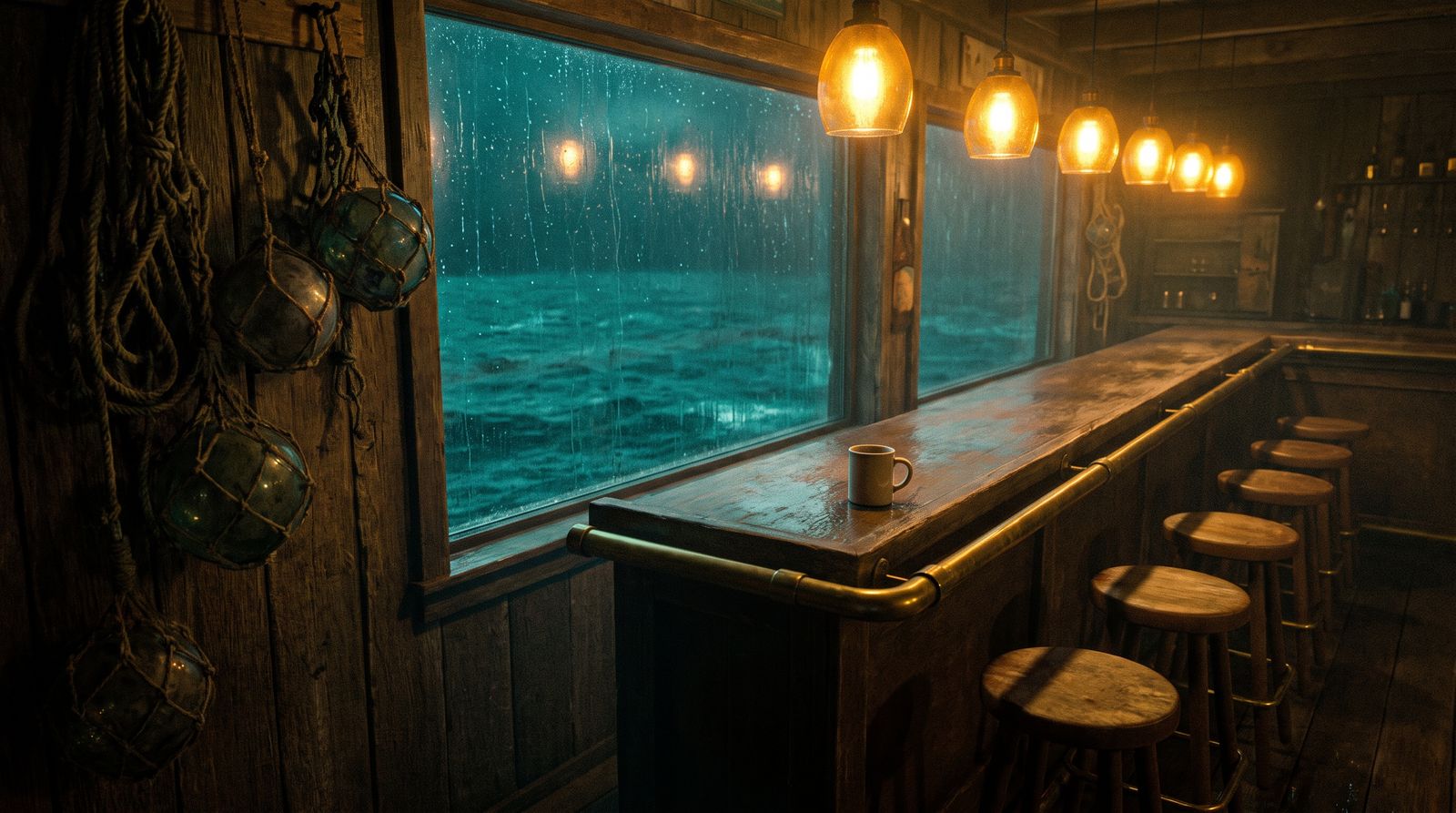
The van died like it had been planning the betrayal for weeks.
Tessa had left Astoria at nine with a full tank, a decent waffle (the syrup still a crime), and the particular optimism of a woman who believed a coastal highway owed her one quiet day. She had a notebook open on the dash with a list: cannon, skip; tillamook, cheese if honest; whoever feeds me before dark. She had a playlist that was only drums and women who sounded like they had been left and gotten a better kitchen out of it. She had, for six years, treated the road like a contract the road mostly honored.
Astoria at nine had been a full tank and a waffle place she would not name. The syrup had been a crime: too sweet, too proud, a tourist sauce on an honest plate. She had eaten it anyway because she believed in finishing a plate. She had tipped. She had sat in the van with the notebook on the dash and made the list she always made when a coast was a job: cannon, skip; tillamook, cheese if honest; whoever feeds me before dark. She had texted her editor heading south, copy as it comes and had not texted Rowan. Pride. The berth Rowan had cleared. The soup. The speech about the pass in October.
Six years on the road. Four vans if you counted Tucson. This one smelled like coffee and smoked paprika. The maple she had sanded in a Sacramento storage unit was a restaurant that could move. New York thought it was a brand. Tessa knew it was rent.
Monday, the twelfth of October. The kind of coastal Monday that looked harmless from a waffle place and then remembered it was Oregon.
The Pacific stayed on her left. The towns got smaller. A sign promised WRECKER'S BAY 8 and then 4 and then the kind of curve that made tourists take pictures and locals take the inside lane. She took the inside lane. She was not a tourist.
She had been thirty-one since April and she still drove like the van could be persuaded by posture. Shoulders down. Hands easy. The maple panel behind her was a kitchen she had built in a storage unit outside Sacramento: two burners, a sink that needed a jug, a spice rack that was not decorative. Her editor in New York thought the van was a brand. Tessa knew it was a lease she paid in mileage and nerve. If it died, she did not have a cute apartment waiting. She had a storage unit, a cousin she had been too proud to text, and a credit card that had opinions.
She had meant to text Rowan from Astoria. Rowan Quinn, thirty-one same as her, boatwright, three years in this zip code, the cousin who cleared a berth and made soup and gave speeches about the pass in October. Tessa had eaten the waffle instead and told herself she was doing the coast alone because alone was how the work stayed honest. Pride was a seasoning. Too much of it ruined the pot.
One second Tessa Quinn had the water and a bag of gas-station licorice on the passenger seat. The next, the engine made a sound she would later describe—professionally, in a piece she would never file—as a wet cough from a man who had already said goodbye. The dash lights flickered. The wheel went heavy. Rain needled the windshield in that coastal way that was not weather so much as a personality.
She had passed a cheese place in Tillamook that looked honest and had not stopped, because the list said cheese if honest and the van had said keep going and she had believed the van. She had passed Cannon and skipped it on purpose. She had texted her editor nothing new. She had eaten the licorice and regretted the licorice. She had thought about Rowan and the berth and the soup and the speech about the pass in October and she had not called, because pride was still a seasoning and she was thirty-one and she could be an idiot until a town fed her.
She downshifted on instinct, coaxed the dying thing toward the only gravel she could see, and rolled to a stop under a faded sign that said SALT & TIMBER in letters the salt had been eating since before she turned thirty-one.
Four vans, if you counted the one she had sold in Tucson with a straight face. This one—maple-paneled, stubborn, smelling faintly of coffee and the smoked paprika she kept in a jam jar—was the livelihood. Not a prop. Not a cute backdrop for a photo. The kitchen, the office, the bed.
Six years had been Sacramento storage units and a Bozeman shoulder and a waffle place she would not name and an editor who wanted Cannon because Cannon photographed. Six years had been a knife that traveled and a notebook with grease on the corner and a professional smile she used in first paragraphs. Six years had not been a man on a painted line who said I don’t take tourist work like a municipal code. She did not have that yet. She had a dying engine and a bag of licorice and a cousin she had been too proud to text, and she sat with both hands on the wheel until the rain found the seam in the driver’s-side window and dripped onto her knee.
She sat with both hands on the wheel until the rain found the seam in the driver’s-side window and dripped onto her knee.
“Okay,” she told the van. “That was rude.”
The van did not apologize.
Monday on a jetty road after a waffle was a woman talking to a vehicle that had planned the betrayal for weeks. She sat with both hands on the wheel until the rain found the seam and dripped onto her knee. Through the wet glass the town was a scatter of roofs and a jetty like a broken sentence. A metal building with a bay door cracked on warm yellow light. A radio, faint even from here, muttering marine weather. No neon. No welcome sandwich board. Wrecker's Bay, Oregon, population something small enough to put on a sign and mean it.
Through the wet glass the town was a scatter of roofs and a jetty like a broken sentence. A metal building with a bay door cracked on warm yellow light. A radio, faint even from here, muttering marine weather at a volume for someone who already knew the forecast and wanted to argue with it. No neon. No welcome sandwich board. A hardware store two blocks in that was not a chain, if the painted letters could be trusted. Wrecker's Bay, Oregon, population something small enough to put on a sign and mean it.
Tessa pulled the hood of her jacket up, shoved the door into the wind, and stepped out. Gravel bit through a sole she had been meaning to replace since Eugene. The air smelled like low tide and diesel and wet wood. She locked the van—habit, even here—and walked toward the light.
She was not a woman who waited to be rescued. She was a woman who had rebuilt a carburetor on a shoulder outside Bozeman with a YouTube video and a prayer. She was also a woman whose hands were already numb, whose phone had one bar, and whose last real meal had been a bowl of chowder two towns back that she had rated, privately, a seven.
The bay smelled like sawdust, diesel, and the particular sweetness of wood that had been wet and then not. A hull sat in straps like a patient. Tools hung on pegboard in an order that suggested the person who put them there would notice if a wrench moved an inch. A slop sink in the corner with a rag that had given up being a color. A pot of coffee on a workbench that had gone the shade of a bad decision. The radio kept arguing with the Pacific.
Tessa stopped at the painted line on the concrete. She had manners. She also had a pulse in her throat that was not only the walk.
“Hello?” she called. “I’m sorry to interrupt. My van just committed a crime against transportation, and I am prepared to be a very good customer.”
A man straightened from the far side of the hull.
He was tall in the way of people who had spent a life reaching over engines. Dark hair gone a little salt at the temples. A flannel that had been washed until the plaid was a suggestion. Hands streaked with something that was probably grease and might have been the hull’s old paint. He looked at her the way a person looked at a leak: locate, assess, decide whether it was his problem.
He was, she guessed, somewhere on the far side of thirty-five. The lines at the corners of his eyes had been earned outdoors. He did not smile.
“We’re closed to walk-ins,” he said.
“I’m not walking in. I’m dying on your gravel.” She tipped her head toward the lot. “Nineteen seventy-something chassis, a kitchen I built myself, and an engine that just made a noise I would not repeat in a family restaurant. I can pay. I can wait. I can make coffee if you have a pot that isn’t a health violation.”
“I don’t take tourist work.”
Tessa felt the smile she used in the first paragraph of a story—the one that said I am not here to ruin your town, I am here to eat it carefully. She let it sit on her mouth and did not make it bigger.
“I’m not a tourist,” she said. “I’m stranded. There’s a difference. Tourists have return tickets. I have a van that is also my rent.”
He wiped a hand on the rag. Walked past her to the bay door without asking permission to look, which she decided to allow because the rain was winning. She followed.
The van sat under the Salt & Timber sign like it was ashamed. He circled it once. Crouched at the rear quarter where she had tried to make a dent charming with a sticker from a pie shop in Idaho. Did not ask her to pop the hood; he did it himself, the latch giving the way latches did for people who had done this a thousand times. The rain darkened his shoulders. He did not seem to notice.
Tessa stood under the eave and watched his face. Food writing had taught her to watch faces when people tasted something they did not expect. His expression was the same one she had seen on a pitmaster in Austin who had found someone else’s sauce in his smoker: offended, then interested, then offended again that he was interested.
He reached in and wiggled a belt. Tilted his head at the fuel line as if it had told a joke in poor taste. When he straightened, water ran off the salt at his temples and he still did not wipe it.
“You drove this over the pass?” he said.
“I drove this from a parking lot in Astoria this morning and a waffle place I will not name because the syrup was a crime.” She tucked her hands into her sleeves. “I’m Tessa Quinn. I write about food and the people who make it, and I was supposed to be in a different town by dinner. I am thirty-one, I have been doing this for six years, and I am very good at not being a problem if someone will just tell me what the problem is.”
He glanced at her then. Really glanced. The assessment shifted a fraction—from leak to person.
“Jude Harlan,” he said, like the name was a receipt. “And the problem is your alternator’s been dying since the state line, your belts are glazed, and whatever you did to the fuel line is creative. I don’t do creative. I do boats and houses that belong to people who live here.”
“I can live here until Friday.”
“That’s not living. That’s camping in my lot.”
The wind came off the water and found the gap at her throat. She did not shiver on purpose. She also did not hide it. Sunshine was a professional skill. Pretending she was made of vinyl was not.
She could have named the last three mechanics who had talked to her like the van was a toy. She could have named the editor who wanted Cannon Beach because Cannon Beach photographed. She did not. She named a number and a day, because that was the job.
“Mr. Harlan,” she said, pleasant as a reservation page, “I have a storm in the forecast, a phone that thinks this zip code is a suggestion, and a livelihood on wheels that you have already diagnosed. I am not asking you to like me. I am asking you to name a number and a day.”
He shut the hood harder than the hood deserved.
“Motel’s a half mile in,” he said. “Diner’s closed Mondays. If you’re hungry, the Hull’s open. I don’t run a charity and I don’t run a bed-and-breakfast. Come back in the morning if the van’s still here. I’ll look. I’m not promising I’ll touch it.”
It was not a yes. It was not a no that would hold in court.
Tessa nodded once, the way she nodded at chefs who said the kitchen was too small for a write-up and then sent out an extra plate.
“The Hull,” she said. “Is that a bar or a threat?”
“Both.” Something that was not quite humor moved through his mouth and left. “Don’t park in the slip lane. Holt will have a stroke on the radio, and I don’t need the harbor master in my business.”
Holt. Harbor master. A name she filed next to the radio and the pegboard and the way this man said people who live here like a municipal code.
He went back inside. The bay door stayed cracked. The radio kept arguing with the Pacific.
Tessa stood in the rain long enough to be sure he was not coming back with a tarp or a kinder sentence. She went back to the van, climbed through to the kitchen, and packed like a woman who had done this in worse zip codes: laptop, charger, the good knife, the paprika (superstition), the notebook with grease on the corner, a charger brick that had survived Texas. She left the licorice. It had not earned the walk.
The kitchen, in the gray light, looked like a life someone might miss. Cutting board scarred by someone who actually cut. The jam jar of smoked paprika with a lid that never quite sat true. A mug that said a diner in Bozeman had existed. She touched the maple once, the way she touched a stove before service: I built you. Do not make me look stupid.
On the gravel she paused and looked at the bay she could not quite see through the rain. The town, from here, did not look like a place that wanted to be written. That, perversely, made her want a paragraph.
Her phone buzzed. One bar. Her editor: Cannon by Wednesday?
Tessa typed, deleted, typed: Held up on the coast. Storm. Copy soon.
She did not type Rowan. Pride still had a hand on the pot.
She started walking toward whatever a place called the Hull thought it was, and she did not let herself check whether Jude Harlan was watching from the bay door.
He was. She found that out later.
At the time she only knew the rain had a personality, the van had committed a crime, and she was thirty-one years old and still very good at putting one boot in front of the other until a town decided what to do with her.
The street in was two blocks of honesty and one of puddles. A window of rain gear that had given up being fashionable in 1998. A bakery dark on a Monday, foil pans stacked in the window like a promise for a day that sold bread. Someone had written a tide time on a chalkboard and then the rain had eaten the numbers. Tessa walked past all of it with her bag and her knife and her livelihood sitting behind her under a sign the salt was eating.
The walk toward the Hull took her past a B&B sign she would later learn was the Widow’s Light—Claire’s, overflow, festival, a note on a legal pad she did not have yet—and past a harbor office with a radio already muttering. She did not go in. She was not here to meet a harbor master. She was here to find a bar that was also a threat and a bowl of something hot.
A man in a watch cap nodded at her bag like the bag was a tourist and then looked at her boots like the boots might be local if they tried. She nodded back. She did not smile the reservation smile. She was thirty-one and stranded and the van was a crime scene, and sunshine was a professional skill she was saving for a mechanic who had already said morning like a maybe.
Her phone buzzed again. Rowan, as if pride had a scent: You in Astoria or are you being an idiot on the 101?
Tessa looked at the message until the rain dotted the screen. She typed Idiot. Van died. Salt & Timber. She deleted it. She put the phone in her pocket. Pride was still a seasoning. Rowan could have the speech when the van lived, or when a man named Jude ran out of reasons not to pick up a phone.
Behind her, Wrecker's Bay did what small towns did in October. It got darker. It got louder with water. It did not ask her to stay.
She had not asked it, either.
Not yet.