Chapter one
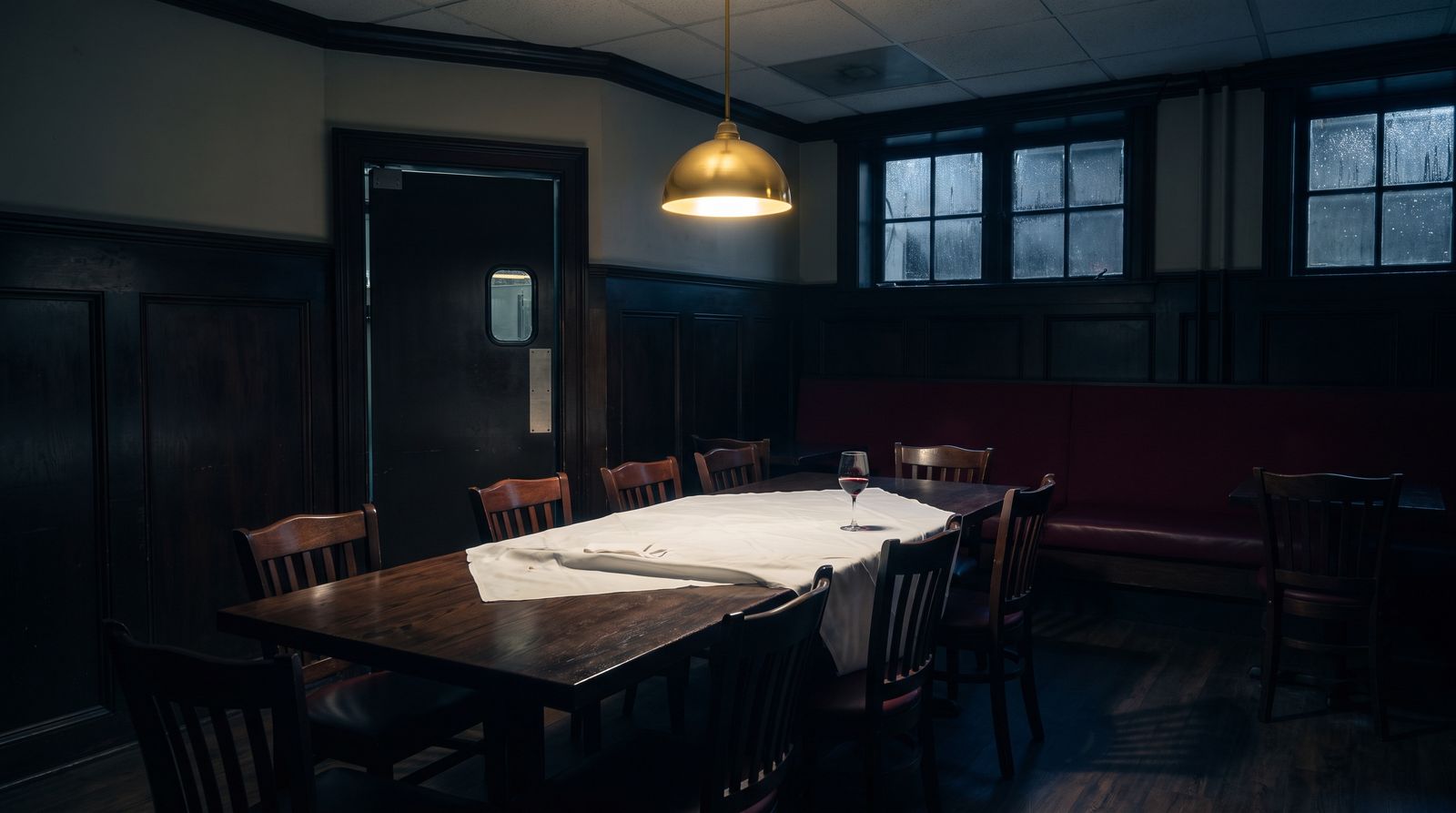
Matteo Ravelli was thirty-one years old and he had been counsel for seven years, which was long enough to know when a contract had been written to kill him politely.
Monday, 8 February 2027. The harbor beyond his office glass pretended it was honest. Matteo did not pretend with it. He had been at the desk since six with a warrant that was not a warrant and a coffee he had scored a threat before he drank it. The city was a wet geometry of cranes and old brick. February in Boston did not forgive anyone for being tired.
He was tired.
Stefano had been dead four months and six days. Official story: Miami. A terrace, a hired shooter already cold by the second morning, a scrap in a dead man’s hand that said a name Matteo had not finished as a sentence. He had written the statements. He had sat in rooms where boredom was the goal and curiosity was a task force. He had made the family look like a company. The company was about to marry him.
He knew that before Dante called.
The October dinner had been Sienna’s problem until it wasn’t. Roman D’Amato had sat at the far end of a table that still smelled like lilies and asked about February like a man who thought he was funny. Thirty then. Miami-raised. A smile like a knife that had been polished for an audience. He had called Sienna cousin and she had corrected him without raising her voice. He had drunk when someone had to, which Matteo respected, and he had looked at Matteo’s mouth when Matteo spoke, which Matteo had filed as a tell and then, inconveniently, not forgotten.
Matteo did not eat lunches with Miami heirs. He had said so. Chiara had watched the calendar anyway.
His phone buzzed. Dante. Not a question. A time. The study, twenty minutes. Matteo put the warrant in a drawer that locked because drawers that did not lock were how you lost a later. He stood. His back complained. Thirty-one was not old. Seven years of sitting like a man who expected a deposition had made him older than the number.
He took the stairs because elevators were cameras and he was already going to be photographed.
The house on the hill still smelled like Stefano’s cigars and Dante’s restraint. That combination had a temperature. Matteo walked it without touching the rail. He passed the room where Nico had learned to stand again after November and did not look in. Alessia Moretti still had the ER. Nico still had the family. Those were different doors. Matteo did not bleed on other people’s hallways.
Chiara was already in the study. Twenty-eight, money, the coldest kindness in the bloodline. She did not look up from the laptop. The screen was a column of numbers that would still be a column if Matteo walked out and bought a ticket to a parish Rafael had already left.
Dante set the packet down like a gun he expected Matteo to oil.
“Roman D’Amato,” Dante said. Thirty-two, don, married on purpose, the settled spine of a house that was still on fire. He had practiced flat since he was twenty. Flat was how you kept a room from becoming a funeral. “Miami wants a photograph that says peace. Boston wants the feds to get bored. You write the language. You also stand in it.”
Matteo did not sit. Sitting felt like signing. “I wrote your wedding. I am not a clause in the sequel.”
“You are the only clause they will accept.” Chiara’s voice was a spreadsheet. “Two families. Two men. The papers stop calling it a war and start calling it a merger. If you wanted a quieter life you should have gone to Rafael’s parish before he left it.”
Matteo’s mouth was dry. He hated that it was dry. He had sat across from Roman last October and watched a knife-smile ask about February. He had gone home and written three memos and not written the fourth, which would have been about a jaw and a mouth and the particular way a man looked at you when he was deciding whether you were a door.
“He’s thirty-one,” Matteo said. “January birthday. Miami-raised. He called Sienna cousin and she corrected him. His uncles sent condolences about a driver and no apologies. I am not marrying a rooftop.”
“You’re marrying a treaty.” Dante’s voice stayed flat. “Separate from whether you like his mouth. The city is tired. Vito is poisonous and useful. Tino D’Amato wants a seat that looks like family. You give him a son-in-law who can read a warrant. Roman gives us a Miami name that has to explain why it’s shooting at a wedding.”
Matteo looked at the packet. His own language looked back at him, tightened. He could see the joints. Shared residence. Public appearances. A ceremony the society pages could spell. A penalty that was not a trunk. Joint security language on the Seaport front that would look like peace and function as a leash. He had written worse. He had not written himself into the signature block.
“I have had men,” Matteo said, because someone in this room was going to make the joke and he wanted it dead first. “I am not a punchline and I am not a beard. If you put me in a photograph you do not get to wink at the men who think one of us is furniture. I will walk before I stand next to a cartoon.”
Chiara’s eyes lifted. They were Stefano’s eyes when Stefano had been counting, which was most of the time. “I don’t wink. I count. The count says you do this or we go back to crates and funerals. Nico is still walking like a man who got a hole in November. Alessia is still in the ER. I would like one month where the only blood I see is on a ledger.”
Dante did not sit either. Two brothers standing over a packet. That was a kind of inheritance. “You can hate him. Hate is cleaner than hope. You have until tomorrow. He lands tonight. Table at ten. If you can’t stand next to him without looking like a hit, practice.”
Matteo opened the packet because not opening it was a tell. The paper was heavy. The residence clause named the Harbor tower, two floors below Dante, two rooms. Chiara’s taste: a building that believed money could be quiet. The appearance schedule started Thursday. A photographer. A promenade. A ring. Matteo’s stomach did something he refused to name.
He thought in clauses. Who benefited. Who smiled. Who had been early last autumn asking about his calendar.
Roman D’Amato had smiled like a knife in a pew and said the contract was tidy.
“I hate him,” Matteo said.
“Good,” Dante said.
Chiara typed. The keys sounded like small bones. “Vito will come to the table. He will call you furniture. You let Matteo hear it after, not in the frame. Tino will not come. Tino sends the boy and a schedule. Ciro wants to post extra on the garage for the landing. I told him no. He poured me water anyway.”
Matteo’s attention snagged. Ciro Bellini. Forty-five. Helpful. Bloodless cuffs. Stefano had died on a terrace. Ciro had been in a stairwell. Matteo had not finished that sentence. He was counsel. He finished sentences he could file.
“Ciro likes doors,” Matteo said.
“Ciro likes being early,” Chiara said. “Those are different columns until they aren’t. You don’t tell Dante a feeling. You tell me a date.”
Dante’s mouth ticked. Not a smile. “I can hear you.”
“Then hear this,” Chiara said. “If you make the landing a war in the lobby I will be very rude. The boy gets a car. Renata. Quiet. He sleeps in the second room. Tomorrow he signs. If either of you smiles like a hit I will put you both on the stairs.”
Matteo took the packet. His hands were steady because he had trained them to be. “Seven years. I made this family look like a company. You are using the company to marry me to the man who wanted the port.”
“I am using the company to keep the port,” Dante said. “You can divorce the photograph later if Boston is still standing. Tonight you are counsel. Tomorrow you are a fiancé. Don’t confuse the columns until you have to.”
Matteo left. The hall was cold. He was thirty-one, and he had already started counting the men who would benefit from his name on a line next to Roman D’Amato’s, and none of the numbers made him less angry that his own mouth had gone dry when Dante said his mouth.
He did not go back to the office. He went to the tower because the tower was about to be a sentence he lived in, and he wanted to see the rooms before a Miami heir unpacked a bag in one of them.
The Harbor building did what expensive buildings did: it pretended the wind off the water was a feature. Two floors below Dante. Chiara’s codes on a card in an envelope that had no name. Matteo walked the hall. Two doors. A shared kitchen that had never boiled water for anyone he wanted. A view of the slips that made him think of routes and of a terrace and of a name he was not putting on a breakfast table.
He stood in the room that would be his and then in the room that would be Roman’s. The second bed was made like a hotel. He did not touch the pillows. Touching would have been settling.
He thought about the men he had had.
A prosecutor in a hotel off Atlantic who had been a bad idea with good hands and a morning that required two showers. A man in Providence who liked to be talked to and did not like to be looked at, which Matteo had filed as incompatible and ended. A clerk from a firm that no longer existed who had put Matteo on his back and asked, afterward, which one of them was the girl, and Matteo had put on his coat and not answered because answering would have been a conversation with a fool.
He was not a fool. He was not a girl. He was not furniture. If this house needed a cartoon they could draw one without his mouth.
He made coffee in the kitchen that was not yet a war. He scored it a threat. He drank it anyway. The ring would come Thursday. Chiara had already bought it. He knew because Chiara bought things the way other people breathed.
His phone buzzed. Sienna. Not a paragraph. He lands. Don’t let him make you the project. I said it in October. It aged well.
Matteo answered: I’m not a project. I’m a filing.
She sent back a period. That was affection, in this family.
He stood at the glass and watched a tanker pretend the channel was a road. Roman D’Amato was in the air above some other water, thirty-one as of January, a knife with a pulse, and Matteo’s body had already started doing the stupid thing it did when a problem had a mouth.
He had wanted men. He had not wanted this one. Wanting this one would be a later he had not given himself.
He practiced standing next to the empty air where a shoulder would be. An inch. Far enough to pretend he had breath. Close enough that a photographer would call it a marriage. His jaw locked. He unlocked it. He locked it again. Dante had said if you look like a hit, practice. Matteo practiced. He looked like a deposition. That would have to be enough.
At eight he went back down to the house because counsel still had work that was not a fiancé. Ciro was in the lower hall with a pitcher no one had asked for and a smile that had learned stairwells.
“Landing tonight,” Ciro said. Helpful. “I can post extra on B. Quiet arrival. No photographs.”
“Renata drives,” Matteo said. “B stays locked. Extra is how people get photographed. Go be useful on Hanover.”
Ciro nodded like a man who wanted to be useful. He left the pitcher. Matteo did not drink the water. He watched Ciro’s back until the door and then he watched the door.
He thought of October. A terrace. A scrap. Bellini. He had not finished the sentence. He did not finish it now. Finishing it with a landing in the air and a treaty on the table was how you started a war the feds would not get bored of.
He went to his old office in the house and read the packet again. Every clause. Every penalty. The sex was not in it. He was grateful and insulted in the same breath. Grateful because he had said the sex was optional and he intended to keep that true. Insulted because someone—Chiara, or Dante, or the version of himself who had written the first draft—had assumed the marriage could be a photograph with two beds and no bodies.
He had bodies. He had had them. He would not be a still.
He read the residence clause a third time. Harbor tower. Two floors below Dante. Two rooms. Chiara’s taste in a sentence: a building that believed money could be quiet. He had walked those rooms an hour ago. He had not touched the pillows. He wrote a margin note he would not show anyone: two rooms is a later they will try to close. He crossed it out. Crossing it out was a conversation with himself. He was getting good at those.
Nico found him in the office without knocking, which was either family or a man who had learned that knocking gave people time to put a face on. Twenty-nine. A scar under the shirt Matteo did not ask to see. November had put a hole in him and a doctor in his doorway. Alessia was still medicine. Nico was still the family. Those were different doors.
“Chiara told me,” Nico said. He did not sit. Sitting in Stefano’s old office still felt like a trespass even when the office was Matteo’s. “Roman. The photograph. You’re going to hate it.”
“I already hate it.”
“Good.” Nico’s mouth ticked. “Hate is cleaner. I hated the hole. Then I didn’t. Don’t do it in that order if you can help it. The doctor is not your plot. The Miami heir is. If he bleeds on Alessia’s hallway I will be very rude.”
“I’m not bleeding anyone on a hallway.”
“No one plans to.” Nico looked at the packet. He did not touch it. “Dante’s using you because you’re the only one they’ll accept. That’s not a compliment. That’s a count. Rafael would have said no and meant a parish. Gio would have said yes and meant a street. You said you wrote the wedding. Now you’re in the sequel. I’m sorry. I’m also not going to talk you out of it. The cousins are still breathing. That’s the only sentence I have that isn’t a mood.”
Matteo nodded once. Nico left. The office remembered both of them and did not care.
Chiara texted: Renata has the car. He lands at nine-twenty. You don’t meet the car. You meet the table tomorrow. If you meet the car you look like a hit or a husband. I haven’t decided which is worse.
Matteo answered: I’m not meeting the car.
He sat with the packet until the light in the window went from gray to the particular black Boston used for February. He thought about the prosecutor off Atlantic. Good hands. A morning that required two showers. A no that had been about a case. He thought about Providence, a man who would not be looked at. He thought about the clerk who had asked which one was the girl. He put those men in a column called past tense and he put Roman D’Amato in a column called photograph and he did not like how close the columns sat on the page.
At nine-forty he stood in the drive and watched a quiet car come up the hill and not stop. Renata, to the tower. The heir in the back. Matteo did not go to the glass. He went to the study and sat this time, because tomorrow he would have to sit at a table and sign, and he was done pretending standing was a strategy.
Dante found him there. Did not comment on the sitting. “He landed. Chiara says he texted Sienna instead of you. That’s either manners or a tell.”
“That’s a knife being funny,” Matteo said. “I don’t do funny.”
“You do tidy.” Dante leaned on the desk that had been Stefano’s and was now a piece of wood that remembered a dead man. “Tidy is why they want you. Tidy is why I can sleep two floors above a Miami heir without putting a man in the hall. If tidy becomes a hostage I will change the locks. If tidy becomes a husband I will not send condolences.”
“I’m not a husband until ten tomorrow.”
“You’re a husband when the papers print the promenade. The table is theater. You know that.” Dante paused. “Sienna will be in the doorway. Not the table. Vito uses daughters as toasts. She is not a toast. Don’t let him make you one either.”
“I don’t toast.”
“I know.” Dante’s mouth moved, almost a smile, and then he was only the don again. “Get some sleep. You look like a man who has already started losing a fight he swore was only inventory.”
Matteo did not answer that. Answering would have been a later.
He went to the tower. The second door was shut. Light under it. A bag being set down, or a man standing still, or both. Matteo did not knock. Knocking was a conversation. He went into his own room and shut the door and did not lock it, because a lock would have been fear, and he was not afraid of Roman D’Amato.
He was afraid of the dry mouth.
He lay on his back on a bed that had been made like a deposition and stared at a ceiling that cost more than a warrant. He was thirty-one. He had been counsel for seven years. He had had other men and he had not asked any of them to stand in a photograph and call it peace.
Tomorrow he would hate Roman at a table. That was the job. The job sat in his chest like a second packet.
He slept badly. He dreamed of a knife-smile in a pew and a calendar that had already decided, and when he woke at three the harbor was still pretending, and the man two rooms away was still a sound, and Matteo Ravelli, counsel, fiancé in ten hours, put his palm on the wood of his own door and did not open it.
He was thirty-one.
He had already started counting.
Tuesday would be a table. Monday night was a palm on wood he did not open.
Matteo got up at five because five was when counsel worked and because the man two rooms away was a sound he would not walk into. He made coffee. He drank it. He read the packet a fifth time. Shared residence. Two rooms. He wrote a second margin: two rooms is how I stay a person. one room is a later I have not given. He did not cross it out.
He walked the house on the hill before the tower, because the house still had his old office and the office still had a drawer that locked. He put a copy of the packet in the drawer. He put the scrap of a thought about Bellini in a different drawer, the one he did not open in front of Ciro. He passed Nico’s door and did not knock. He passed the dining room that had been used for Dante’s papers and would be used for his. The walls had not improved.
Sienna texted: He landed. I told him not to be a rooftop. You are not my project. Don’t let him make you one.
Matteo answered: I’m a filing.
She sent a period. Affection.
He stood in the drive at dawn and watched the hill pretend it was honest. He was thirty-one. He had been counsel for seven years. He had a fiancé in ten hours and a dry mouth and a column of men who would benefit from his name next to Roman D’Amato’s. He went back to the tower. The second door was shut. He did not knock. He sat at the kitchen table with the copies and practiced sitting, because sitting at ten o’clock would otherwise look like fear, and he was not afraid of Roman D’Amato.
He was afraid of the dry mouth.
Monday night he walked the slips alone because a packet on a table still needed water under it.
February metal. A crane that had not moved. A hull that sat too long. Gio found him without being told, which Chiara would yell about later. Twenty-seven. Coffee that had given up.
“You’re marrying a horse tomorrow,” Gio said. Not a question. “I’m not writing a poem about it. I’m saying it so counsel hears it from a street. Ciro offered me a map for B this afternoon. I said I had yours. He offered it twice. That’s the twice. If you want me on a cone I can be on a cone. If you want me on a wedding I will be rude.”
“Sit on the cone.” Matteo’s back complained. “If the hull moves I want the time. If Tino writes a name I want it on wood, not in my ear in a lot. I’m not combining columns tonight. Don’t make me famous.”
“I don’t make counsel famous.” Gio’s mouth ticked. “Go sit. I’ll stay bored. Bored is how we bury a packet without burying a warrant.”
Matteo walked back the long way. Hanover. A bakery dark. A stoop arguing in Italian. He stood in the tower lobby long enough to see Renata at the desk with a list that was already Chiara’s handwriting, and he did not take the list, and he went up the stairs because elevators were a still.
He sat at the kitchen table with the copies again. He practiced sitting. Tuesday was a table. Monday night was a palm on wood he did not open, and a cousin on a cone, and a dry mouth he had not billed anyone for.